Transcript
Automated transcript · uncorrectedWhat’s going on in the war. Well, it’s Sunday morning, and no better to ask than the former Supreme Ally Commander of NATO, General Wesley Clock. General Clock. So many things are going on in the world. I mean, we’ve got wars all over the place, and I jokingly say, but it’s not too far from a joke. How many
countries have to be involved before you call it a world war? See Sunday morning. Can you give the American people an updates? Let’s start wherever you take the appropriate places start.
Well, first of all, let’s put the big picture in place. John. We’re in a new era today. We have to recognize them. This is multi polarity. And the old idea that the power of the US, example, was so great that all we had to do was point our finger and snap our hands together and people would jump and do what
we said. That that’s wrong. So we’re in a contested global environment. It starts with Russia. Russia invaded Ukraine just because Vladimir Putin wants to regain the historic territories of the Soviet Union. He sees himself as a sort of modern Putin the Great doesn’t care how many people he kills or what economies he wrecks, and if he gets
Ukraine or stabilizes and gets a pause in the fighting, he’s going to move on to the Baltic states, Estonia, Latvia, Lithuania, and maybe Poland. And they’re all NATO members. So we’re on the brink of a real NATO confrontation, face to face with a nuclear armed Russia. And then on the other side of the world there’s China, which is rapidly
building its forces of President Chijin Ping said farewell to Putin and visited last year in Moscow and said, we’re going to see changes in the world seen in one hundred years, and we’re driving it. I guess that means they appreciate Putin trying to wreck NATO. And at the same time, what China is trying to do is established
dominance in the Pacific and regain control of Taiwan, and Cijinping hasn’t ruled out the use of force to do that, and that would put America again in the cross airs of conflict. And then there’s the Middle East, and there we’ve got a conflict in every direction. We’ve been in a forty year undeclared war with Iran. They call it
a war. We try not to. They want to destroy Israel and attack the United States, I guess, and drive us out of the region. And what we’re trying to do is somehow bring peace and stability in the region at the same time help Israel secure itself. So that’s got a lot of action going on right now. And
then there’s even Venezuela, which wants to take two thirds of its neighbor Guyana and sees its offshore oil rights. Venezuela course being advised by Iran, China and Russia. So yeah, it’s a global problem and it’s growing.
Well, you were Supreme a like commander I think nineteen ninety seven to two thousand under President Clinton, and I did some work with President Clinton too, So it’s different times today, thirty years later, twenty five years later. What do you think the best course is going to be?
I mean, is Putin looking for it but Trump to be president of Putin looking forward for Biden to be president.
Well, Putin is looking forward to being able to reduce significantly the power of the United States, and Donald Trump has played along with it for his own purposes. I don’t think Putin believes he can control Trump, but he does believe he can influence him. On the other hand, he sort of sized up the administration and realized that
the administration is not exactly prepared to stand up and risk confrontation with a nuclear armed Russia. So Putin’s are winning, and that’s the problem. The world sees it that way, and so many of our erstwhile friends in the Global South as they call it, are hedging their bets. They don’t want to. They may like the United States, They
certainly don’t want to live in Russia, but on the other hand, they don’t see the United States as strong and as forceful as it used to be.
Well, has there armed forces gotten weaker in the last five to ten years or can it be easily regained if we have the right leadership.
Well, I think we do have to strengthen the armed forces. We’re busily reorienting. You know. First we were involved in the invasion of Iraq, and then we were fighting ISIS, and we were still in Afghanistan, and we finally got out of that three years ago.
And for the last four or five years we’ve been focused on China, and then Ukraine came along and suddenly it looks like old style warfare with new equipment in Ukraine. So there are trench lines, there’s obstacles, there’s tanks, there’s big artillery battles, but there’s also drones and missiles and patriot air defense systems. So it’s stretched in the United
States defence budget tremendously. We’re trying to support Ukraine, although there are some apparently a large number of Republicans and maybe a few Democrats that don’t want to do this. That fight in Ukraine is our fight for our values and our freedom, and all we have to do is provide them some old military equipment and they’re doing the
fighting and the bleeding on it. It’s a hate to say it, but it’s a bargain for the United States if it works. But our armed forces are still volunteer. We’ve only got maybe seventy thousand people in all of Europe.
But we’re also missing our recruiting goals and having a hard time recruiting young people into the armed forces. So it’s not just a matter of rebuilding the equipment and the armed forces and reorientate away from counterinsurgency, but it’s also a matter of re engaging the American public with a support for the United States Armed Forces and letting
and encouraging their sons and daughters to serve.
Understood, we’ve got about a minute left. What Sunday morning, the American people are sitting at the table, kitchen table, having a cup of coffee. What hope can you give them? That way? You know things are straightened out soon.
Well, I think you know. The first and basic foundation of America’s strength is its economy. And I don’t know what side of the partisan divide people are on, but I do know this. The economy is growing, it’s creating jobs, the level of inflation is down, and there’s not another country in the world that’s doing better growing its economy
in the United States of America. So that’s a good sign, and that gives us a capacity to do everything else. But we’ve got to get serious about national security, national defense, and our armed forces. And we’ve got to face reality.
This is not the nineteen nineties. We’re not the sole superpower. It’s not about America the exceptional, America, the indispensable. Now it’s America first among equals, challenged on all sides, and it’s not just the power of our example. We’ve got to show the examples of our power.
General Buck, thank you thing you’ve done for America and continue to speak out for America. God bless you, God bless America. And let’s catch up again real soon.
Thank you, John
Sunday, February 18, 2024
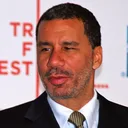

Update on New Jersey politics. Governor Murphy's wife – Senate.
Eric Shuffler Founding Partner, River Crossing Strategy Group
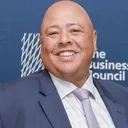

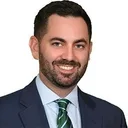

Update on the Ukraine war. Houthis retaliation.
Tidal McCoy Venture Capitalist & Former Asst. Secretary of the Air Force

Trump's $355 million judgment and 3-year ban from New York.
Alan Dershowitz Harvard Law Professor Emeritus
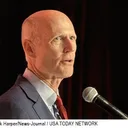
This week's guest: Jared Epstein, Partner, Aurora Capital
Michael Stoler Real Estate Expert

Threat of Russian satellite war.
Steve Kates Space and astronomy broadcaster (Dr. Sky)