Transcript
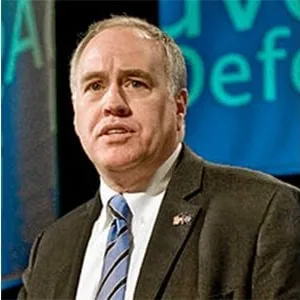
Automated transcript · uncorrectedAnd joining us now is Tom DiNapoli, the New York State Tom Troller and mister comptroller. This was amazing news. You put out a tweet and we have gotten so many calls WABC about this, basically saying that year to year state tax collections are down thirty nine point nine percent.
Is that true? That’s a big deal. Yeah.
We put out tweeting and also we put out our budget report as we always do, and we did an update on those April numbers, and that thirty nine percent is lower than what had been projected. And I think we all knew that with all the economic trends and the federal relief money being spent down there was going
to be an impact, but certainly it’s a more severe drop in revenue than had been anticipated. Keep in mind, after the state budgets completed, there’s an update to the financial plan. We haven’t seen that yet, but based on the most recent project to be down thirty nine percent, and again it’s the first month, it’s one month. Will
it be a trend, too soon to tell, but certainly it’s not good news to start off the new fiscal year with those kind of numbers.
Mister Tanopoli, I mean, I am concerned, and I guess you put out the tweet because it should go on record that you’re concerned. And I’ll tell you what I notice. The restaurants are very very busy. The streets are very very busy. Tuesday’s Wednesday, Thursday, but yeah, Fridays and Mondays and the weekends, you could throw bowling balls up and
down Third Avenue, Fifth Avenue, Second Avenue, Punk Avenue, and those people are not here to take you birds, take taxi cabs, go to restaurants, and that’s all.
Sales sex well, I absolutely, and I think part of what we’re seeing also is although inflation is moderating, it’s still very high and people are concerned about that. Interest rates, you know, obviously that’s still a big issue of big concern.
Looking at the sales task collections, which had been consistently higher, they still are, but we’re seeing the increase you’re of starting to slow, not just in New York City but across the state. I think it speaks the fact that people are very concerned, rightfully so, about where this whole economy is headed. They still hear, you know, a lot
of projections about a recession. When will it be how deep will it be. There’s just a lot of uncertainty out there. Obviously, you know, the real estate market has had significant challenges to a lot of taxes are generated when there’s real estate activity, so when there’s not real estate activity, that has an impact. So we’re you know,
we’re in for a time as we’ve tried to flash that bright yellow light, you know, for a number of months now. Question is very important, and certainly now that we’re seeing the numbers go so not in the direction we’d like them to be, and it’s very important we monitor carefully these revenues because you know, the state budget
has a lot of important spending commitments. We have to have the money to pay for it. The same is true with the city’s budget. A lot of issues there obviously a lot of discussion about the cost related to the migrant issue on anticipated costs that hadn’t been budgeted for.
The state came up with some more money for the city, but there’s a big question about what the federal partnership will be there. So both for New York City and for New York State, it’s very concerning when we start to see a slow down in the revenues below, what had been projected.
And I’m Controller Tom Tanapli. You brought up the migrant issue. I was seeing a headline the other day eight million dollars a day just for New York City alone. Do you have any sense of sort of an estimate so far of what it’s costing and also the impact just in general of crime people fleeing New York they’re worried
about crime.
Yeah, yeah, no, I mean, there are certainly a lot of issues. I mean, I have no reason to doubt that number that you But the issue then becomes what has the city been able to budget for in this regard and what kind of support will be coming from the state on The state budget has about a billion
dollars over the next two fiscal years of the city, but it’s very clear from what everybody’s saying that more help is going to be needed from the federal government. There was a request of FEMA I think for about three hundred and fifty million dollars, and I think thus far the Atoms administration learned it’s only going to be
receiving about at least for now thirty million of that request. So there are going to be some big, big budget gaps there and has to be addressed. This could impact on spending for all the other programs that that people care about. So you know, the cost could reach as high as you know, well over two billion dollars at
the rate that we’re going and it’s very clear the city is going to need more support to pay for that.
Wow. And what about crime too? What about people fleeing crime too because they’re so worried they’re seeing that headlines. That’s also driving people, as John talked out, you know, they’re not spending as much time in the city.
Yeah, although there are times where you see you do see a lot of activities. Say, I mean, you know, on some of the weekends, you’re still seeing a lot of folks come in. But I read on that point because another report we put out this week talked about the MTA and how they’re managing their debt burden, especially
with the new money they’ve gotten. This has been one of the challenges in getting riders back on the subways and the trains because of the the perception reality perception becomes reality that the safety issue is one that’s not been fully addressed. Now, some progress has been made, there’s been more of a police presence on the subways, and
that’s good, but I still think that there is a hesitancy out there and the MTA, even with all the additional support that’s been given obviously from the federal government during COVID, from the state government now with the state budget ridership, the farebox is still so key to the financial strength, long term sustainability of the MTA. We need
people to feel safe, to feel the subways of being maintained and with cleanliness, and obviously you’re absolutely right, people are still very concerned about all of that.
You know, I want to follow up. You brought up the two billion dollar price tag. Is that for? Is that an annual amount on the migrant issue? Where do you see the two billion?
Well, where that could reach by fiscal year twenty twenty four, So that’s that’s a big number. And then when you go into you know, the the they’re projecting that after that those that amount to moderate perhaps around a billion dollars.
But at this point, as I understand, in the city’s financial plan, there’s nothing budgeted after that, so, you know, a big question mark whether or not this is going to be a long term problem. The city is going to have to deal with the whether we’re talking about you know, a two year you know cycle to have
to deal with this. Obviously, there’s a lot on the federal level that needs to be straightened out with this whole issue, not only in terms of funding for localities that are dealing with it, but just the whole question about how this is being handled. And as we all know, there’s been terrible gridlock on this whole issue for years.
But obviously many communities are feeling it’s at a crisis point. Let’s hope it prompts greater action and greater support from Washington.
Well, thank you Controller Danapolis for coming on. I hope there’s some common sense in Albany, and I hope they realize what the heck is going on.
Well, you know what, we want to just remind people, we call it straight. The numbers are what the numbers are, and that’s why people need to not assume that, you know, the piggybank is unlimited, because it’s not. We’ve benefited from billions coming from Washington that is being spent down. The economy has a lot of struggles. It’s impacting tax revenue
in a negative way right now, So we have to be looking very carefully, managing the money carefully both for New York City and for New York State.
Thank you, Tom Dinnapoli. It’s pray for New York and we’ll catch up with you again real soon.
Thank you, Thanks John, Thanks reader,
Sunday, May 21, 2023

Albany slow to react to New York City migrant crisis.
Zach Williams Transportation Reporter, Bloomberg Government

President Biden needs to negotiate on the debt ceiling.
Larry Kudlow Fox Business Host and Former NEC Director

Immigration in the City is unsustainable.
Peter King Former U.S. Representative from New York

Calls for hearings on the Durham report.
Lindsey Graham U.S. Senator from South Carolina, 2003–2026

More water in the universe than previously thought.
Steve Kates Space and astronomy broadcaster (Dr. Sky)