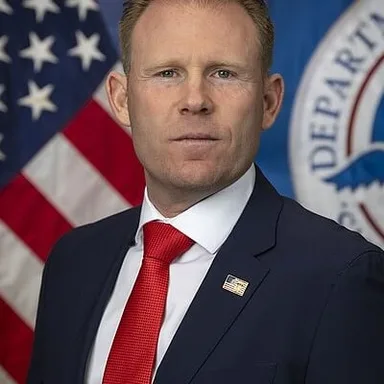
Andrew Giuliani Former Executive Director, White House FIFA World Cup 2026 Task Force
Preparing for the World Cup and America's 250th Anniversary
Transcript
Automated transcript · uncorrectedSunday morning. Well with us this morning is Andrew Giuliani, and the President has made him the executive director of the White House FIFA World Cup Task Force, and he’s in charge FIFA, well, the International Federation of Association of Football.
And when they say football in Europe they say soccer. Well, Andrew, we know each other a long time. And congratulations, I understand you guys started on Friday already and tell us what the heck is going on?
Hey, John, Well, obviously great to be with you. Yeah, this is just the largest sporting event really in our country’s history. You could even argue in world history, when you look at the viewership numbers, the size and scope of these events, the safety procedures that go around these events.
I’ll just go into a comparison with the Super Bowl, because I think it gives Americans a real good perspective just about how much of the world is watching the last About one hundred and thirty million people around the world watched the last World Cup final. One point six billion people watched. We’re expecting so this World Cup Final
in the meadowlands eight miles west of where you’re sitting right now, for over two billion people to watch this World Cup throughout the one hundred and four games spanning sixteen North American cities, eleven in the United States, three in Canada, three in Mexico, two in Canada. It’s going to be an unbelievable celebration. Also going on over America’s
two hundred and fiftieth birthday. What a summer it is to be an American and what a summer it is to be in America.
Well, I mean, soccer is, I guess, is the biggest football game in the world. I mean how much if you look at the big the big world soccer versus NFL football, and the NFL football is coming up fast.
Where did they both stand?
Well, you know in the unit United States, obviously NFL football is still king. But then you go outside of that, and I’ll say the other six continents as well. I guess I’ll include Antarctica in this one. It is soccer, That’s what they tell me, John. They tell me it is pretty gold there. But soccer really is king. And
you could see that with all the international travelers that are coming to the United States from South America, Brazil, Argentina too, countries that have incredible soccer history to all the European countries that are coming here, to all the African countries that are coming here as well in Australia, the Asian countries as well. I know South Korea kicked
off a couple of days ago. Really really amazing to see just how all these different cultures end up coming together for this World Cup and this really becomes a thirty nine day celebration, and it really creates great opportunities, not just from a diplomatic standpoint, but great opportunities from maybe countries that wouldn’t get in the same room to
get in the same stadium together and believe it or not, create conversations that can lead to lasting good outside of the soccer pitch and outside of these stadiums that we play in.
So what was supposed not only are we going to be competitive football wise, we want to make some good will bringing everybody together.
One hundred percent, John, And that’s how the President has viewed this. You know, when I first spoke to our good friend about this fifteen months ago, after he had signed an executive order creating this White House Task Force on the World Cup, what we ended up speaking about was, Hey, there is going to be no larger platform than the
World Cup, to be able to show off American exceptionalism to the rest of the world over our first two hundred and fifty years and then the great hope and promise of the United States of America over our next two hundred and fifty years. You know that there’s some media, both in the United States and internationally that have told
fantastic lies about the United States, dates that maybe we aren’t as great as we once were. Well, there’s no better cure for that than actually having international visitors come to the United States and see just how excellent the United States of America and the freedoms that are provided here, what that can mean when they go back home. It
really really inspires people. What we’ve done on the Task Force, John Is we’ve tried to make sure, more than anything else, that we can strike that balance between making sure those people that want to come for the World Cup, want to come for America’s two hundred and fiftieth birthdays, have a pathway to legally do that, while also making sure
bad actors and those that are trying to illegally get to the United States, maybe under the guise of a soccer tournament, do not have access to do that.
How many total games are going to be played in how many states and how many cities in the next forty days of thirty nine days and thirty eight days.
Yeah, it’s sixteen cities in North America, and in the United States it’s Boston, New York, through Jerseys, Philadelphia, Atlanta, Miami, Houston, Dallas, Kansas City, Los Angeles, San Francisco, and Seattle. Then in Mexico it’s Mexico City, Guadalajara, Monterey, and in Canada, Toronto and Vancouver. So it’s sixteen North American cities, eleven in the United States, one hundred and four matches. They always
say matches in soccer for some reason, matches in pitch. I’m learning the lingo here, John, to make sure I’m always the American football guy, so I say games in field. It’s matches in pitch.
Wow, but I.
Never knew that, I know.
So, how many games is the United States going to be playing out of all of.
Those seventy eight in the United States of America in our eleven cities. Let’s hope the United States men’s team ends up playing eight games. That’s what we want. That means they’re making their way to the final. You know, I know that some people say it’s a long shot here for the United States men, considering just to we’re
a younger soccer nation when you consider the England’s and the Brazils and the Argentinas and how all their top talent ended up going into soccer. But the US men’s team is actually one of the top fifteen teams in the world. So I mean, they do have a chance if they get hot and go on a run, to
go very deep into this tournament. And just like that nineteen eighty US Olympic hockey team, I do believe in miracles. I mean, wouldn’t it be an amazing story? John, thinking about this if over our two hundred and fiftieth birthday, the US men’s national team is able to go on an improbable, unlikely, nearly miraculous run and be there at
the final of the World Cup in New Jersey here in thirty five short days.
Oh, that would be absolutely great. I mean, what could be better public relations for the whole world than the United States team ending up in the top whatever, top five, top ten, top three. I mean, that’s great public relations.
And I think you guys are doing in the right direction and doing the right thing. Anything else you want to tell the American people on Sunday morning.
Yeah, well, and John, to your point right there, I mean, could you imagine what that would do to bring the country together. I mean, you’re great at this, certainly in what you’re able to do, the dialogue that you’re able to create. But what I’ll just point out in one of the important things that sports plays in our civic
life is it’s an opportunity for people from all different backgrounds, different racial backgrounds, different religious backgrounds, different political beliefs, to be able to go and unite around that one jersey, that team, even if it’s just for ninety minutes, and you look at each other as people and not not as the opposite. That’s what sports can do. That’s what
I think the World Cup can do. And that, more than any written anything, is why we’re rooting for this US team to go on a deep run.
Andrew Giuliani, thank you so much for coming on this Sunday morning and explaining to the American people what the heck is going on. And we’ll catch up again real soon and good luck and everything we are we’re doing.
Thank you. John
Sunday, June 14, 2026
Senate Campaign Centers on Growth, Safety and National Security
Michael Whatley Former RNC Chairman; nominee for U.S. Senate, North Carolina
U.S.-Canada Partnership Vital to North American Security and Prosperity
Kevin Cramer U.S. Senator from North Dakota
Global Crises Could Have Major Electoral Consequences at Home
Jim Gilmore Former Governor of Virginia
Iran Tensions and Fan Violence Raise Concerns
David Paterson Former Governor of New York
Corrupt Agenda in Albany Fuels New York's Affordability Crisis
George Borrello Senator from NY

New Book Explores the Faith and Ideals Behind America's Founding
Eric Metaxas #1 NYT Bestselling Author & Radio Host

Defending New York's Horse Carriage Industry Amid Renewed Scrutiny
John Samuelsen International President, Transport Workers Union

Protecting Data Ownership Through Sovereign AI Infrastructure
Brittany Kaiser Digital Rights Advocate & Author

Political Polarization Threatens America's Social Fabric
Hank Sheinkopf Political Consultant

Elon Musk's Wealth and Vision Drive a Historic SpaceX Milestone
John Catsimatidis Jr. President & COO, Red Apple Group

NY-12 Campaign Focuses on Public Safety, Affordability and Education
Caroline Shinkle Nominee for Congress, NY-12
Celebrating the 69th Puerto Rican Day Parade and New York's Vibrant Puerto Rican Community
Joe Ithier Political Consultant & Community Leader


Hypersonic Flight, Martian Mysteries and the Legacy of Einstein
Steve Kates Space and astronomy broadcaster (Dr. Sky)

Internet Safety Month Highlights Growing Threats to Children Online
Lynn Shaw Founder of Lynn's Warriors