


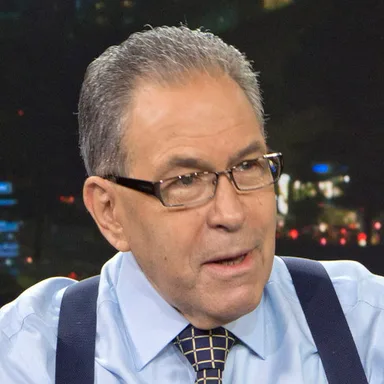
Michael Stoler Real Estate Expert
The Stoler Report with Michael Stoler: Cory Zelnik
Transcript
Automated transcript · uncorrectedFrom Christopher Nolan Te does mean you will come beat What if I kid this Friday?
Get your weapons ready the epic arrives. No one could stand between me and homes.
Matt Damon, Tom Holland, Anne Hathaway, Robert Pattinson, who Peter Yongo.
With Zendeia and Charlotte Sterren. Let’s job. The Odyssey in Cinema’s Friday book tickets now certificate fifteen.
A good morning. This is Mike Stoler for the Stolar rever Slave Report. What’s happening in retail? Interesting things that restaurants are completely booked, offices, people back to work at least forty five days a week, and retail is thriving in the city and around the nation. I have my friend Cory Zondich, who is the founder and CEO of
Zandicking Company, who’s going to be celebrating his fortieth anniversary over the years. So how has the retail changed over the last forty years?
Oh, thanks for having me, Michael. Always a pleasure.
You know, there’s there’s change and then this consistent sameness at all all together we see different things over the last certainly five seven years. The keyword with retail has been experiential. People want to go out and sort of feel and touch what they’re doing. Some of it is games and playing different activities. But at the same time,
even at the highest level in terms of UH good, I should say, like the Jewelry and the designer level Rimez Tiffany, their experiential is that they’ve all put cafes and restaurants within the stores, so they want to keep you in there. That’s that’s their experience within the shopping world.
So so with regard to that, you have Capital One, who’s done the similar thing.
Right, Capital great example.
So Capital One has Capital One Cafe and we’ve been around town monitoring that for one of the clients that we work with, and they bring in at their locations thirty and forty thousand people a week into their spaces really in and out, sit down, hang out, do some banking, do some coffee drinking, hang it, do some work, what
have you. And they’re taking, you know, bigger formats in terms of their retail space. I went, I actually went into one. Someone asked me to do them a favor at Capital One. I went to the one over on lekingson Avenue, and they’re designed similarly at most of their locations where you walk in, it’s the lounge area, it’s
the coffee area, and then the tellers are in the back, and so they’re well, they’re welcoming community, which, by the way, is a big word in retail. You ask about change, it’s about community. It’s about bringing people together again on an experiential level. The gym’s, you know, gm have been thriving post COVID. They got hit the probably the hardest
during COVID, but they’ve been thriving now. And a lot of these gyms do community related activities forty five to one. They do.
They have groups and it’s you know, back in the day it was classes, but now it’s about community.
Bring them together, work out together.
A lot of the place climbing gyms.
Climbing gyms, all of that stuff, and they do it and they sell it as community. And then from the gyms and then random things you see around the city they have run clubs. Now you know, we’ll meet at the corner you know of X and Y, and then let’s all go running together.
There are even.
Okay, so if they are going to the running club, what do they what do they need the specific place it’s.
Not it’s not that they need the specific place, but they utilize the place as a base.
So the gym is bringing.
Them together and so their name is involved and hope, you know, they get people to Joe and they come together.
Let’s talk about your clients. Who’s open upening up in Herald Square. Mumu, it’s interesting. Tell me a little bit about So.
Mumu was a company out of China. They are an offshoot of their corporate entity, which is Futu. If you tu, they are Chinese conglomerate, Chinese financial conglomerate. And what they’re doing with this Mummu is very similar to what you refer to with Capital One. They are going to be a cafe and you’re gonna sit there and drink coffee,
but you’re gonna have the ability to trade stocks.
The the design and.
The interior will have the various trading floors, uh you know, screens and the different markets.
And they have an app. It’s under Mumu.
You download the app, you have an account similar to Robinhood and Fidelity and.
Things like that. But you can sit there half coffee and trade.
How they decide to go to Herald Square.
When they were thinking about the city. They wanted as busy as possible and as visible as possible, And we spent some time in Times Square looking at some big billboard signs and things like that. Some of those rents ran very, very high. It was a combination of ground floor rent plus the signage and what they’re doing at
what the Jerome family’s doing with where we ended up is they’re adding a Times Square led sign to the exterior of the property that Mumma will have a portion of. So that lent itself to a tremendous amount of visibility.
And while there’s an argument made certainly that we took the thirty third Street corner versus the thirty fourth Street corner, it was important for them just the same to be a drop closer to Koreatown, which is at thirty second Street.
So the combination of all of that, and you know, you’re sitting right there at Greeley Square, it’s this tremendous, tremendous traffic.
Let’s talk about retail in Times Square these days. Sure, what’s happening new interesting companies out there.
There’s a lot of talk about some people coming. There haven’t been any major new signings of any type of new tenants. There’s been some pop up food related places that have come in.
The rents have come back.
We did some Like I said, we did some work from Mumu looking at some opportunities. The rents are creeping back to the fifteen hundred plus dollar a square foot rental. You always get tremendous visibility with the billboard signs, but there’s there’s a decent amount of large space available, but people are looking for smaller spaces and that’s a little
bit harder to come by.
Let’s talk about the restaurant business. I alluded at the beginning that you can’t get reservations, and I think you should tell me this story about Houston’s and so on.
Oh Houston’s which is now Hillstone, right. What happened was my listeners explain, Okay, so Houston’s became Hillstone a few years ago. They’re under the same corporate umbrella, and so they had changed the names a few years and at the time there were two of them. There were two Houston’s that became two Hillstones. The one at City Corps
Center eventually closed. They at least expired and they closed and they re basically rebranded the City Corps Center. With respect to the one that’s on Park Avenue South on twenty seventh Street.
It showed up on a list I was.
Looking at my TikTok feed as one of the top ten hardest restaurants to get a reservation in. For Hillstone, they do have one of the best burgers in town, I have to admit, and they’re extremely extremely popular. They will only take a reservation thirty days out.
I mean you call them a quick service before one degree higher than a.
One degree higher because the definition in the quick serve in the restaurant world, the QSR quick service restaurant is one where you do not have wader waitress. Okay, so Hillstone is wadeer waitress. So they are certainly a notch or two above that.
But in the world.
Of you know, for Charles and Trees and these other restaurants and that you can’t get in, Hillstone’s on that same list.
Talk about the restaurants that you can’t get in.
I mean you look at Ralph Lauren and his you know, Polo bar and things like that. That’s one of the places if you go online and you look at the screenshot of their availabilities, they’ll take you out four months four months. You can’t get a reservation locally, you can’t get into Fresco and Fresco is you know, they’re a
mainstay here in midtown Manhattan, and with the market coming back on the office side and the density that we have on a daily basis, you can’t get into these places for lunchtime.
What about food holes?
Food halls are going the way of the Dodo bird. There’s only a couple that are still hanging around.
What do you attribute that to?
I just think that they I can’t get into the management of it. I don’t know it well enough. I just think that there are a lot of startup brands that were in these places and they couldn’t make they couldn’t maintain the business. I think that there were times, you know, they all took a hit during COVID like
everybody else did, and they just never really seemed to bounce back.
Okay, let’s talk about the proliferation of the bagel store, because when you started business, especially in the garment center, they had a company called Bagel Nash Sure, Okay, and then they they expanded. They probably had as many as a dozen locations. Then they went bankrupt. They closed the operation.
What’s happening now, I mean there’s been a leading article in the Wall Street Journalist magazine New York Times about the bagel shops.
Yeah, there’s you know, over the last two three years, the unbelievable prolifer proliferation of these bagels with this pop up Bagels, Utopia Bagels, Tompkins Bagels. Uh, they just keep coming. There’s a one outside my office. It’s called Broad nush Okay, never heard of it, but it’s their third location and I look outside and there’s lines out the door. On
a daily basis pop up bagels there. You got about fifty locations now around the country, about ten here in the city. It’s called They go with a slogan of Rip and Dip. They sell you a minimum of three bagels at a time, So you get a bag of bagels and then you buy your dips, and they have
different flavors, Like you would go into it.
Can you buy bagels alone or you need to buy the dips?
Pop up? You got to buy the bagels.
Well, you could probably buy the bagels alone, but it’s all about the dips, which are their flavors. And you remember back in the day basket robins, thirty one flavors. That’s what they have with the cream, cheeses and the dips, and so they change them up on a regular basis, and so you buy it, you rip the bael, you
dip it in and you eat it. And that’s their thing.
What about the ice cream stores?
Ice cream stores, we haven’t seen much in the way of ice cream stores, but we have seen a growth of gelato stores, so that’s I guess that’s Italian ice cream. But we’ve seen a fair amount of those popping in and I think we’re just going to ride awave.
We’re going to ride a wave of some of these things. I think with respect to the.
Bagel stores, you know there’ll be some fall off, but this is what happens. We get streaky, We get streaky with a concept and we run it for as long as we can.
What about the pharmacies and the drug stores.
That ship is saaled. That ship is saled.
So what you’re going to see now is I mean, we’ve seen a continuation of them closing and downsizing and figuring it out. We certainly got over pharmacied here in the city. They were all in a race for the best corner and they did it, and this went on around the country. Walgreens sold out to private equity, so
they are changing their model. Dwayne Reid which was owned by Walgreens, so they started to step on their own toes. And what happened with that business is that it was always separated as front store and pharmacy, and they considered themselves convenience stores. They don’t even consider themselves pharmacies. The problem is is the front store that drew you it,
that brought you, brought, that brought you in is all available online. That’s all about Amazon. So that model is out the window. And what they’re you’re going to start to see is that I think CBS will be the first here in the city. Instead of the ten thousand foot box that they’ve all been taking, You’re going to
see a twenty five hundred square foot CBS pharmacy that I’ll sell a few other items, but their main focus will be the pharmacy. And so that’s how that’s going to change.
So what’s your outlook for retail for the end of the for the year twenty twenty six.
I think it’s going to continue to be strong. All the all of the main streets of the city are good. Space is hard, it’s hard to come by, grocery, gross, bigga. You’re going to still see that. You’ll see a handful of those type of tenants taking over some of those old pharmacies, and so you’ll continue to see that people
still need to eat. I think plenty of people are going to still want supermarkets can spend money and not like what Mamdami is planning to do, and so I think they’ll be fine. Mister Katsu Matids will still run a good, you know, grocery grocery business. But I think that what’s going to happen is the secondary markets will
still struggle.
I just like to thank Corey’s son for being here. Oh and I hope to have you back during the rest of the year.
I look forward to it.
Thanks again, Michael,
Sunday, June 14, 2026
Senate Campaign Centers on Growth, Safety and National Security
Michael Whatley Former RNC Chairman; nominee for U.S. Senate, North Carolina
U.S.-Canada Partnership Vital to North American Security and Prosperity
Kevin Cramer U.S. Senator from North Dakota
Preparing for the World Cup and America's 250th Anniversary
Andrew Giuliani Former Executive Director, White House FIFA World Cup 2026 Task Force

Global Crises Could Have Major Electoral Consequences at Home
Jim Gilmore Former Governor of Virginia
Iran Tensions and Fan Violence Raise Concerns
David Paterson Former Governor of New York
Corrupt Agenda in Albany Fuels New York's Affordability Crisis
George Borrello Senator from NY

New Book Explores the Faith and Ideals Behind America's Founding
Eric Metaxas #1 NYT Bestselling Author & Radio Host
Defending New York's Horse Carriage Industry Amid Renewed Scrutiny
John Samuelsen International President, Transport Workers Union

Protecting Data Ownership Through Sovereign AI Infrastructure
Brittany Kaiser Digital Rights Advocate & Author

Political Polarization Threatens America's Social Fabric
Hank Sheinkopf Political Consultant

Elon Musk's Wealth and Vision Drive a Historic SpaceX Milestone
John Catsimatidis Jr. President & COO, Red Apple Group

NY-12 Campaign Focuses on Public Safety, Affordability and Education
Caroline Shinkle Nominee for Congress, NY-12
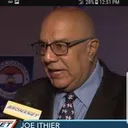
Celebrating the 69th Puerto Rican Day Parade and New York's Vibrant Puerto Rican Community
Joe Ithier Political Consultant & Community Leader

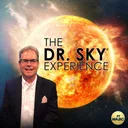
Hypersonic Flight, Martian Mysteries and the Legacy of Einstein
Steve Kates Space and astronomy broadcaster (Dr. Sky)
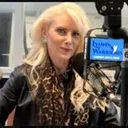
Internet Safety Month Highlights Growing Threats to Children Online
Lynn Shaw Founder of Lynn's Warriors
Michael Stoler
The Stoler Report with Michael Stoler: Eli Weiss and Andrew Albstein
Michael Stoler Real Estate Expert
The Stoler Report with Michael Stoler: Eli Weiss and Andrew Albstein
Michael Stoler Real Estate Expert
The Stoler Report with Michael Stoler: Robin Schneiderman
Michael Stoler Real Estate Expert
