


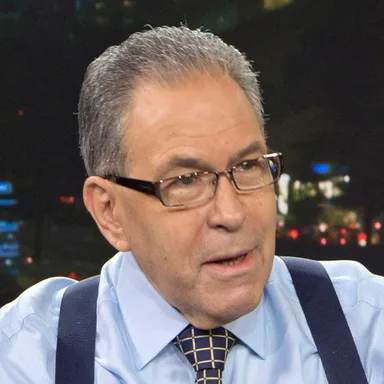
Michael Stoler Real Estate Expert
The Stoler Report with Michael Stoler: David Schechtman
Michael Stoler
Meridian Capital Group senior executive managing director David Schechtman tells Michael Stoler that nobody could have predicted the volume of New York City transactions, with huge demand across all asset classes to own a piece of the Big Apple. He says new benchmarks are being set for retail rents and restaurants are booming, while rising interest rates have led some buyers to retreat on price.
Key takeaways
- Schechtman said deal volume in his $10 million to $150 million range has been gangbusters.
- He said three-star and five-star hotel rates are rising, but perhaps not as much in the middle.
- He said that as a long-term bet, he doesn’t know that any sector is as solid as industrial.
- He said institutional sellers will likely still transact despite interest rates, but one-off family owners may not sell.
- He cited a colleague’s figure that 2.5% to 3% of city commercial property changes hands almost every year.
In their words
“Nobody could have predicted the volume of transactions in New York City”
“Industrial by its nature is going to continue to grow shoulder to shoulder with online commerce.”
“we’ve had a gradual interest rate hike, but now we’re starting to see some spikes.”
Quotes are word for word from the automated transcript, uncorrected; the summary and takeaways are editorial.
Transcript
Automated transcript · uncorrectedGood morning, this is Mike Stoler for the Stoler Real Estate Report. The real estate market is hot. Not hot, it’s boiling over there. And the market is blasting, doing well. So what’s really happening from an eye’s view of the real estate market in New York and even around the country?
I have David Sheckman, who’s the Senior Executive Managing Director at Meridian Capital and Meridian Investment Sales. Thanks for coming over here. You were here in March. What’s happened since March?
Boy, a lot’s happened since March, and it’s always a pleasure to be here. So brokers by nature are always optimistic, and we need to be. But you get to a certain age, and you become a little bit more pragmatic and a little less fluff and a little more substance.
Nobody could have predicted the volume of transactions in New York City, and I focus on the $ 10 million to $ 150 million range. It’s been gangbusters. And across all asset classes, there remains a huge demand to own a piece of the Big Apple, and everybody’s benefiting from it.
What pieces are doing better?
Well, I would say retail has seen an incredible resurgence, certainly from the zenith of several years ago. Post-pandemic, there was growth just of necessity as we took off the masks and got back on the streets and into the stores.
But there was a reset on values. And while renting activity picked up, rental rates didn’t necessarily move up that high because they had been really high just before the pandemic. What’s happening now is the volume remains. And because of the laws of supply and demand, the rental rates and new benchmarks are being set. Soho is white hot. even
Madison Avenue, which had become a little bit sleepy. I wouldn’t be surprised if in the next 24 months we start seeing new benchmark pricing there. Health and wellness, of course, beauty, food and beverage are probably leading the day. But we are seeing a fascinating phenomenon, which is retail, as we know, the internet and online sales will continue to dominate in
this country, and I think they’ll be the lion’s share of how goods are sold. But there has been a return to brick and mortar, and I think we’re seeing that nationally, but it’s really kind of centralized in the major CBDs. Do I think that we’re going to see a 15,000 square foot J.Crew or Gap anytime soon? I
don’t know if those days are going to return. But you certainly are seeing boutique and dry goods, tremendous demand for people to come and touch and feel as they buy.
What about the restaurant business?
Restaurant business I know for a fact is booming because as I entertain clients and friends and colleagues and as a resident of New York, I want to be out and about. And the greatest test that I can use is how difficult it is to get a reservation at some of the spaces I like to go. You’ve got
certain places going out weeks and weeks, and you can only get a high top at the bar on a random Tuesday. We have tremendous demand from the food and beverage industry, from casual fare and kind of grab-and-go all the way up to the white tablecloths. The numbers are fantastic.
What about the hospitality business, the hotels in general?
You know, the hospitality business in some ways has been a tale of two cities. you’re definitely seeing volume tick up and numbers tick up, but I think it’s becoming polarized. You’re getting the people who are traveling on a little bit more of a shoestring budget, and they’re really filling up your kind of three-star limited service hotels, and those
numbers are going up on an ADR, or average daily rate, for the hotels. And then the ultra hotels, the five-stars and the storied hotels, with the chandeliers, those numbers are going up. The middle is still packed and the numbers are there, but I don’t know if the average daily rate is climbing as much.
What about industrial?
Industrial had seen a kind of day crescendo. About two years ago, leasing volume fell off on the I-95 corridor. You saw a retreat from Amazon, which really has tremendous market share, but then everybody followed But what people don’t realize is it was a retreat from what was a 4X or a four times multiple of rents that had
been achieved just five or six years prior. So if in 2019 you were renting a warehouse at $ 10 a foot, by 2022 you were probably paying $ 50 a foot and that backed down to $ 40 a foot. Industrial by its nature is going to continue to grow shoulder to shoulder with online commerce. And logistics in general, as we become
more automated, there is going to be a need to store and deliver and distribute and coordinate goods closer to the bedroom communities. So I think as a long-term bet, I don’t know that any sector is as solid as that.
What about financing for properties?
Well, I prefer we don’t discuss financing right now, but I guess that’s what we’re here for. The banks are open. and across asset classes, loans are being made. Underwriting became stricter, certainly in the residential and rent-regulated world several years ago.
But even against that backdrop, what’s really affected recently, and it’s really been only the past four or five weeks, we’ve had a gradual interest rate hike, but now we’re starting to see some spikes. So case in point, In the past eight weeks, we finished up the broad marketing of a retail condominium down in Tribeca. And that is
a single tenant deal. When you buy those deals, it’s really a financial instrument. It’s a function of the rent and the programmatic growth in the rent pursuant to the lease.
Coupled with the credit of the tenant.
Completely coupled with the credit of the tenant. And then you determine a price. The market determines the price by how low will you go in the sense that some investors want to solve to a double-digit return, and some are happy with a lower return based on credit. So we kind of triangulated a price. A lot of the credible,
bona fide, and ready, willing, and able buyers have retreated in pricing, even after they’ve made their offers. And they came to us and they said, this isn’t a We’re not retreating on our price on a whim, and we value our reputation in the market. These are the buyers speaking, and we wouldn’t do this without good reason. It’s tied
to the interest rates. Fortunately, what we’re finding is the institutional sellers and the professional real estate families, those who have multiple properties and who they themselves are buyers sometimes and sellers other times, They recognize that these interest rates are going to affect the pricing we as brokers bring to them, so they likely will still transact. But when
you have a one-off owner in the boroughs selling a building that’s been in their family for 20 years, and you tell them just a year ago that it’s worth $ 20, it’s kind of tough to explain to them after a marketing process, well, we had people willing to pay $ 20, but now they’re willing to pay $ 17. and that’s tied
to interest rates. That may not result in a sale because that building may be the only property for those folks.
What about insurance companies and the agency financing?
They’re there, and they are putting out more and more money. We’re coming into Q4, so some of them may have fulfilled their annual mandate, and others are still looking to fulfill their annual mandates. They definitely are more discerning customers and a little bit pickier about what they are going to lend on. And if their numbers aren’t hit on
debt coverage, et cetera, et cetera, then they may not put out that money. But they are open for business. They, too, however, are affected by interest rates.
Last question. What do we see before the year end with regard to sales and everything else?
I think that or I know that just based on the pipeline and bid due dates, you’re definitely having an excellent year in New York City. One of our colleagues in the industry who’s a real statistician who you’ve hosted over the years always likes to remind us that in between two and a half and three percent of all
the commercial real estate in New York City changes hands almost every year. Now, keep in mind that’s all five boroughs, and this is anywhere from $ 5 million to a billion, so it’s varied in buildings. For years, 2019, 2020, even 2021, we fell well below that 2.5%, 3%. I think we’re going to return to normalcy on what’s actually changing hands.
And keep in mind, that’s not just good for sellers, buyers, and brokers. That means lawyers, accountants, appraisers, even building staff. There are going to be a lot more activities, and the real estate industry is going to throw off tons of revenue this year, and I think the future looks pretty bright for the near term.
I’d like to thank David Sheckman for being here today. Thank you.
Sunday, October 25, 2026
The Stakes of the Midterms and the Global Fight for Freedom
Rick Scott U.S. Senator from Florida
Putting America First and Cutting UN Bureaucracy
Mike Waltz U.S. Ambassador to the United Nations

Ending the Ukraine War and Securing Europe’s Borders
Matthew Whitaker U.S. Ambassador to NATO

Fighting Back Against Costly Regulations and Progressive Policies
Jeff Van Drew U.S. Representative from New Jersey

Obama, Trump and the Political Battle That Changed His Life
Rod Blagojevich Former Governor of Illinois
Outrage Over a Campaign Tactic and the Battle for the Midterms
David Paterson Former Governor of New York

Where Did New York City’s Common Sense Go?
Tony Carbonetti Former Chief of Staff to Mayor Giuliani

Fighting to Keep Tampa Free in a Competitive Florida House Race
Mike Beltran Former Florida State Representative; nominee for Congress, FL-14

Challenges of Medical Transparency and Statistical Analysis
Dr. Marc Siegel Physician; Fox News Senior Medical Analyst

Nuclear Tensions Rise as World Leaders Prepare for Critical Talks
Gordon Chang China Analyst & Author

The Political Map Is Shifting as Both Parties Battle for New Ground
Jesse Arm Vice President of External Affairs, Manhattan Institute

Albany’s Spending Spree Is Pricing New Yorkers Out
Paul Zuber Executive Vice President, The Business Council of New York State

Are Taxes and Safety Concerns Driving Buyers Away From NYC?
Suzanne Miller President, Empire State Properties; WABC Real Estate Analyst

Protests Across Europe Could Trigger a Right-Wing Wave
Jose Santamaria Chief Investment Officer, Fundamental Investment Services

Connecting NYC Property Owners With the Officials Who Can Help
Humberto Lopes Founder, Gotham Housing Alliance; CEO, H.L. Dynasty

Alien Encounters in Patagonia? The Mysteries Behind Sacrificing Humanity
Indy Pederson Author, 'Sacrificing Humanity'

Fighting Cancer and Aging With the Latest Medical Advances
Dr. Peter Michalos WABC Medical Expert

Russian Satellites Track U.S. Spacecraft as Japan Targets Mars’ Mysterious Moon
Steve Kates Space and astronomy broadcaster (Dr. Sky)

Washington Summit Puts Online Child Safety in the Spotlight
Lynn Shaw Founder of Lynn's Warriors
Michael Stoler
The Stoler Report with Michael Stoler: Eli Weiss and Andrew Albstein
Michael Stoler Real Estate Expert
The Stoler Report with Michael Stoler: Eli Weiss and Andrew Albstein
Michael Stoler Real Estate Expert
