


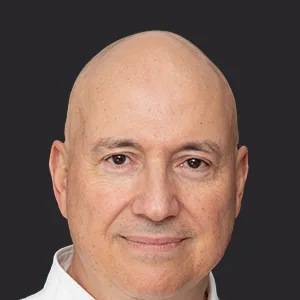
Dr. Peter Michalos WABC Medical Expert
Fighting Cancer and Aging With the Latest Medical Advances
Dr. Peter Michalos
WABC medical expert Dr. Peter Michalos tells John Catsimatidis that catching cancer early is part of living longer, since early diagnosis means a higher chance for a cure. He reviews screening for breast, colon and lung cancer, and says two of the first three people with blindness injected with OSK Yamanaka genes showed improvements in their peripheral vision.
Key takeaways
- Michalos said one in three people in the United States will get a cancer diagnosis in their lifetime.
- He said mammograms should start at 45, but can start at 40 with a family history.
- He said a new 3D CAT scan of the breast will probably prove more accurate than standard mammography.
- He said colon cancer is on the rise, especially in young people, and screening starts at 45.
- He said one company claims a breath test can detect lung and colon cancer with about 85% success.
In their words
“early intervention, early diagnosis means a higher chance for a cure.”
“two out of the three showed improvements in their peripheral vision and improvements in their retina.”
“it’s not about life span, it’s all about health span, living longer and healthier for many more years.”
Quotes are word for word from the automated transcript, uncorrected; the summary and takeaways are editorial.
Transcript
Automated transcript · uncorrectedSunday morning. Well, live long and prosper. Dr. Peter Michalos is back from the Greek islands, and he has a lot of revelations of how we’re going to live longer and prosper at the same time. Well, Dr. Peter Michalos, give us your answers for this Sunday morning. Well, John, living longer also involves prevention, and cancer prevention is one
of the biggest issues. For example... Smoking in European women is rampant right now, and they used to have some of the lowest cancer rates in the 1950s, and now they have some of the highest cancer rates for lung cancer in the world. So that’s why part of living long and prospering and... anti-aging is catching cancer early because
early intervention, early diagnosis means a higher chance for a cure. And in the United States, one in three people in their lifetime will get a cancer diagnosis, whether it’s a skin cancer or other types of cancer. So it’s so important to do cancer screening. And now that we have a great awareness of breast cancer, it’s so important for
women to do their self-exams where they’re in the shower. And if they feel something abnormal, they should right away report that. But mammography should begin screening at age 45. If you have a family history of breast cancer, you can even start earlier at 40. One of the things that scares women away from mammography is that the way
the mammogram machine works, it clamps and compresses the breast, and people find it uncomfortable and painful. There’s an amazing new advance. And it’s called Pink. And what they do is they develop a scan where it’s just two holes on a table. The woman lies flat. The breasts are suspended freely. And a 3D CAT scan does it without
distorting the breast. And it’s probably going to end up being more accurate. than standard mammography, and that’s one of the great new advances, and it’s the same amount of radiation as a mammogram. And if a woman has dense breasts, they can even do MRIs now on breasts and even ultrasound for more details. The next one, big one, is
colon cancer. And colon cancer has been on the rise, especially in young people. And 45 is the screening age. And the gold standard is still colonoscopy, where the doctor has basically a soft telescope that goes up and sees the entire colon, see if there’s any polyps that are cancerous, and remove them. If you’re afraid of doing that, they
do have a poop test now where you send off a sample and any shedding tumor shows up in that sample. And that’s a colo-guard test. And many people are opting for that now, especially if they’re over 75 or 80 and they don’t want to risk any type of anesthesia or any type of procedure. So that’s another option. The
other one is lung cancer. And if you’re a smoker, definitely they have these low dose radiation CAT scans. Now you can do it age 50, especially if you have a history of being a smoker. Some people who are heavy smokers or have a strong family history are considering it even earlier. Or those who work, for example, around
asbestos or the people who are around 9-11 who have higher risk for these things. And these new machines are quite amazing. And the, uh, The other thing we have are amazing new tests, like a blood test that can check for 50 cancers, like CancerGuard, where basically when a tumor starts showing up microscopic amounts in the blood, it
picks it up with a blood test. And the other thing is a company called Rua Diagnostics, they’re claiming they can pick up lung cancer and colon cancer with about an 85% success rate just from breathing into a machine.
And through breath analysis, they can pick up the colon cancer or the lung cancer. And that’s going to be non-invasive, no needles, no scans, no radiation. So that will be an amazing addition if that pans out in the next few years. And on the other exciting front to follow up what we talked about with the Yamanaka genes and
OSK genes for partial epigenetic reprogramming, the results from the June 6th injection of the first three people with blindness came out, and two out of the three showed improvements in their peripheral vision and improvements in their retina. So now they’re going to be injected with another round of these OSK Yamanaka genes. So that study is moving forward,
and that’s probably one of the biggest stories in medicine in the last hundred years that we can actually reprogram ourselves and tell them to go back to a younger stage. So all these people who have glaucoma, retinitis pigmentosa, damaged retinas from diabetic retinopathy will have a possibility of getting their eyesight back in the next few years with this
advancement and this study. that is moving forward. And that’s why so many people have pumped so much money into these Yamanaka factors. It’s on the cover of Time magazine as well. And you can read more about this whole situation and all information in my new book, The Death of Aging on Amazon, which covers all this amazing new
technology to live long and prosper and all the different stories we cover. here on WABC to help people have a healthier life and health span, because it’s not about life span, it’s all about health span, living longer and healthier for many more years. Well, thank you, Dr. Peter Michlos, and I’ll meet you at the age of 100, maybe 110.
God willing, John, and it’s amazing to live in this exciting time with all these great advances coming out of the United States of America, the greatest country in the world. Thank you so much.
Sunday, October 25, 2026
The Stakes of the Midterms and the Global Fight for Freedom
Rick Scott U.S. Senator from Florida
Putting America First and Cutting UN Bureaucracy
Mike Waltz U.S. Ambassador to the United Nations
Ending the Ukraine War and Securing Europe’s Borders
Matthew Whitaker U.S. Ambassador to NATO

Fighting Back Against Costly Regulations and Progressive Policies
Jeff Van Drew U.S. Representative from New Jersey

Obama, Trump and the Political Battle That Changed His Life
Rod Blagojevich Former Governor of Illinois
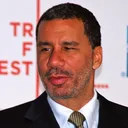
Outrage Over a Campaign Tactic and the Battle for the Midterms
David Paterson Former Governor of New York

Where Did New York City’s Common Sense Go?
Tony Carbonetti Former Chief of Staff to Mayor Giuliani
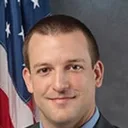
Fighting to Keep Tampa Free in a Competitive Florida House Race
Mike Beltran Former Florida State Representative; nominee for Congress, FL-14

Challenges of Medical Transparency and Statistical Analysis
Dr. Marc Siegel Physician; Fox News Senior Medical Analyst

Nuclear Tensions Rise as World Leaders Prepare for Critical Talks
Gordon Chang China Analyst & Author
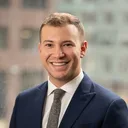
The Political Map Is Shifting as Both Parties Battle for New Ground
Jesse Arm Vice President of External Affairs, Manhattan Institute
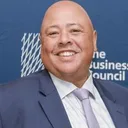
Albany’s Spending Spree Is Pricing New Yorkers Out
Paul Zuber Executive Vice President, The Business Council of New York State

Are Taxes and Safety Concerns Driving Buyers Away From NYC?
Suzanne Miller President, Empire State Properties; WABC Real Estate Analyst
Protests Across Europe Could Trigger a Right-Wing Wave
Jose Santamaria Chief Investment Officer, Fundamental Investment Services

Connecting NYC Property Owners With the Officials Who Can Help
Humberto Lopes Founder, Gotham Housing Alliance; CEO, H.L. Dynasty

Alien Encounters in Patagonia? The Mysteries Behind Sacrificing Humanity
Indy Pederson Author, 'Sacrificing Humanity'
The Stoler Report with Michael Stoler: David Schechtman
Michael Stoler Real Estate Expert
Russian Satellites Track U.S. Spacecraft as Japan Targets Mars’ Mysterious Moon
Steve Kates Space and astronomy broadcaster (Dr. Sky)

Washington Summit Puts Online Child Safety in the Spotlight
Lynn Shaw Founder of Lynn's Warriors
Dr. Peter Michalos

Cutting-Edge Strategies for Extending Human Health and Longevity
Dr. Peter Michalos WABC Medical Expert
Advances in Lung Cancer Detection and Personalized Treatment
Dr. Peter Michalos WABC Medical Expert
Healthy Eating, Stronger Immunity and the Science of Living Longer
Dr. Peter Michalos WABC Medical Expert
Limiting Sugar and Choosing Whole Foods to Support Healthy Aging
Dr. Peter Michalos WABC Medical Expert
