


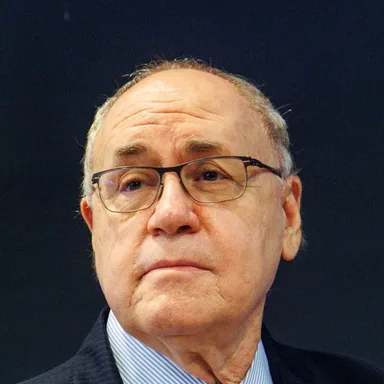
Dr. Marc Siegel Physician; Fox News Senior Medical Analyst
Challenges of Medical Transparency and Statistical Analysis
Dr. Marc Siegel
Fox News senior medical analyst Dr. Marc Siegel tells John Catsimatidis that a claim John sent him, that Moderna’s data does not back up results for an mRNA melanoma vaccine, points to a larger issue: transparency in research. He says the original data is key, lists what to ask of any study, and says it is unknown whether nitrates in Iowa water are converting into something that could be carcinogenic.
Key takeaways
- Siegel said NYU authors of the melanoma study he spoke to are actually excited about it.
- He said the best scientists don’t look at press releases and that the original data is key.
- He said readers of a study should ask about bias, blinding, cherry-picked data and who was excluded.
- He agreed with John that swordfish is a problem, saying people are eating it way too much.
- He said the news came back that the Pope is clear.
In their words
“it points to a larger issue, which is transparency in research.”
“Was the data cherry-picked? Who was in the study? Who was excluded from the study? And what else could have caused the result?”
“We don’t know if the nitrates are converting into something that could be carcinogenic or not.”
Quotes are word for word from the automated transcript, uncorrected; the summary and takeaways are editorial.
Transcript
Automated transcript · uncorrectedWell, lots of things are happening in the medical world. With us today is Dr. Mark Siegel. And, Dr. Siegel, what the heck is going on?
Well, one of the things that is going on that you sent to me is that the inside data or data from Moderna doesn’t back up the results that were shown on the mRNA vaccine against melanoma, which is interesting because I spoke to some of the authors on that study recently. that were even here at NYU, and they
actually are excited about it. But it points to a larger issue, which is transparency in research. You know, how do we know that the information we’re getting on clinical trials is accurate? And we always worry about that, and we’re always suspicious about that. And that’s why the best people in the world that study science don’t look at
press releases, don’t look at what they write in People magazine. They only look at two things. Three things. Fox News, what John Katsimatidis says on the radio here with Siegel, and the original data itself. The original data is key.
And tell us, so you think that we don’t have all the information yet to make a decision?
We don’t, and we never do. And that brings to mind another issue is, do we know how to read studies? Who’s talking to us, and do they know how to read studies in the first place? You know, I actually took biostatistics when I was a resident with one of the most boring, blow-tied guys that you’re ever going to meet.
You and me, John, would have dinner with this guy. His name was Thompson. We would have dinner with him, and we would fall asleep at the table. But he made some great points. How many people are studied? How were they studied? Was there a bias? Was it truly double-blinded, or did the investigators actually know what they were getting into?
Was the data cherry-picked? Who was in the study? Who was excluded from the study? And what else could have caused the result? Dr.
Mark Siegel, you know what you remind me of? The pollsters in today’s polls that are polling what’s going to happen in the election.
Well, and because they’re actually, well, speaking of cherry-picking, right, the people in the polls, the pollsters today are actually leaving out a huge factor, which is the Donald Trump factor, because of his great national charisma. That’s a factor. And then they’re assuming that people that are going to back Democrats are going to accept ultra-socialists who are anti-Israel. You know,
they somehow got that to happen here in New York City, which I don’t understand. Do you understand how that happened here in New York City, John?
No, tell us.
No, I’m saying I don’t know how we have this current mayor. I mean, I don’t think we’re going to have free buses. We’re certainly not going to have free supermarkets. We all have to go to Gristini’s. We don’t believe when people say they’re not anti-Semitic that might actually be.
that have different biases or different backgrounds. I think it is relevant if you have a relative that’s on a no-fly list, by the way. I think that that’s relevant. I’m wondering how people are looking at facts. And that’s another issue. That’s not the clinical trial issue, but that’s how we look at facts. We have that going on
in Iowa right now. I just did a big op-ed on this issue of what’s in the water. And everybody’s saying, well, the water worries us in Iowa because of spillover from corn or spillover from soy or spillover from hog farming.
We’re worried about the water. We don’t know if the nitrates are converting into something that could be carcinogenic or not.
Well, I’ll tell you what I found out. I was drinking a certain water, and I don’t want to mention it on the air because my friend owns the company. I was drinking the water, and And when I started drinking it until I stopped drinking it, my arsenic count went from normal, which is 1 to 12, and went
up to 31. I stopped drinking it. Within 3, 4, 5 months, it went back down to 12.
No, I totally believe that. And by the way, that applies to kosher chickens as well. I actually, I’m not fully kosher. Sometimes I am, but I don’t necessarily only eat that. But some of the kosher chickens are washed in arsenic. And my wife, who you know, my wife, who you know well. and think the world of, and
she thinks the world of you, is a top neurologist that tests a lot of people that are having tremors or memory issues for arsenic content, and she finds it a lot of the time. And, you know, people are eating a lot of tuna fish coming out of cans without knowing and not thinking about it. So I’m not
saying I’m against that. I love tuna fish, by the way. Let me tell.
You something else, too. We went to a dinner at the Hilton Hotel last week. And we had 500, 600 people. And you know what they served us? They served us swordfish, which is the richest one in Mercury. And I started yelling at the people running the dinner.
Yeah, and that’s also not usual. That usually is third in line behind the good filet mignon, right? So I don’t know how that even happened.
Swordfish of all things?
I agree with you. I agree with you. Swordfish is a problem. It tastes good, but it’s totally a problem. And people are eating it way too much.
Well, Dr. Mark Siegel, thank you. Anything else you want to say?
Yeah, I want to talk about the Pope. And I want to tell you that I’m really happy with the outcome here. And, you know, it’s an interesting thing about the news cycle. that things end and you don’t hear about them afterwards. We were hoping and praying for the Pope and that he wouldn’t have any cancer in his
lymph nodes and that they got it all out. And everybody in the world is praying for this man because he’s really a great Pope and healthy before this. And the news came back yesterday. He’s clear. The Pope is clear.
And now we hope and pray for decades of good health with this Pope.
Maybe God is watching over him. You know, the pope and the patriarch and the chief rabbi, they’re pretty close to God.
Yeah, this particular pope is pretty close to God. And you are always introducing me to rabbis who are close to God, too, as well as great priests at your breakfast, you know, with the Greek church. And so, you know one thing I learned? I learned that it isn’t one religion.
It’s symbols that cross lines. I think you know, because you were involved with this, but when I lost my father early in the year, a pair of geese visited me on my front lawn, on my back lawn in Sag Harbor in January. And I said, what are these geese doing here? And then I started reading about geese,
and these were wild Irish geese, which is a symbol for the Holy Spirit. And my father ended up passing on St. Patrick’s Day. So I know those geese were coming to send me a message. And that wasn’t a matter whether I was Jewish or Catholic or whatever I was.
The message was strong, and the message was the same. That’s in my new book, The Angels Among Us, by the way, which— John and I are going to be celebrating together.
Thank you so much, Dr. Siegel, and we’ll catch up with you again real soon.
Thanks, John. Thanks for having me.
Sunday, October 25, 2026
The Stakes of the Midterms and the Global Fight for Freedom
Rick Scott U.S. Senator from Florida
Putting America First and Cutting UN Bureaucracy
Mike Waltz U.S. Ambassador to the United Nations
Ending the Ukraine War and Securing Europe’s Borders
Matthew Whitaker U.S. Ambassador to NATO
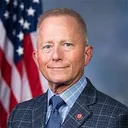
Fighting Back Against Costly Regulations and Progressive Policies
Jeff Van Drew U.S. Representative from New Jersey
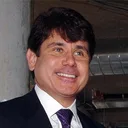
Obama, Trump and the Political Battle That Changed His Life
Rod Blagojevich Former Governor of Illinois
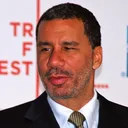
Outrage Over a Campaign Tactic and the Battle for the Midterms
David Paterson Former Governor of New York

Where Did New York City’s Common Sense Go?
Tony Carbonetti Former Chief of Staff to Mayor Giuliani
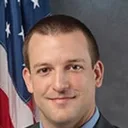
Fighting to Keep Tampa Free in a Competitive Florida House Race
Mike Beltran Former Florida State Representative; nominee for Congress, FL-14

Nuclear Tensions Rise as World Leaders Prepare for Critical Talks
Gordon Chang China Analyst & Author
The Political Map Is Shifting as Both Parties Battle for New Ground
Jesse Arm Vice President of External Affairs, Manhattan Institute
Albany’s Spending Spree Is Pricing New Yorkers Out
Paul Zuber Executive Vice President, The Business Council of New York State
Are Taxes and Safety Concerns Driving Buyers Away From NYC?
Suzanne Miller President, Empire State Properties; WABC Real Estate Analyst
Protests Across Europe Could Trigger a Right-Wing Wave
Jose Santamaria Chief Investment Officer, Fundamental Investment Services

Connecting NYC Property Owners With the Officials Who Can Help
Humberto Lopes Founder, Gotham Housing Alliance; CEO, H.L. Dynasty

Alien Encounters in Patagonia? The Mysteries Behind Sacrificing Humanity
Indy Pederson Author, 'Sacrificing Humanity'
The Stoler Report with Michael Stoler: David Schechtman
Michael Stoler Real Estate Expert
Fighting Cancer and Aging With the Latest Medical Advances
Dr. Peter Michalos WABC Medical Expert
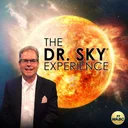
Russian Satellites Track U.S. Spacecraft as Japan Targets Mars’ Mysterious Moon
Steve Kates Space and astronomy broadcaster (Dr. Sky)
Washington Summit Puts Online Child Safety in the Spotlight
Lynn Shaw Founder of Lynn's Warriors
Dr. Marc Siegel

“The Angels Among Us”: Miracles, Visions and Unbelievable Coincidences
Dr. Marc Siegel Physician; Fox News Senior Medical Analyst
COVID-19 Origins and the Case for Greater Transparency
Dr. Marc Siegel Physician; Fox News Senior Medical Analyst
Modern medicine will astound people.
Dr. Marc Siegel Physician; Fox News Senior Medical Analyst
Socialized medicine, pathway to poor care.
Dr. Marc Siegel Physician; Fox News Senior Medical Analyst
Diet drugs, Ozempic and Wegovy. Side effects
Dr. Marc Siegel Physician; Fox News Senior Medical Analyst
