


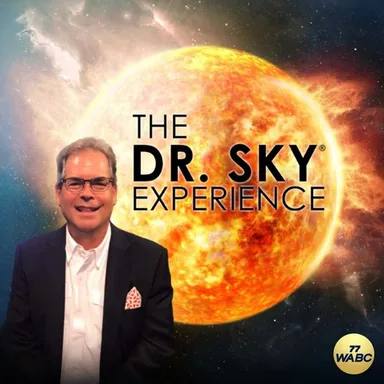
Steve Kates Space and astronomy broadcaster (Dr. Sky)
Russian Satellites Track U.S. Spacecraft as Japan Targets Mars’ Mysterious Moon
Steve Kates
Space and astronomy broadcaster Steve Kates, known as Dr. Sky, tells John Catsimatidis that a Russian satellite, Cosmos 2612, has closed in on a U.S.-registered imaging satellite that Ukraine has used. He says Japan’s mission to the Martian moon Phobos may bring material back to Earth sometime after 2030. He says the new Tesla Roadster does not truly fly, using high-pressure cold gas thrusters instead.
Key takeaways
- Kates said a Russian satellite closed in on a U.S.-registered imaging satellite, allegedly to spy on it.
- He said another Russian satellite came very close to a so-called secret U.S. satellite in 2020.
- Kates said the Japanese spacecraft will deploy a little rover to the surface of Phobos.
- Kates said the new Tesla Roadster can hop, jump and move forward, but not fly.
In their words
“This is an imaging satellite that the Ukrainians have used to be able to detect Russian activity.”
“the first time, John, that we’re going to actually get something from that area of Mars”
“The new Tesla Roadster does not truly fly, John.”
Quotes are word for word from the automated transcript, uncorrected; the summary and takeaways are editorial.
Transcript
Automated transcript · uncorrectedSteve Cates is with us. Well, also known as Dr. Sky. And one good friend, one smart guy. And give us an update. What’s going to tickle our minds today, Steve Cates?
Well, I got a lot, John. Good Sunday morning to you and the listeners. How about this? A Russian satellite is confirmed to stalking another satellite. What’s that all about? Russian satellite called Cosmos 2612 has closed in, John. on a surveillance satellite that’s U.S. registered. It’s called ICI-X36. This is an imaging satellite that the Ukrainians have used to
be able to detect Russian activity. So this particular Cosmos 2612, John, has come probably within 100 feet of this particular satellite to allegedly spy on it. But this is not the first time that this has happened. In 2020, Another Russian satellite called Cosmos 2542 actually came very close to one of our so-called secret satellites, USA 245. So this is
quite an interesting thing, because the satellite that’s being spied on, the one that we just talked about, the first one, it uses, John, something called synthetic imaging radar. What is that? It’s radar that penetrates deep below the Earth. So the Ukrainians have been using this to fight against Russia. That’s an interesting story of proof that we’re now having the
prelude to some surveillance in outer space by satellites.
Well, you know, the Space Force that President Trump has launched has some interesting... I hear there’s some very interesting aircraft up there, or craft, not aircraft, because aircraft is for air. Craft is, I guess, for space. And with some interesting weapons... and I hear that we’re doing a good job protecting America and the free world.
Absolutely, John, and it’s been identified by the Secretary of the Air Force and others, even Raging Kane, our general who heads, of course, the entire military, that apparently America has some sort of weapons in space. But, John, here’s a great story. We shift gears. Japan’s Martian moon exploration mission.
You and I love to talk about Mars. So it was launched last week. And what it is, John, it’s a spacecraft headed to one of the moons of Mars called Phobos.
Is that the one that supposedly shot down the other probe? Yes.
And this is an interesting continuation of the story, John, because nobody really knows what the nature of Phobos and the other moon called Deimos. And Phobos is only 12 miles in diameter, John. And it has a crater... on it called Stinkney that’s about nine miles across. So whatever that means, how this little moon was formed, but why
is this an important news story? This is the first time, John, when this spacecraft reaches this particular moon in August of 2027, it will then deploy a little rover down to the surface to scoop up some material and bring it back to Earth maybe sometime after 2030. So the first time, John, that we’re going to actually get something from that area
of Mars and the strangest moon, because over the next few million years, that Phobos, John, is going to literally run in and crash onto the surface of Mars.
Only if the Martians allow us to get it.
Absolutely, John. And we end off with the mystery of the week. And this has been in the news, John, but it needs further clarification. The question is, how does the new Tesla Roadster, a so-called flying car, actually work?
And this is fascinating. The new Tesla Roadster does not truly fly, John. Instead, it uses high-pressure cold gas thrusters, a large tank or two made out of composite materials. And what happens on this, John, it also has the capability to fire those little so-called rockets with air. And it also has the capability, as many saw when they
saw the demonstration of this car upside down, I thought it was fake, I thought it was AI, but it was real. It also has the ability to have vacuum suction in the form of some two Gs of force to hold something upside down. But the real truth, John, is it’s only something that can hop and jump and
move forward, but not fly, as we saw in Back to the Future, when the classic line of the doc, as many people remember the great trilogy of those movies, he said to his partner in the car, and I quote, where we’re going, they don’t need roads. So lots of mystery around this Tesla car. I wonder, John, how much
that thing would cost. But how could you use it in traffic? And if many people have them, you might have some mid-air collisions, you think?
Well, you know, I think of flying cars. I think of the Jetsons 50 years ago, 60 years ago.
Well, if we can perfect that. There’s other companies out there, John, that are perfecting the true drone-type technology for cars. But again, who’s going to manage the skyways instead of the roadways? That’s another subject for another time.
Well, the FAA has not done a good job lately, even with aircraft.
I would totally agree with you, John, as we conclude Sunday morning here with many of the things that people probably don’t hear about. And we try to bring them together to open our minds about great mysteries and current events that we thought are important.
Steve Cates, otherwise known as Dr. Sky. Thank you so much for coming on. And I listened to you at, uh, uh, midnight to 2 AM on, uh, Saturday morning and midnight to 2 a.m. Sunday morning. And thank you so much, and we’ll talk again soon.
Thank you, John. Have a good Sunday, and thanks to the listeners.
Sunday, October 25, 2026

The Stakes of the Midterms and the Global Fight for Freedom
Rick Scott U.S. Senator from Florida

Putting America First and Cutting UN Bureaucracy
Mike Waltz U.S. Ambassador to the United Nations

Ending the Ukraine War and Securing Europe’s Borders
Matthew Whitaker U.S. Ambassador to NATO

Fighting Back Against Costly Regulations and Progressive Policies
Jeff Van Drew U.S. Representative from New Jersey

Obama, Trump and the Political Battle That Changed His Life
Rod Blagojevich Former Governor of Illinois
Outrage Over a Campaign Tactic and the Battle for the Midterms
David Paterson Former Governor of New York

Where Did New York City’s Common Sense Go?
Tony Carbonetti Former Chief of Staff to Mayor Giuliani
Fighting to Keep Tampa Free in a Competitive Florida House Race
Mike Beltran Former Florida State Representative; nominee for Congress, FL-14

Challenges of Medical Transparency and Statistical Analysis
Dr. Marc Siegel Physician; Fox News Senior Medical Analyst

Nuclear Tensions Rise as World Leaders Prepare for Critical Talks
Gordon Chang China Analyst & Author

The Political Map Is Shifting as Both Parties Battle for New Ground
Jesse Arm Vice President of External Affairs, Manhattan Institute

Albany’s Spending Spree Is Pricing New Yorkers Out
Paul Zuber Executive Vice President, The Business Council of New York State

Are Taxes and Safety Concerns Driving Buyers Away From NYC?
Suzanne Miller President, Empire State Properties; WABC Real Estate Analyst

Protests Across Europe Could Trigger a Right-Wing Wave
Jose Santamaria Chief Investment Officer, Fundamental Investment Services

Connecting NYC Property Owners With the Officials Who Can Help
Humberto Lopes Founder, Gotham Housing Alliance; CEO, H.L. Dynasty

Alien Encounters in Patagonia? The Mysteries Behind Sacrificing Humanity
Indy Pederson Author, 'Sacrificing Humanity'

The Stoler Report with Michael Stoler: David Schechtman
Michael Stoler Real Estate Expert

Fighting Cancer and Aging With the Latest Medical Advances
Dr. Peter Michalos WABC Medical Expert

Washington Summit Puts Online Child Safety in the Spotlight
Lynn Shaw Founder of Lynn's Warriors
Steve Kates
What Martian Meteorites Tell Us About the Origins of Life
Steve Kates Space and astronomy broadcaster (Dr. Sky)
The Bizarre Natural Phenomena That Continue to Puzzle Scientists
Steve Kates Space and astronomy broadcaster (Dr. Sky)
Deep-Space Mysteries, UFOs and the Orionid Meteor Shower
Steve Kates Space and astronomy broadcaster (Dr. Sky)
The Mysteries of Mermaids, El Niño and the Antarctic Ice
Steve Kates Space and astronomy broadcaster (Dr. Sky)
Exoplanet Radio Signals, SpaceX’s Heavy Rocket Test and Nuclear Propulsion
Steve Kates Space and astronomy broadcaster (Dr. Sky)
Supersonic Jets, SpaceX’s Next Starship Launch & Trump’s Golden Dome Defense System
Steve Kates Space and astronomy broadcaster (Dr. Sky)
