


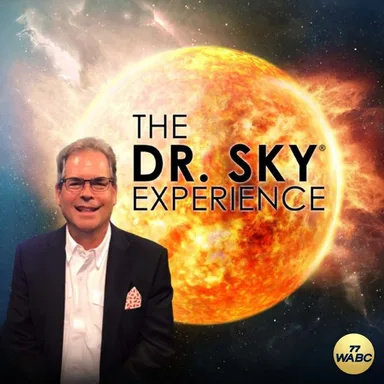
Steve Kates Space and astronomy broadcaster (Dr. Sky)
The Mysteries of Mermaids, El Niño and the Antarctic Ice
Steve Kates
Space and astronomy broadcaster Steve Kates, known as Dr. Sky, tells John Catsimatidis why October, the eighth month of the original Roman calendar, is now the 10th, and why the mermaids Columbus reported in 1493 were most likely manatees. He describes Kelvin waves, underwater waves of heat that come with a super El Niño, and speculates about what may lie beneath Antarctica’s ice.
Key takeaways
- Kates said January and February were added around 700 B.C., but October kept its name.
- He said Emperor Domitian wanted October renamed Domitianus, but the name was not popular.
- Kates said Columbus logged his mermaid sighting near today’s Dominican Republic on Jan. 9, 1493.
- He said a super El Niño, which comes perhaps every 10 or 20 years, is building now.
- Kates said Antarctica covers 5.5 million square miles, against a little over 3 million for the continental U.S.
In their words
“Roman Emperor Domitian tried to change October to call it in his own honor.”
“So what he actually probably saw, and this is interesting, it’s in one of his logbooks, he actually probably saw something called manatees.”
“Kelvin waves, John, are these underwater waves of heat.”
Quotes are word for word from the automated transcript, uncorrected; the summary and takeaways are editorial.
Transcript
Automated transcript · uncorrectedSunday morning with us is, well, Dr. Sky, otherwise known as Steve Cates. And, well, Steve, it’s Sunday morning. We talk every Sunday. You’re on Fridays night, which is Saturday morning from midnight to 2 a.m. And Sunday night, well, not Sunday night. It’s Saturday night, Sunday morning from midnight to 2 a.m. Tell us, what ideas do you have today?
Well, John, good morning. Happy Sunday. And as we move deeper into October, here comes a couple of interesting questions. Why was October originally the eighth month of the year? Well, we know it as the 10th. Well, the Latin prefix oct, O-C-T, of course, means eighth. And in ancient Rome, John, the calendar had 10 months, and it began in March and
ran until December. Then they were adding January and February. They added it to the calendar, those months in 700 B.C. But it gets more interesting. Julius Caesar introduced the Julian calendar, of course, 45 BC. And since January and February were added to the calendar, the old name October was then still kept as the 10th month of the year, which
is weird. But here we go. Why is it also a controversy? Roman Emperor Domitian tried to change October to call it in his own honor. They wanted to call October Domitianus But that was not very popular with people.
So there’s been so many changes in the calendar. Interesting historical side of the story of calendars. But, John, as we move into the weekend of Columbus Day, here’s an interesting story. And it’s actually kind of true, whatever that means.
Did Columbus actually see mermaids? Well, John, on January 9th, 1493, Columbus was sailing to the New World near the Dominican Republic, as we know today. and the mouth of a river called the River of Gold. And one of his books that he wrote, one of the actual transcriptions, he mentioned sighting of mermaids. Well, John, that’s kind of bizarre, maybe,
we think of it in modern terms, which was the crew, of course, was very tired. They wanted food. They wanted shelter. So what he actually probably saw, and this is interesting, it’s in one of his logbooks, he actually probably saw something called manatees. These are creatures that swim in the ocean.
They’re rather large. And from his perspective, John, they could have looked indeed like beautiful mermaids on the shore. So it’s quite interesting as we mark the celebration of Columbus Day. Interesting story.
It’s been said that Columbus was also seeing, well, whatever you want to call them, UFOs in the sky. Absolutely. Absolutely. So who knows what he saw?
Yeah. Well, John, you’re right. But going into Greek mythology, as you probably know better, Odysseus in Homer’s Odyssey, they obviously passed a certain location where the so-called sirens were. Well, these were bird women. And to prevent the men from going crazy, they put wax in their ears and tied themselves to the mast. But actually, John, if you look
at manatees, they’re under a category of animal called sirenia, which also comes from sirens. The story is fascinating, John. But, of course, with Columbus, he also, not only being a navigator, he was also an early astronomer. And he helped map out so many of the wonders that we now know and take for granted in the world of astronomy. But, John,
we saved the best for last. Mystery of the week. What are Kelvin waves? Why are we talking about this, John? Because right now we’re seeing a total increase in something called the super El Nino. So every so often, maybe every 10, 20 years when El Nino starts to fire itself up, Kelvin waves, John, are these underwater waves of heat. Now,
they never break the surface. So if you were sitting on the coastline, you would never see it. You know, it’s not the thing that surfers would want. But they’re deep underwater waves, John, that could be hundreds of miles long.
And what we’re saying in simplicity terms here is that when the lunar high tide is going to occur and some of these Kelvin waves can hit the coast, You, of course, would see a, well, maybe not a super dramatic rise in the ocean. But isn’t that interesting, John, for people who navigate submarines? There’s a whole other thing
to be watchful under there. And these move at pretty good speed. Kelvin waves. Amazing. Wow.
Any other mysteries? I mean, the other thing, the other big mystery is these UFOs that we all see up there. And we also talked about the possible that they live in inner Earth. both on the East Coast with the entrance through wherever Bermuda-type situation is, and on the West Coast where they lost all those UFOs going underwater. There’s
also UFO-type things that go 300 miles an hour underwater. Yes, John.
You’re absolutely right.
Well, that’s a great mystery, and we should dig into it deeper. But here’s what I can tell the audience on this great Sunday morning. that many submarines, not only United States naval vessels, but other nations, witnessing things on sonar that, as you reported, traveling hundreds of knots underwater, not something that we have technologically. But John, one of
the great answers that I think we’ll have to dig into deeper is the great continent of Antarctica. And if you were to look at the size of Antarctica, you see it on maps, and it always looks like it’s this big, gigantic area down there that doesn’t have any definition.
It’s 5.5 million square miles. The whole United States, continental U.S., John, is a little over three-some million square miles.
Wow, I don’t think people realize that.
It is, John. It’s incredible. And the answer that I would give today, not knowing it specifically, maybe a little more like speculation for doing research, is that what might have been or might still be underneath the surface of the two-mile ice because we know there’s actually forests that are buried under there. So the great history that we
really don’t know about, maybe ancient civilizations did live there. And who knows, John, it would be a perfect parking place if I was an alien technology person or coming from another star system. It might be a nice place to hide out because a lot of people, of course, as we know, do not regularly go to Antarctica. How
about that?
Well, there’s something going on in Antarctica, and I can’t tell you everything I know, but we’ll talk about it someday.
Absolutely, John. And again, happy Sunday to everyone as we move on to Columbus Day weekend. God bless.
Sunday, October 11, 2026
Protecting America From Foreign Threats and Winning the AI Race
Jay Clayton Director of National Intelligence
Unleashing American Energy Dominance Through Sweeping Deregulation
Lee Zeldin EPA Administrator
Protecting Florida's Prosperity From Progressive Policies
Ashley Moody U.S. Senator from Florida

Fighting Inflation, Cutting Taxes and Lowering Energy Costs for American Families
Mike Lawler U.S. Representative from New York

Taking on California's Political Machine With a Plan to Cut Costs and Revive the State
Steve Hilton Candidate for Governor of California
Confronting Russia, Iran and China as Global Threats Intensify
General Jack Keane Retired Four-Star General, U.S. Army

Why Midterm Losses and Impeachment Threats Won't Derail Trump
KT McFarland Former Deputy National Security Advisor

Pushing E-Bike Safety Regulations and AI Safeguards
Julie Menin New York City Council Speaker

Aging Infrastructure and Cyber Threats Put America's Water Supply at Risk
Robert F. Powelson President & CEO, National Association of Water Companies

From Late-Night TV to Novelist With The Refuge
Carly Hillman Novelist; Former Late Show Producer

Taking Control of Aging Through Fitness, Nutrition and Relationships
Dr. Mason Pimsler Geriatrician, Lincoln Medical Center

Voters Deserve a Debate in the 38th Senate District Race
Thomas Ossa President, Rockland News

The Stoler Report with Michael Stoler: Eli Weiss and Andrew Albstein
Michael Stoler Real Estate Expert

Healthy Eating, Stronger Immunity and the Science of Living Longer
Dr. Peter Michalos WABC Medical Expert

The Social Reckoning Highlights the Need to Protect Children Online
Lynn Shaw Founder of Lynn's Warriors

Corporate Earnings and Fed Decisions Set the Tone for Wall Street
John Terrett WABC Financial Analyst
Steve Kates
Russian Satellites Track U.S. Spacecraft as Japan Targets Mars’ Mysterious Moon
Steve Kates Space and astronomy broadcaster (Dr. Sky)
Deep-Space Mysteries, UFOs and the Orionid Meteor Shower
Steve Kates Space and astronomy broadcaster (Dr. Sky)
Exoplanet Radio Signals, SpaceX’s Heavy Rocket Test and Nuclear Propulsion
Steve Kates Space and astronomy broadcaster (Dr. Sky)
Supersonic Jets, SpaceX’s Next Starship Launch & Trump’s Golden Dome Defense System
Steve Kates Space and astronomy broadcaster (Dr. Sky)
The Science Behind Hurricanes, Cosmic Radiation and the Universe
Steve Kates Space and astronomy broadcaster (Dr. Sky)
Ben Franklin, Mars, and Asteroid Mining
Steve Kates Space and astronomy broadcaster (Dr. Sky)
