


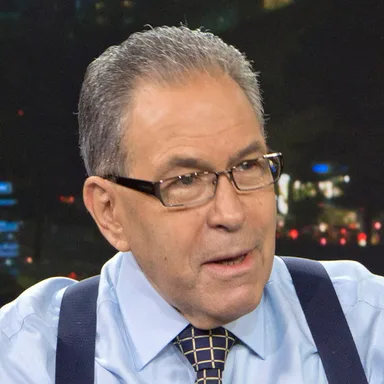
Michael Stoler Real Estate Expert
The Stoler Report with Michael Stoler: Eli Weiss and Andrew Albstein
Michael Stoler
On the Stoler Report, Michael Stoler continues his conversation with developer Eli Weiss of Joy Construction and attorney Andrew Albstein about the unintended consequences of New York real estate legislation. Albstein says the 2019 rent law led owners to leave apartments vacant and pending city legislation on delivery workers has stopped warehouse development; Weiss says the rent law caused a massive disruption and describes his Kingsbridge Armory project.
Key takeaways
- Albstein said owners cite as many as 50,000 vacant units, though he called that number probably high.
- Albstein said good cause eviction limits renewal increases in market-rate buildings and will keep rents below market.
- Weiss said the Kingsbridge Armory project has cleared land use review, with density for about 500 apartments.
- Weiss said rents at the Brooklyn building he is leasing beat three-year-old projections by 20%.
- Albstein said lenders now demand major paydowns at refinancing, leaving some smaller owners in distress.
In their words
“Eli, what effect has this had on your business, especially you’re involved with affordable housing and the creation today of new affordable housing?”
“What about financing? A question for both of you.”
“So let’s hope that this distress gets better.”
Quotes are word for word from the automated transcript, uncorrected; the summary and takeaways are editorial.
Transcript
Automated transcript · uncorrectedGood morning. This is Mike Stoller for the Stoller Real Estate Report. Unattended consequences. That’s the quote of Andy Alpstein, who is one of our guests today, who is the managing partner of Goldberg, Wepper, Finkel, and Goldstein. In addition to having Andy over here, we have another one who’s involved with the law of unattended consequences, the developer side
of the world. I have Eli Weiss, who is the principal of Joy Construction. So, Mr.
Alpstein, since you brought up the term the unattended consequences, let’s talk about some of the unattended consequences specifically relating to the 2019 Act and explain what the Act was.
Well, it would take more than a brief radio show to explain the Act, but it had the best. But it had the best of intentions. It’s trying to protect tenants. The legislature felt that landlords were being too aggressive with tenants in terms of trying to terminate tenancies or raising rents. And so the legislature, the state legislature passed a law in 2019 restricting landlords in major ways.
And the law said– the new legislation says that if you improve a unit– tenant moves out, you improve it. You used to be able to raise the rent to any amount if a tenant moved out. You used to– if a tenant remained, you were restricted on how much you could raise the rents until a tenant reached a
certain economic level or until the rent reached a certain economic level and then you were permitted to raise the rents to any amount. And the goal in buying for a buyer was to own the property, to improve the property and to raise the rents and to deregulate units, the legislature said you were being too aggressive, landlords. We’re
going to stop that. So the legislature said going forward, units that were regulated will always be regulated. There are going to be limits on the amount you can raise rents, very strict limits. Even if you improve properties, you can’t raise the rents more than very limited amounts. And so it will be very difficult for you to get to–
you can’t really get the fair market rents in the new legislative. So landlords have had– owners have had to deal with that. Not only have owners had to deal with that, lenders to these owners have had to deal with it. It was unexpected in 2019. There was a lot of– lenders who have made mortgages on properties, who
have given loans on properties and received mortgages as security that expected rents to continually increase the way they had in the past. And all of a sudden, the ability to raise rents just ended. And the effect it’s had unintended, yes, it did help tenants to some extent, but landlords stopped improving, stopped fixing units, stopped making major improvements to buildings. When
units became vacant, they did not want to put money into improving the units, and so they’ve left them vacant. So the real estate owners have said it may be as much as 50,000 units are vacant today. It’s probably a high number. It’s probably quite a bit less. But in an area at a time when you have a
major housing shortage, having that many units vacant, the unintended consequences of good legislation– It may not be the best for all, not only for the landlords, but for tenancy in New York.
Eli, what effect has this had on your business, especially you’re involved with affordable housing and the creation today of new affordable housing?
The first thing I would say is I think Andy said it perfectly right.
These unintended consequences usually start from a good place, and they start off with people who work in government and politicians.
Who are looking at the greater good.
Not realizing that when you interrupt an ecosystem, there are consequences.
And those consequences are broad. And so how is it impacted?
So most of the affordable housing have long-term regulatory agreements. So we were never in the business of deregulating. I’ve been in the business my whole life of creating rent-regulated rental buildings, not deregulating them. That said, a huge stock of New York City’s housing is rent-regulated apartments. that if improved, were able to either have their rents raised or be
taken out of stabilization.
As I always say, it’s an ecosystem, right?
So what ended up happening was there was a massive, massive, massive disruption in that sector. Landlords were no longer investing in improving their properties. Landlords were not re-renting apartments. As Andy said, there could be 50,000 vacant apartments. That’s a staggering number.
That’s a city.
That’s a normal-sized city anywhere in America, and it’s vacant. And it’s Only driven by policy. So I don’t think that was the intent of the policy, but it’s certainly now that we have to deal with that. Those 50,000 vacancies mean 50,000 apartments not paying rent, which trickle down to the mortgage. Not being improved means less contractors are
getting contracts to fix roofs and replace windows and replace this.
It was a massive, massive, massive disruption.
To what was, in my opinion, one of the most stable sectors in the real estate market. And when that was disrupted, think about what that does to the psychology of a real estate investor across any industry in any sector in real estate. If the most stable asset class in New York for probably 50 years got disrupted to
the point where I would say turned upside down, what does that mean if you own hotels or office or retail, right? If, you know, one stroke of a pen in the legislature cannot, you know, slightly changed the economics, but completely changed the economics, that has a huge impact on the psyche of an investor.
Okay.
Andy, you were talking about warehouses and last mile.
Oh, that’s legislation that has not yet passed. It’s in the city of New York. The mayor supports it. And what the legislature is trying to do is have good working conditions for delivery people that deliver goods from the warehouse to the consumer. And businesses send their goods to warehouses and they hire– they have hired companies to just
deliver those– to store the goods and then to deliver those goods as they’re being purchased. It could be an Amazon type of business. It could be many smaller businesses that have the same goals and the same economic formula for.
Profitability.
And the legislature says that these delivery people not only are not union people. They don’t have the benefits that they would like to see. So the legislation that’s pending right now that will likely be signed is going to require that the delivery people are employed by the companies that are manufacturing the goods or selling the goods, that
they have benefits, they have high compensation, that they have training, a lot of good goals. But what that is doing now is development of warehouses has stopped, leasing of warehouses. This has slowed down considerably. Businesses are thinking of moving these type of operations out of New York City, and there are unintended consequences.
Okay.
Eli, you’re involved with the Kingsbridge Armory. Talk a little better about that. Sure.
Just before I do, I just wanted to say, not so that we don’t sound completely negative, as we were saying, I just got remarried, so I’m always the optimist. But what I’ll say is there’s also been legislation that’s been very helpful, right? This city passed the City of Yes last year, which was the first zoning... changed since the
1960s in the city, and we’re seeing.
The fruits of that right now.
So I guess as being an optimist, I got involved with my partner, George Madruga, on the Kingsbridge Armory, which at one point was the largest indoor structure in the Western Hemisphere.
It’s about 250,000 square feet.
And we won the project with an RFP that was issued by the City of New York through EDC. The project has successfully been through the Euler process, which is the land use review process.
In New York. So we’re now almost there on.
All of the entitlements, and we’re working on trying to secure users to what we think will be a really great community facility that will host music shows, sports events, hopefully have a community center for the community, and also have ancillary affordable housing.
How much affordable housing can.
Right now, we’re estimated that we have enough density to build about 500 apartments on site.
Now, aren’t you leasing apartments in Brooklyn? I am. I am.
I’m leasing apartments right now on the corner of Tillery and Prince, 67 Prince Street or 202 Tillery.
It has two entrances.
It’s a 473-unit, 7525.
Market rate rental building.
And to talk about unintended consequences, I can tell you that with all of this legislation— One of the unintended consequences is that market rate rents in New York are extremely high. They have not come down. And so that you can make an argument that’s economic. You can make an argument it’s because supply has been hindered and also
because units are offline, as Andy said. I don’t know, but I can tell you that the rents that we’re achieving from what we projected three years ago are 20 percent more.
It’s the same way that the office rents. are achieving at least 20% to 30% more. That’s correct.
Yeah. We were a few years ago thinking who would even rent? Forget what the rents were in an office building, right?
Now what eli was just saying about his development the legislature is concerned even with market uh rental that that doesn’t go too high so we now have a new law that just uh was it came into effect about a year ago it’s called we refer to it as good cause eviction and what it says is we have
a tenant in a market rate building and the tenant’s lease comes due, you have to offer them a new lease and it restricts the amount that you can increase the rent by. And the unintended consequences of that have not yet been felt, but there will be. So it sounds like it’s a good reason and it’s going to
have positive results for the tenants. They’re not going to be forced out of their properties. They’re not going to receive tremendous rent increases. But it’s going to keep the rentals from being market. And market usually is what’s necessary for the landlords to make a healthy profit and to continue to develop and to continue to buy new properties.
And we’ll see how that changes the market.
What about financing? A question for both of you.
Off the bat, I would say more expensive, right? Just base rates.
This is a national, if not international topic of where the cost of capital is, whether it be in Japan, whether it be in the United States, treasuries are on one of the wildest increase runs of the last 90 days.
I think everything comes home to roost at some point.
We have $ 40 trillion of debt, and who really wants to lend.
To that type of actor? So I sort of get it.
I would say that underwriting standards, Andy, for the last three to four years have been really, really tight. I think we were just starting to see some level of loosening, but now the base rate is the 10-year treasury is over 5%, so it’s just math.
You’re doing larger transactions than many of my clients. My clients are typically owners of smaller buildings and the lenders made loans at much lower interest rates and they predicted also that rents were going to increase greatly. Rents have not increased so as much and at the time for refinancing, the lenders are now requiring major paydowns and the clients
don’t have it. So I’m also now representing quite a few owners that are in distress and facing lenders that are beginning proceedings.
So let’s hope that this distress gets better. And I’d like to say thank you for both being here the past two weeks, Andy Osteen and Eli Weiss.
It was an honor. Thank you. Thanks.
Sunday, October 11, 2026
Protecting America From Foreign Threats and Winning the AI Race
Jay Clayton Director of National Intelligence
Unleashing American Energy Dominance Through Sweeping Deregulation
Lee Zeldin EPA Administrator
Protecting Florida's Prosperity From Progressive Policies
Ashley Moody U.S. Senator from Florida

Fighting Inflation, Cutting Taxes and Lowering Energy Costs for American Families
Mike Lawler U.S. Representative from New York
Taking on California's Political Machine With a Plan to Cut Costs and Revive the State
Steve Hilton Candidate for Governor of California

Confronting Russia, Iran and China as Global Threats Intensify
General Jack Keane Retired Four-Star General, U.S. Army

Why Midterm Losses and Impeachment Threats Won't Derail Trump
KT McFarland Former Deputy National Security Advisor

Pushing E-Bike Safety Regulations and AI Safeguards
Julie Menin New York City Council Speaker

Aging Infrastructure and Cyber Threats Put America's Water Supply at Risk
Robert F. Powelson President & CEO, National Association of Water Companies

From Late-Night TV to Novelist With The Refuge
Carly Hillman Novelist; Former Late Show Producer

Taking Control of Aging Through Fitness, Nutrition and Relationships
Dr. Mason Pimsler Geriatrician, Lincoln Medical Center

Voters Deserve a Debate in the 38th Senate District Race
Thomas Ossa President, Rockland News

Healthy Eating, Stronger Immunity and the Science of Living Longer
Dr. Peter Michalos WABC Medical Expert
The Mysteries of Mermaids, El Niño and the Antarctic Ice
Steve Kates Space and astronomy broadcaster (Dr. Sky)
The Social Reckoning Highlights the Need to Protect Children Online
Lynn Shaw Founder of Lynn's Warriors

Corporate Earnings and Fed Decisions Set the Tone for Wall Street
John Terrett WABC Financial Analyst
Michael Stoler
The Stoler Report with Michael Stoler: David Schechtman
Michael Stoler Real Estate Expert
The Stoler Report with Michael Stoler: Eli Weiss and Andrew Albstein
Michael Stoler Real Estate Expert
The Stoler Report with Michael Stoler: Robin Schneiderman
Michael Stoler Real Estate Expert
