



Michael Stoler Real Estate Expert
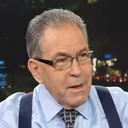
The Stoler Report with Michael Stoler: Eli Weiss and Andrew Albstein
Michael Stoler
On the Stoler Report, Michael Stoler talks with developer Eli Weiss of Joy Construction and his longtime counsel, Andrew Albstein, about how New York real estate has changed over 40 years. Albstein describes a labyrinth of legislation, including a new annual tax on out-of-state homeowners; Weiss explains why the 485-x program, with higher wage rules above 99 units, is producing affordable housing 25 units at a time.
Key takeaways
- Albstein said a contract once took an hour or two; now every deal needs heavy due diligence.
- He said a $2 million home owned by an out-of-state resident would be taxed $80,000 a year.
- Albstein said developers will now build 99-unit buildings, sometimes two side by side, to keep the tax break.
- Weiss said the trigger is higher construction wage rules above 99 units, which make building costlier still.
- Weiss said the market is K-shaped: low-income and luxury projects get built, the middle does not.
In their words
“I go through the economics, and at times I’m even a psychiatrist.”
“You probably won’t buy anymore. What you’re going to do next is you’ll rent. You’ll stay in a hotel.”
“So what I’m saying is this new legislation has forced us to try to tackle the affordability crisis in New York, which is monumentous, 25 units at a time”
Quotes are word for word from the automated transcript, uncorrected; the summary and takeaways are editorial.
Transcript
Automated transcript · uncorrectedGood morning, this is Mike Stoller for the Stoller Real Estate Report. It’s an unusual time when you would have a developer and his counsel together on a show. So today I have an interesting group of individuals. I have Eli Weiss, the developer, okay, and principal at Joy Construction.
And then I also have the senior counsel, making him older than he is. I have the managing partner, at Goldberg, Webber, Finkel, Goldstein, LLP, Andy Alpstein. Good morning.
Good morning. So we were talking, it’s interesting that the two of you work together and even own some properties together. So let’s talk about the time today as compared to 40 years ago, Andy, when you started in the business.
All right, that’s a very interesting question. First of all, thank you for having me this morning. I’m a fan of the show. I listen every week. It annoys my wife because of the early hour, but I’ve been married that long, I can get away with it.
Right.
I guess when I started, which was 40 years ago, in real estate, maybe a little longer, the dream was always to own real estate for every American. Everybody either wanted to own a home, They wanted to own income producing property. They always had some affinity or, uh, interest in, in real estate ownership as being satisfying the, the goals of,
of growing up. And so people would come to me, they were buying a home. They would be buying a home in New York. Uh, they could be an out of state of buying a home in New York. They would come to me that they were buying rental or rented property. Uh, some came to me, they were developing property.
I would, uh, I would get a term sheet from a broker. I would call the lawyer for the seller if I was representing the buyer. I would go over to their office. We would have forms, fill it out, sign a contract in a matter of an hour or two hours. And the deal would happen usually without an issue.
Now you go 40 years later and you have legislatures both at the city and the state that are attempting to do good good deeds. They’re attempting to pass legislation that’s going to help everyone. And there are unintended consequences.
What do you mean unintended consequences?
Every law, uh, the building still stands, but the economics of it, it changes the economics, changes development possibilities. It changes the income possibilities. Uh, it changes what an owner has to do in terms of ownership. And it becomes now, uh, a labyrinth of laws that have to be navigated and you can’t just go and sign a contract. You have to,
what we call due diligence. You have to look into the properties. You have to understand them, uh, very well, as well as the seller, if not much better. And you have to be prepared not only to deal with the new legislations, but you have to be prepared to deal with what may be new legislations. You have to
consider it all. So I’m not only a contract lawyer, uh, I go through the economics, and at times I’m even a psychiatrist. I have to go through with the buyers all the possibilities, all the risks, and I have to try to get them in a state of comfort. Nothing is an easy transaction.
Nothing is an easy transaction. Let’s ask Eli his thoughts. You’ve been involved with the business over 25 years, okay, starting in the government. So let’s talk from the perspective of the government coming through today. and then some of the work about the armory and others.
Sure.
So thanks again for having me. It’s great to be here with Andy, this longtime friend, partner, trusted advisor, even surpasses my mother-in-law in terms of giving good advice. But to be very candid, I think Andy is 100% right.
I think 40 or 50 years ago, real estate in general was a far less institutional business that seemed to be far less regulated and intertwined with legislation than I think you had a lot of people that just bought property, and there was only one direction that property only went up.
People bought and held, and financing was far less complex. You went to a local bank, you shook somebody’s hand, you went out for a closing dinner, and that was the end of it. What’s changed is, A, capital markets are far more sophisticated, and that makes capital stacks, raising money, the size of deals, the complexities of deals, infinitely more
complicated than they were when I started. And I think Andy’s 100% right. I think that today where capital is fungible, right? So when I grew up, people didn’t really live in New York and do business overseas or live in New York and buy real estate in Arizona. It was very difficult to do that. Email, fax, all of that came
much later. And so in today’s world, local politics are a lot more important because back then, like I said, Things were much simpler, right? Capital stacks were simpler. Regulations were far less important. Now, in today’s world, people are going out and buying assets all over, whether it be people from New York buying in the South, people in
the South looking to buy in New York. And as Andy said, when you have an environment like we do in New York that’s highly regulated, and it’s not just that it’s highly regulated, it’s also in flux, right? There have been big swings in policy. I think on some level, you have to just be honest and say that’s going
to impact the market. not always adversely, but it’s going to have much more of an impact than it did historically.
Let’s talk, Andy, about the current legislation out there and its effect on the developer.
Well, last week, the PA tax was one of your main topics. That will affect developers, but The effect of it is there’s a tax now if you are an out-of-state individual owning a home in New York, a co-op condo or a single-family home, one-to-three-family home, you’re going to be taxed every year on the value of the home.
If you have a $ 2 million home, you’re going to be taxed $ 80, 000 a year. So you’re going to think to yourself, if you’re an out-of-state resident that is just using the home to visit New York a couple of times a year, You’re going to think to yourself, why do I want an expense like that? And the expense
goes up, the more value of the home. You probably won’t buy anymore. What you’re going to do next is you’ll rent. You’ll stay in a hotel. So developers who are counting on out-of-state buyers of their units, the PA deters, are not going to have them as readily anxious to buy as they were in the past. Developers face other
issues now with the legislation. Back in, I don’t know, in the from the late 1990s, perhaps to 2022, there were tax advantages in having affordable housing. And developers always realize if there are tax advantages, it’s to your It’s to your advantage to comply with whatever is needed, not to have to pay as much in real estate taxes.
So developers would build buildings, and you had to have until 2022, and Eli can correct me because he’s the expert on this, but you had to have 20% affordable housing. Let me just, one second, in 2022, the law expired. Right.
From 2022 to 2026, developers stopped developing in New York. Very few permits for new development. Then in 2026, a new law came about. It’s 485X, it’s called. It says if you build under 100 units, you can have 25% affordable housing and you can get tax advantages. If you build 100 units or more, you have to have more
affordable housing. And you have to pay your workers considerably more and provide additional benefits to the workers. So now developers, as I would think Eli will now explain, developers are going to build 99-unit buildings to avoid these consequences to get the tax advantages. So you’re going to see many 99-unit buildings. Sometimes you may see two right next to
each other on the same lot instead of one major building. It’s going to cut down on the amount of affordable housing. But it’s something that developers today must consider.
I think Andy hit the nail right on the head.
So first of all, just historically, I can think of four 421A buildings that I developed where Andy was my attorney. 431 West 37th Street, 84 3rd Avenue, 411 West 35th Street, and 445 West 35th Street. All of them had an excess of, well, two of them were less than 99 units.
Two of them were more. And what’s interesting is the two with less would get developed today, and the two with more wouldn’t. And those were the larger properties. So what happened with the regulation is above 99 units, there are higher wage requirements for the construction, which developing in New York right now is so expensive, just everything from
insurance to the cost of land to the cost of everything developing in a dense urban area.
So what do you develop?
So what I’m saying is this new legislation has forced us to try to tackle the affordability crisis in New York, which is monumentous, 25 units at a time, right? Because 99 divided by 25% is 25 units. So rather than tackle a need, which is in the thousands, with countering it with production in the thousands, we’re trying to counter
it by doing 25 units at a time, very much like the Dutch boy, you know, with his finger on the dam. But what are we developed? So I think what’s happened is, and I think this is very, very much true on many levels, not just in real estate.
I think it’s sort of broader in the economic, you know, sphere of this country is a K-shape, right? So people are very, very active in low-income housing, where we use other tax abatements like 420C and Article 11, and we don’t have these wage requirement issues with the 485X, as Andy mentioned. And then on the other side of the
K is the super high-end luxury $ 4, 000- a- foot condos on fancy neighborhoods in New York, which don’t need a tax abatement. People who can afford to pay $ 4, 000 a square foot for a condo can afford to pay their real estate taxes, even if not abated. So I think what we’re seeing is two ends of the spectrum, sort of the horseshoe theory, right?
Where the two ends of the horseshoe are very, very close. So the very low income and the very high income side is seeing a lot of production. And I think everything in the middle, unfortunately, is trying to get resolved 25 units at a time, which if you ask me, and I think Andy would agree, is just not going
to cut it.
So I’m going to have you back next week, and we’re going to continue this discussion. Thank you.
Thanks for having us.
Thanks very much.
Sunday, October 4, 2026
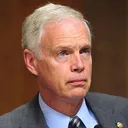
Wisconsin Campaign Strategy Centers on Local Races and Election Administration
Ron Johnson U.S. Senator from Wisconsin

Washington Gridlock Raises Questions About Bipartisanship and Legislative Reform
Kevin Cramer U.S. Senator from North Dakota

Social Media Lies and Leaving the Democratic Party
Alan Dershowitz Harvard Law Professor Emeritus

Michigan Senate Race Focuses on Costs and Energy Policy
Ronna Romney McDaniel Former RNC Chairwoman
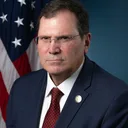
Federal Prosecutors Uncover Nationwide Identity Theft and Benefit Fraud Scheme
John Sarcone First Assistant U.S. Attorney, Northern District of NY
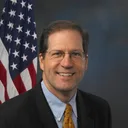
New Hampshire Campaign Centers Economic Policy and Congressional Reform
John E. Sununu Former U.S. Senator from New Hampshire; nominee for U.S. Senate

New York Governor’s Race Centers on Public Safety and Economic Relief
Bruce Blakeman Nassau County Executive; nominee for Governor

Fiscal Accountability and Government Waste Drive Comptroller Campaign
Joseph Hernandez Entrepreneur; nominee for New York State Comptroller


Bruce Blakeman Is Stylistically Like George Pataki
Bernadette Castro Former NYS Parks Commissioner

Lieutenant Governor’s Departure Sparks Questions Over Transparency and Accountability
Christine Hanlon Chair, New Jersey Republican Party

New York City Business Leaders Confront Economic Competition and Safety Concerns
Steve Fulop President & CEO, Partnership for NYC

Beijing Uses Diplomacy and Trade Pressure to Advance Its Interests
Gordon Chang China Analyst & Author

Prostate Cancer Awareness and Why Early Detection Matters for Men’s Health
Ed Randall & Dr. Daniel Petrylak Fans for the Cure Founder & Yale Oncologist
Offshore Wind Projects Raise Concerns Over Maritime Safety and Search-and-Rescue Operations
Bonnie Brady Executive Director, LI Commercial Fishing Assoc.
FCC Wireless Radiation Standards Face Scrutiny Over Safety Concerns
Odette Wilkens President, Wired Broadband Inc.

Limiting Sugar and Choosing Whole Foods to Support Healthy Aging
Dr. Peter Michalos WABC Medical Expert

Exoplanet Radio Signals, SpaceX’s Heavy Rocket Test and Nuclear Propulsion
Steve Kates Space and astronomy broadcaster (Dr. Sky)
How Smartphones and Endless Scrolling Affect Young Minds
Lynn Shaw Founder of Lynn's Warriors

Weak Employment Data Eases Rate Concerns as Disney and Mattel Make Headlines
John Terrett WABC Financial Analyst
Michael Stoler
The Stoler Report with Michael Stoler: Eli Weiss and Andrew Albstein
Michael Stoler Real Estate Expert
The Stoler Report with Michael Stoler: Robin Schneiderman
Michael Stoler Real Estate Expert
