


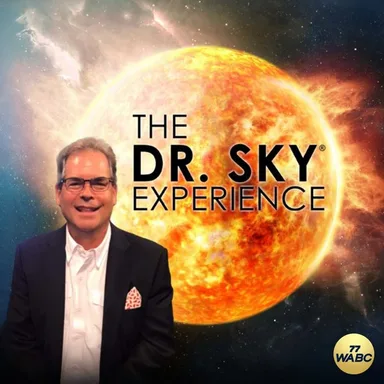
Steve Kates Space and astronomy broadcaster (Dr. Sky)
Exoplanet Radio Signals, SpaceX’s Heavy Rocket Test and Nuclear Propulsion
Steve Kates
Astronomer Steve Kates tells John Catsimatidis about radio signals detected from the exoplanet Beta Pictoris b by a 64-dish radio telescope in South Africa, the first ever from a planet beyond the solar system, which astronomers attribute to auroras. He marks 69 years since Sputnik, reviews SpaceX’s 14th Starship flight, which deployed new Starlink V3 satellites despite an engine failure, and explains the Stirling engine.
Key takeaways
- Kates said about 6,000 exoplanets are known and none had ever sent radio signals before.
- He said astronomers think auroras from radiation storms, like Jupiter’s, explain the signal, not aliens.
- Kates said Starship, with 16 million pounds of thrust, cut 10 planned orbits short after an engine failed.
- He said Robert Stirling’s 1816 closed-cycle engine powers some submarines and may drive nuclear rockets.
- Kates said Venus is visible in the southwest this week and a meteor shower comes later in October.
In their words
“No exoplanet has ever sent radio signals.”
“SpaceX launched Starship 14. This is the most powerful rocket, John, in the entire world, 16 million pounds of thrust.”
“We still have a long way to go, and obviously let’s not rush landing on the moon and going to Mars until we can perfect this particular spacecraft.”
Quotes are word for word from the automated transcript, uncorrected; the summary and takeaways are editorial.
Transcript
Automated transcript · uncorrectedSunday morning with us is our good friend Steve Cates, also known as Dr. Sky. And he’s got two shows on WABC, and he’s on every Friday night or Saturday morning from 12 midnight to 2, and Saturday night, Sunday morning from 12 to 2. Well, Steve Cates, tell us what’s going on in outer space.
Well, good morning, John, and to the listeners, happy October. One big news story, John, that starts our conversation on Sunday is strange signals coming from a star some 69 light years away. And what’s so unusual about this, John, is that we have never detected this particular story, and what is the story? We know now there are about 6,000 exoplanets.
These are planets discovered about other stars. And one in particular, it’s a constellation called Pictoris in the southern hemisphere. The star Beta Pictoris has a strange exoplanet. How creative. Beta Pictoris B. And radio astronomers, John, have detected some sort of radio transmission coming from it. What makes it unusual?
No exoplanet has ever sent radio signals. So the astronomers put their thinking caps on and they believe that the causation of this is Like Jupiter, like the Earth, we have auroras that are created by powerful radiation storms. And they simply think, may not be aliens per se, obviously, but that out there in the distant universe, 69 light
years away, we’re first detecting a tiny little object that far away. And we separated the star’s energy from that of the planet. I give kudos to the astronomers who’ve been able to slice the pie, as they say, and detect these strange signals. It’s amazing.
Well, I have a question to ask. Why all of a sudden they come up with these strange... I mean, it’s a zillion miles away. I mean, just about. Is there a reason? Who did it? NASA did it? Who did it?
No, it’s actually a radio telescope, John, in South Africa. And they have 64 of these big, gigantic dishes. You know, the days when people... Well, some still do depend on their satellite transmissions, but from the ground to space... What makes this unusual, and I find it very, very strange, is that when we look at a star that far away,
and that we’re now able to determine that it’s not the star, so precision, it’s like looking under the microscope, we’ve detected these strange signals. But obviously, many people believe that it could be extraterrestrial life. But in this case, the Great Mirror Telescope, they call it in South Africa, It’s been something I find very, very unusual, John. So
it means that many of these planets that are bound out in the solar system and out into the universe, they may also have similarities to even closer planets. The beat goes on. The discovery is interesting. Understood.
We talk about something else, John. This is fascinating. On this date, 69 years ago, we began the space program. Now I was just a one-year-old running around, I guess, in Jamaica, New York. And this was the Sputnik launch.
But let’s talk about one of the great things that just happened last week. SpaceX launched Starship 14. This is the most powerful rocket, John, in the entire world, 16 million pounds of thrust. This time they wanted to put the spacecraft on top, which is the craft that hopefully will go to the moon and Mars, to go into
orbit around the Earth. It’s a very difficult thing to do. One of the engines on the Starship failed, so they didn’t get to do 10 orbits. But they deployed, get a look at this, brand-new, much larger Starlink satellites called V3s.
So they succeeded in that, but they have a long way to go, John. I think you would agree. Before we can now determine that we can send astronauts on that particular craft. This is the 14th time that they’ve launched it. Great success that they’ve had, but all these things in space can be very dangerous, and they simply take.
A long time. So it’s the 14th time they launched it, but you didn’t finish the sentence. How many. How many cases did they have a problem?
Well, they had engine problem on the Starship rocket. So they were going to orbit 10 times, as I said, the Earth. But no, they decided they would shorten the mission. But the goal was to get that spacecraft into orbit.
And they released, as I said, these new satellites. Starship 14 is a great success. It’s amazing, John. Just think about 50 years ago when we started to talk about the beginning of the space program 69 years ago. We still have a long way to go, and obviously let’s not rush landing on the moon and going to Mars
until we can perfect this particular spacecraft.
We have a long way to go before we go to warp speed. I understand.
Absolutely, John. And speaking of that, here’s something interesting in my mind, the mystery of the week. What is the Stirling engine, and why is it called by some the Star Drive? This is amazing. In 1816, a British clergyman, Robert Stirling, developed this engine called the closed-cycle external combustion engine.
Sounds like a lot of words. What is it? It’s a fixed amount of gas which expands when hot and contracts when cold and pushes a piston, much different than this type of gas engines that we use today. And it’s now used, John, on some nuclear submarines around the world.
And this technology that NASA is working on and other space agencies, they’re going to deploy the Stirling engine concept to rocket propulsion, nuclear rocket propulsion, and maybe then, John, we’ll get closer to the warp drive concept that we watch and see on so many science fiction shows.
Well, let’s see what happens. I mean, anything else that will tickle our minds?
Well, John, we begin with October, and it’s another great month to see many things in the sky, now that we’ve passed these hurricanes and these you know, extra powerful, you know, nor’easter storms. Just look into the heavens. If you look in the southwest during this early week, you’ll see Venus, the brightest of all the planets. We begin
a whole new season, a big meteor shower coming up later in the month of October. And just a beautiful time of the year. I always like fall. And John, we wish everybody the best for a happy Sunday. And always remind them to keep their eyes to the skies.
And appreciate them tuning in to the Dr. Sky experience, as you mentioned, at the top of this broadcast.
Thank you so much. And we’ll catch up again real soon.
Thank you, John.
Sunday, October 4, 2026

Wisconsin Campaign Strategy Centers on Local Races and Election Administration
Ron Johnson U.S. Senator from Wisconsin

Washington Gridlock Raises Questions About Bipartisanship and Legislative Reform
Kevin Cramer U.S. Senator from North Dakota

Social Media Lies and Leaving the Democratic Party
Alan Dershowitz Harvard Law Professor Emeritus

Michigan Senate Race Focuses on Costs and Energy Policy
Ronna Romney McDaniel Former RNC Chairwoman

Federal Prosecutors Uncover Nationwide Identity Theft and Benefit Fraud Scheme
John Sarcone First Assistant U.S. Attorney, Northern District of NY
New Hampshire Campaign Centers Economic Policy and Congressional Reform
John E. Sununu Former U.S. Senator from New Hampshire; nominee for U.S. Senate

New York Governor’s Race Centers on Public Safety and Economic Relief
Bruce Blakeman Nassau County Executive; nominee for Governor

Fiscal Accountability and Government Waste Drive Comptroller Campaign
Joseph Hernandez Entrepreneur; nominee for New York State Comptroller


Bruce Blakeman Is Stylistically Like George Pataki
Bernadette Castro Former NYS Parks Commissioner

Lieutenant Governor’s Departure Sparks Questions Over Transparency and Accountability
Christine Hanlon Chair, New Jersey Republican Party

New York City Business Leaders Confront Economic Competition and Safety Concerns
Steve Fulop President & CEO, Partnership for NYC

Beijing Uses Diplomacy and Trade Pressure to Advance Its Interests
Gordon Chang China Analyst & Author

Prostate Cancer Awareness and Why Early Detection Matters for Men’s Health
Ed Randall & Dr. Daniel Petrylak Fans for the Cure Founder & Yale Oncologist
Offshore Wind Projects Raise Concerns Over Maritime Safety and Search-and-Rescue Operations
Bonnie Brady Executive Director, LI Commercial Fishing Assoc.
FCC Wireless Radiation Standards Face Scrutiny Over Safety Concerns
Odette Wilkens President, Wired Broadband Inc.

The Stoler Report with Michael Stoler: Eli Weiss and Andrew Albstein
Michael Stoler Real Estate Expert

Limiting Sugar and Choosing Whole Foods to Support Healthy Aging
Dr. Peter Michalos WABC Medical Expert

How Smartphones and Endless Scrolling Affect Young Minds
Lynn Shaw Founder of Lynn's Warriors

Weak Employment Data Eases Rate Concerns as Disney and Mattel Make Headlines
John Terrett WABC Financial Analyst
Steve Kates
Deep-Space Mysteries, UFOs and the Orionid Meteor Shower
Steve Kates Space and astronomy broadcaster (Dr. Sky)
The Mysteries of Mermaids, El Niño and the Antarctic Ice
Steve Kates Space and astronomy broadcaster (Dr. Sky)
Supersonic Jets, SpaceX’s Next Starship Launch & Trump’s Golden Dome Defense System
Steve Kates Space and astronomy broadcaster (Dr. Sky)
The Science Behind Hurricanes, Cosmic Radiation and the Universe
Steve Kates Space and astronomy broadcaster (Dr. Sky)
Ben Franklin, Mars, and Asteroid Mining
Steve Kates Space and astronomy broadcaster (Dr. Sky)
The Search for Dark Matter and the Mysteries Hidden Beneath Antarctica
Steve Kates Space and astronomy broadcaster (Dr. Sky)
