


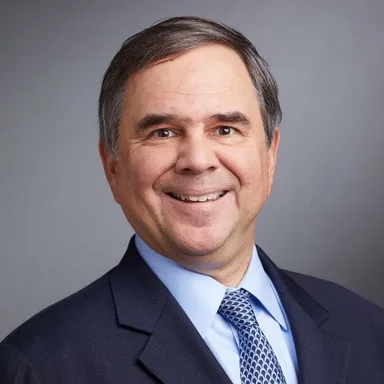
Ed Randall & Dr. Daniel Petrylak Fans for the Cure Founder & Yale Oncologist
Prostate Cancer Awareness and Why Early Detection Matters for Men’s Health
Ed Randall & Dr. Daniel Petrylak
Ed Randall of Fans for the Cure and Dr. Daniel Petrylak of the Yale School of Medicine tell John Catsimatidis why early detection of prostate cancer matters. Petrylak says more than 300,000 American men will be diagnosed this year and more than 36,000 will die of metastatic disease, and explains who should have a PSA test and when. Randall reports 206 men screened free at Yankee Stadium.
Key takeaways
- Randall said prostate cancer has a better than 90% cure rate when detected early.
- Petrylak said men should have a PSA test at 50, or at 45 with a family history.
- He said African-American men have a higher rate of prostate cancer.
- Petrylak said he helped develop docetaxel, the first chemotherapy for prostate cancer, 22 years ago.
- Randall said fewer than half of American men know a PSA blood test is the first diagnostic tool.
In their words
“I will tell you that we are in business as a prostate cancer survivor to get men to go to the doctors to understand that early detection is everything”
“There’s one form that you die with, not from. It’s not aggressive.”
“So the important thing is talking to your doctor about what’s appropriate for you.”
Quotes are word for word from the automated transcript, uncorrected; the summary and takeaways are editorial.
Transcript
Automated transcript · uncorrectedWell, prostate cancer, is there ever going to be a cure? With us today is Ed Randall, and Ed Randall is in charge of advocacy for finding the cure, and he’ll tell us more about that. And then we have Dr.
Daniel Petrilak, and I hope I said it right, and he’s the professor of medicine and urology at the Yale School of Medicine. Well, let’s start with Ed Randall. Ed Randall, you want to find a cure and you’re putting people together to talk about it and pray about it. Do we need the Cardinal to come on his phone call
with us to pray about it?
That can’t hurt, John, but before we begin our discussion, hats off to you, hats off to WABC for bringing attention to PSA screenings for prostate cancer, not just in September during Prostate Cancer Awareness Month, but year-round. We are so grateful, John, for your advocacy. We would love to have the Cardinals’ power of prayer, but I will tell
you that we are in business as a prostate cancer survivor to get men to go to the doctors to understand that early detection is everything, that there’s a better than 90% cure rate if prostate cancer is detected early.
Well, you know, we had a very bad situation at WABC where Sid Rosenberg’s co-host never went to the doctor. never checked, and ended up with a stage four and he ended up passing away. And he would still be alive today if he went and was tested.
That’s exactly right. And I had a discussion with Bernie McGurk shortly before his passing, offering him the services of Fans for the Cure, where we have a medical advisory board, John, of dozens of the greatest urologists in this country, including the one that is on the phone with us right now.
Tell us, Dr. Daniel Petrelak, Yale, you have a wonderful medical school up there. You saved the life of one of my best friends, Louis Cherivant, the former CEO of of United Technologies.
Yes, I know him well. He’s a great supporter of Yale, and we really appreciate him. Well, as Ed has said, early detection is one of the keys. More than 300,000 men will be diagnosed with prostate cancer in the United States this year, and more than 36,000 men will die from metastatic disease. That’s the second leading cause of cancer
deaths in men. And, of course, what we’d like to do is detect disease early. But as you note from stats, there are some patients, unfortunately, who escape that particular early detection. Generally, a man who is 50 or higher should have a PSA performed. If you have family members who have prostate cancer, you should have your PSAs done earlier at 45. Also,
if you’re African-American, there’s a higher rate of prostate cancer in African-Americans. So this is one of the things, detection of early disease. But If the unfortunate situation happens that the cancer is spread outside the prostate, we have many things that we can do to help. And in fact, 22 years ago, I helped develop the first chemotherapy for
prostate cancer, a drug called docetaxel, which helped to improve survival in men with the most advanced form of prostate cancer. Since that time, we’ve had multiple FDA approvals in this disease. And in fact, we’re working on some new drugs at Yale right now that target what’s called the androgen receptor, which is one of the targets we go after in
prostate cancer in very, very novel ways. We have some drugs that have been developed at our institution that we’re looking at in clinical trials and really, really excited about some of the results that we’re seeing. Understood.
And you think with prostate cancer, I think you can almost have a 100% cure rate if you catch it in time. What’s the latest on early detection? You tell us.
So if you detect the disease early, and there was always this controversy about whether PSA made a difference, really the important thing is you talk to your doctor if you do have the disease detected. Because there are really two forms of prostate cancer. There’s one form that you die with, not from. It’s not aggressive. The best way
to describe it is Gleason 6, which is considered to be the least aggressive form of prostate cancer. That can be watched very, very successfully. But there’s the other form as well that you can die from, which is where the 36,000 men a year fall into play. So if you can catch the disease early and treat it with
either prostatectomy or radiation therapy, with or without hormone therapy, that potentially could also lead to a cure in these patients. So the important thing is talking to your doctor about what’s appropriate for you.
Understood. Anything else you want to tell us? Are you having any big get-togethers? Well, I’m in New York. In New York, to be able to talk about it publicly and to talk and move it publicly.
Well, we have... Go ahead.
I was going to say, John, that we’re proud to tell you that last week in Yankee Stadium, fans for the Cure screened for free more than 200 men, 206 to be exact, with a PSA exam. It was our 14th annual event. free screening inside Yankee Stadium before and during their game, and we have screened now well over 2,000 men,
and we’re very proud of that. And just to add something that the doctor said, less than 50% of American men, John, know that a simple PSA exam is the initial diagnostic tool to detect prostate cancer. I was diagnosed at 47 with a routine PSA blood test. So our job at Fans for the Cure is to increase that 50% exponentially
so all men go to the doctors every year to get a simple PSA blood test that can potentially save their life.
Thank you both for coming on this call today and making more people aware. Bernie McGurk made a zillion people aware of prostate cancer. And God, you know, we had 5,000 people at St. Patrick’s Day that day when we remembered him.
And thank you all, guys, and we’ll talk again real soon. Thank you.
Thanks for the opportunity, John.
And we’re at fansforthecured.org.
Sunday, October 4, 2026

Wisconsin Campaign Strategy Centers on Local Races and Election Administration
Ron Johnson U.S. Senator from Wisconsin

Washington Gridlock Raises Questions About Bipartisanship and Legislative Reform
Kevin Cramer U.S. Senator from North Dakota

Social Media Lies and Leaving the Democratic Party
Alan Dershowitz Harvard Law Professor Emeritus

Michigan Senate Race Focuses on Costs and Energy Policy
Ronna Romney McDaniel Former RNC Chairwoman

Federal Prosecutors Uncover Nationwide Identity Theft and Benefit Fraud Scheme
John Sarcone First Assistant U.S. Attorney, Northern District of NY
New Hampshire Campaign Centers Economic Policy and Congressional Reform
John E. Sununu Former U.S. Senator from New Hampshire; nominee for U.S. Senate

New York Governor’s Race Centers on Public Safety and Economic Relief
Bruce Blakeman Nassau County Executive; nominee for Governor

Fiscal Accountability and Government Waste Drive Comptroller Campaign
Joseph Hernandez Entrepreneur; nominee for New York State Comptroller

Bruce Blakeman Is Stylistically Like George Pataki
Bernadette Castro Former NYS Parks Commissioner

Lieutenant Governor’s Departure Sparks Questions Over Transparency and Accountability
Christine Hanlon Chair, New Jersey Republican Party

New York City Business Leaders Confront Economic Competition and Safety Concerns
Steve Fulop President & CEO, Partnership for NYC

Beijing Uses Diplomacy and Trade Pressure to Advance Its Interests
Gordon Chang China Analyst & Author
Offshore Wind Projects Raise Concerns Over Maritime Safety and Search-and-Rescue Operations
Bonnie Brady Executive Director, LI Commercial Fishing Assoc.
FCC Wireless Radiation Standards Face Scrutiny Over Safety Concerns
Odette Wilkens President, Wired Broadband Inc.
The Stoler Report with Michael Stoler: Eli Weiss and Andrew Albstein
Michael Stoler Real Estate Expert

Limiting Sugar and Choosing Whole Foods to Support Healthy Aging
Dr. Peter Michalos WABC Medical Expert

Exoplanet Radio Signals, SpaceX’s Heavy Rocket Test and Nuclear Propulsion
Steve Kates Space and astronomy broadcaster (Dr. Sky)

How Smartphones and Endless Scrolling Affect Young Minds
Lynn Shaw Founder of Lynn's Warriors

Weak Employment Data Eases Rate Concerns as Disney and Mattel Make Headlines
John Terrett WABC Financial Analyst
