


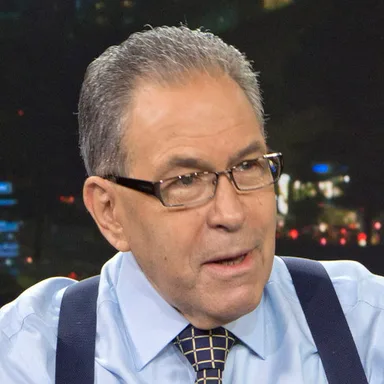
Michael Stoler Real Estate Expert
The Stoler Report with Michael Stoler: Mark Stagg
Michael Stoler
Mark Stagg, founder of the Stagg Group, tells Michael Stoler that he went from building a two-family house in the Bronx in 1998 to nearly 6,000 units built, owned and managed today. He says it is time for the legislature to adjust the 485-x tax benefit’s limits on the number of units, and that land prices have held steady despite rising interest rates.
Key takeaways
- Stagg said many developers get around 485-x limits by building 99 units or 275-unit buildings.
- He said Westchester approvals are a heavier lift, while building in the city is mostly as of right.
- Stagg said a one-bedroom in his new subsidized housing will rent for $850 at 40% AMI.
- He said the Stagg Group has 3,000 to 3,500 units in the pipeline and over 500 employees.
In their words
“I call it New York City living without having to be in the city.”
“So I think it’s time for the legislature to look at that and make an adjustment.”
“The more and more I learned, we’re not in the business of housing. We’re in the business of people. That’s who we’re building this housing for.”
Quotes are word for word from the automated transcript, uncorrected; the summary and takeaways are editorial.
Transcript
Automated transcript · uncorrectedGood morning. This is Mike Stoller for the Stoller Real Estate Report. Today’s show, we’re going to be talking about the Bronx and Westchester, which we have not focused in the past. So I have an expert who lives in White Plains, who does business in White Plains, does business in Westchester, as well as Riverdale. I have Mark Stagg,
the founder and the principal of the Stagg Group. Thanks for being here.
Thank you. Good morning.
So tell me a little bit about your company. Sure.
We’re a company that’s been in business for 30 years. I started in ground-up construction, building a two-family house in the Bronx on 232nd Street. And from there, we built three families, four-story walk-ups. And finally, I built an elevator building.
And we haven’t looked back since.
So when did you build the elevator building?
I built the elevator building. I started building in 98, my first two-family house. And I didn’t build an elevator building until 2010.
So what made the change to 2010?
I brought the plans to a new architect. And I said, I want to build five, 10 families. And he said to me, no way. I’m not going to let you do it. So we ended up building a six-story building.
Okay. In today’s world, what are you building?
Oh, we’ve got a variety of projects in the pipeline. Westchester County, from market rate housing to affordable as well. Okay.
What do you mean affordable? Affordable, I mean.
Workforce housing, subsidized agency deals, 4% tax credit deals.
Who’s doing the underlying deals? financing before you go to the agency?
We’ve got larger institutions.
You’ve got Bank of America, Citibank.
Are taking the debt positions.
Okay, let’s talk a little bit about Riverdale. You have one or two major projects in Riverdale.
I’ve got in Riverdale, we’ve on Broadway and we just finished a great project in the Riverdale Tower about a year and a half ago. It’s an 18-story, 95-unit building.
It fits right in on the avenue.
I call it New York City living without having to be in the city.
Okay. What type of tax benefits are you offered?
That was a 421A tax benefit. We’ve done a lot of work at the as-of-rate 421A.
Today, of course, everybody knows it’s a 485X.
Okay, let’s talk about 485X and the limitations that are being built on the number of units.
Yeah, that’s a big problem.
And we don’t quite understand why they would restrict the number of units based on the pay scale. As of right builders, we have a certain way that we operate. So we’re going to take the path of lease resistance.
And when it comes to reporting, so a lot of people are taking these deals and they’re structuring either 99 units or they’re doing 275 unit buildings. So they’re getting around it. So I think it’s time for the legislature to look at that and make an adjustment.
Okay. How is it? Is it user-friendly in White Plains as opposed to... Certain other parts of the city?
Well, I’ve got Westchester County, you’ve got municipalities. So in the city, it’s as of right for the most part, unless you’re going to do a zoning change.
A larger scale project. We’ve done very well in.
100 by 100 lots. It’s the zoning in the Bronx allows us to build 70, 80, 90, 100 units. We. I have a great pre-development team. We put it in the pipeline. Within four to six months, we’re ready to go.
We have a shovel in the ground. In Westchester, with the municipalities, it’s a heavier lift, and it takes time.
What do you mean by a heavier lift?
Well, you have to go through the zoning may be there, but you have to go through the certain boards, maybe a city council, maybe a town planning board.
So it takes time.
Okay, yeah. Would you say today how it’s financing, sources of financing, from traditional banks to market rate?
We happen to have a lot of experience, so I think for us it’s open arms, but I hear for the person getting started that doesn’t have the balance sheet, that doesn’t have the experience, it’s very difficult.
What about interest rates, which have been going up substantially?
Yeah, that’s put a monkey wrench in the wheel. And on the larger scale projects, if the needle, it’s going to move the needle with a point, point and a half, two points. That’s why I think we’ve got to be very concerned about, it hasn’t affected prices yet, which is interesting on land prices. We thought that would affect land
prices to make up for it.
But we haven’t.
Land prices have stayed steady. So it’s kind of an interesting phenomenon what’s happening.
What about retail, especially in the Bronx and White Plains?
I think retail, where retail is needed, I think it’s going to perform. I think the public still wants retail. They want those basic services.
What about the hospitality industry?
I think that as well. People want to go out. They want a place to stay and a place to be entertained.
Okay, are you going to come into the other boroughs? I am.
I actually, we just finished a project in Astoria, 68-unit building. We’re breaking ground on a 72-unit building in Astoria as well, Hoyt Avenue.
We’re excited to do that.
We’re about to break ground at 800 units, a two-phase project in White Plains. We’re just finishing up phase two. of an affordable housing. The first phase is 99% rented. We started the job in January of this year, and we expect to finish in the first quarter 251 units of subsidized housing.
Okay. What price will the apartments rent for?
Depends on the AMI.
If you take a 40% AMI, you’ll get a one-bedroom for $ 850. Okay.
You’re working with what type of nonprofits?
Oh, we work with many nonprofits. You know, I thought when we got into the business, I was getting into the business of housing. The more and more I learned, we’re not in the business of housing. We’re in the business of people. That’s who we’re building this housing for.
And shelter is very important. And to be able to build for the less fortunate, On the lower AMIs, it never gets old.
Never gets old.
To see a single parent and the child walk into that new home and run into a bedroom and say, this is mine. That keeps us going. It’s not always about the X’s and O’s, where the numbers on.
The balance sheet work. People have a love affair with new construction. Who wouldn’t?
What’s happening in Yonkers?
Yonkers, we’ve got a few interesting projects in Yonkers. We finished two market rate buildings there. We have in June of next year on Yonkers Avenue, we’re calling it a gateway project, 153 units. There were dilapidated houses there. It was heavy rock outcropping, not very sightly. We’re going to improve the sight line in the gateway. Mayor Spano and
the- team are very excited in the city to welcome this new project which will be a gateway project we’re also going to do there’s an adjacent park where we’re going to do some improvements in the park and that’s the fun stuff we get to take a ball field that’s dilapidated we get to improve the dugouts put new
lighting put new turf new fencing and that really excites us at Stag Group to do those things.
So how do you look for the end of the year in volume and everything? We’re presently.
Touching 6,000 units of built, owned, and managed. We have another 3,000. To 3,500. Units in the pipeline. So we’re very bullish. We’ve got a lot going on. We have over 500 employees now. And it’s a big responsibility, but somebody has to do it, and I’m passionate about what we do.
And I’m very happy that I have you today to talk about interesting topics which have not been focused on the show. Thanks again.
Thank you very much. Thank you for inviting me.
Sunday, November 8, 2026

Alaska's Election Challenges and the Growing Affordability Crisis
Mike Dunleavy Governor of Alaska

Republicans Must Listen to Voters and Get Back to Problem-Solving
Newt Gingrich 50th Speaker of the House

Poor Messaging and Extreme Rhetoric Hurt Republican Election Results
Nicole Malliotakis U.S. Representative from New York

Voters Are Fed Up With Political Division and Washington Dysfunction
Tom Suozzi U.S. Representative from New York
Securing New York's Northern Border Against Criminal Threats
John Sarcone First Assistant U.S. Attorney, Northern District of NY
Why Democrats Swept Key Races and Republicans Lost Ground
David Paterson Former Governor of New York
New York's Business Community Shouldn't Fear Democratic Dominance
Jay Jacobs Chairman, New York State Democratic Party

The Meaning of Veterans Day and the Importance of Military Service
John Mulholland Retired U.S. Army Lieutenant General
America Must Never Forget Its Veterans and Their Sacrifices
Jack Jacobs Medal of Honor Recipient, Retired Army Colonel

The Intrepid Museum's Remarkable History and Mission to Honor Veterans
Ken Fisher Chairman & CEO, Fisher House Foundation

Recognizing the Value of Veterans in the American Workforce
Bruce Mosler Chairman of Global Brokerage, Cushman & Wakefield

Honoring Fallen Heroes and Bridging the Military-Civilian Divide
Allison Jaslow Former CEO, Iraq and Afghanistan Veterans of America

The Path Forward for Republicans After Democratic Election Victories
Jesse Arm Vice President of External Affairs, Manhattan Institute
How NATO Expansion Shaped Relations Between Russia and the West
Kato Hetschinoff President, Russian Heritage
The Fight for Accountability One Year After the Ostrich Culling
Katie Pasitney Spokesperson, Universal Ostrich Farms


What Martian Meteorites Tell Us About the Origins of Life
Steve Kates Space and astronomy broadcaster (Dr. Sky)
Social Media Companies Must Answer for the Youth Mental Health Crisis
Lynn Shaw Founder of Lynn's Warriors

Midterm Election Fallout Triggers Market Selloff and Investor Uncertainty
John Terrett WABC Financial Analyst
Michael Stoler
The Stoler Report with Michael Stoler: David Schechtman
Michael Stoler Real Estate Expert
The Stoler Report with Michael Stoler: Eli Weiss and Andrew Albstein
Michael Stoler Real Estate Expert
The Stoler Report with Michael Stoler: Eli Weiss and Andrew Albstein
Michael Stoler Real Estate Expert
