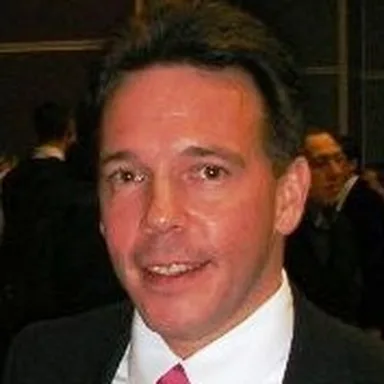
Kato Hetschinoff President, Russian Heritage
How NATO Expansion Shaped Relations Between Russia and the West
Kato Hetschinoff
Kato Hetschinoff, president of Russian Heritage, tells John Catsimatidis that American friends of his living in Russia were very concerned when the conflict began in 2022 but are calmer now, which he links to President Trump and President Putin trying to find peace. He argues that NATO’s moves toward Russia’s borders, which he dates to the late 1990s, are where the hostilities began.
Key takeaways
- Hetschinoff said friends in Russia considered leaving in 2022 as companies disappeared, but decided to stay.
- He said he came back to the States but stays in touch with American friends in Russia.
- Hetschinoff said Russia has no interest in the war, which he called a conflict.
In their words
“I stay in touch with many friends, American friends, that is, who ended up moving and or working in Russia”
“Again, I want to say this, that Russia has no interest in any of the war.”
Quotes are word for word from the automated transcript, uncorrected; the summary and takeaways are editorial.
Transcript
Automated transcript · uncorrectedSunday morning. Well, what is going on in Europe? What is going on in Russia? What is today is Cato Kachinoff. And we work closely together in St. Petersburg, Florida, and work closely together with my wife, Margo. And he’s the president of the Russian Heritage Foundation in St. Pete that has been running the Russian Heritage New Year’s events forever,
along with Margo’s mother and Margo. Well, Cato, you have a lot of friends in Moscow, a lot of friends in Russia. Can we get an update of what the heck is going on in Russia from all your friends and yourself?
Well, hello, John. Thank you for the introduction. Well, yeah, I stay in touch with many friends, American friends, that is, who ended up moving and or working in Russia, and that’s how I stayed in touch with them throughout all these years. I came back to the States here in St. Petersburg.
But anyway, yes, interesting thing has been happening, and I would say this, that what my friend states they have been initially in twenty twenty two when this conflict began they were very concerned they were very cautious a lot of companies were disappearing right and they they didn’t understand what was going on per se they actually also thought
about leaving but their intuition they decide to stick around and i’ve been in touch with them uh... for the most part, right now, they’re a little bit more calmer as to, especially between President Trump and President Putin, where they’ve been trying to find some peace matters, right, some understanding, some equality to calm down the, let’s say, the conflict
between the two countries, at least. President Trump has been trying to pull out of NATO. and I’ll say rightfully so, because what has NATO been doing? Putin, President Putin, has been, you know, he’s been interested only in protecting his borders.
He’s been a president since 2000. And, of course, we all heard the old agreements between United States and Russia and European Union. Well, at that time it was the European Union. But they all agreed that NATO will not move one step closer to Russia’s border. But all that was changing.
In the 90s. So who violated those agreements? NATO did. But I guess who was the president of the United States at that time who allowed that to happen?
Oh, yes, that’s correct. You’ve got a point there, John. You have all the presidents from Clinton onwards to Bush, Bush Jr. that is. Obama was also. So this was in the process, of course, but it was from the 90s.
Cato, I remember when President Putin wanted to be a member of the European Union or wanted to be a member of Europe versus aligning themselves with China. So what I remember correctly is during the Olympics, the Winter Olympics, that President Obama really laid it out badly to President Putin, which tore us further apart. Is that what you remember?
That’s absolutely correct, John.
And then at that point, at that point that forced President Putin to, closer to China because President Obama notified him that I guess he wasn’t really welcome to come to the European Union.
That was not their interest, correct. That was not their interest, right.
And now it’s President Obama that did that. And the other fact is, the way I remember it is that, and if I’m wrong, tell me the truth, is that... that the President Obama, that the big difference they had was President Putin did not want gays at the Winter Olympics and to insult President Putin even more, President Obama
sent a delegation of gays.
Yes, absolutely right. There was that issue.
I just want the whole world to know what the truth is. That’s all.
Yes, that was there, and that was opening up. Now, mind you, Russia was just, you know, because it was the male-female transgenders who were taking part in sports already. And Russia was kind of against it. So, again, they were trying to focus on even on that issue. There was no talk about taking over Ukraine. And we’re talking about, well,
when was the Winter Olympics?
And President Putin said if President Trump was president, I would not have taken over Ukraine or tried to.
Well, again, President Putin had no interest in ever taking over any country around its border. Never. And when he took power in 2000 from Yeltsin, there was, again, a focus was just to improve the economy of Russia. That was it. Improve the military borders because already, like I said, NATO forces have been putting up, along with the United States,
were putting up rocket launchers all over the ex-Soviet Union countries.
Yeah, but let’s be specific. What years were that? So we can find out which was the American president at that time.
Well, this was definitely in the late 1990s, early 2000, that era.
So was that Bush? That was. I don’t know.
Yeah, well, Bush was during 2001, of course. But before that was Clinton, right? Yes. So.... Clinton was the one where President Putin asked for, can Russia become part of NATO? And it was during that, it was during Clinton’s regime, and that’s where he said no.
He said, no, unfortunately, you’re not invited. You’re not part of the club. So that’s where it started. And somewhere around there, when Putin came in, started noticing the rocket launchers being put in Czechoslovakia, Poland, they’re putting these rocket launchers literally at Russia’s borders already. So that’s where all kind of hostilities began. And no matter what, then you
had 2008 when. There was the conflict with Georgia, the Republic of Georgia, right, the country of Georgia, where there was also an attack that happened in 2008, but already in line with Ukraine. They were trying to do these, if I could remind you, color revolutions, right, regime changes. The United States eventually backed away from Georgia, but they wound up going to Ukraine, 2014, Euromaidan.
Victoria Nuland handing out cookies, stupid things, right? She was out there handing out cookies. That’s all recorded. And, of course, their speeches. And it was a regime change interest. Now, Crimea, which was part of Ukraine, Russia had no interest in taking anything over. Yes, before 2014, Russia had its military bases in Crimea. But while everything was focused on Kiev,
the regime changed, somehow whoever was planning it out from the European-slash-U.S. side they forgot that they should have been securing something about Crimea. Unfortunately, they didn’t have that plan. Russia came in and said, came up to the Crimean authorities then and said, are you in with Ukraine or are you in with us? And they said, Crimean officials,
the government said, we’d rather be with you than with Ukraine because we’ve had no progress with Ukraine whatsoever. Everything was not working. No energy problems. Everything was in disaster mode.
Cato, we’re going to be out of time. Let’s conclude our discussion, and we’ll continue our discussion next week.
Sounds good, John. Again, I want to say this, that Russia has no interest in any of the war. And the war that’s going on right now, it’s a conflict. It’s a conflict that Putin initially said in 2022... They’re there to create peace, but with peace they have to conquer some territory to bring down death, the death and
the dying.
Back. Understood. Let’s continue this conversation because it’s important. Everybody knows history exactly how we know it. Thank you, John. We’ll catch up again real soon. Thank you, Cato.
Thank you, John. Take care. God bless. Thank you.
Sunday, November 8, 2026
Alaska's Election Challenges and the Growing Affordability Crisis
Mike Dunleavy Governor of Alaska
Republicans Must Listen to Voters and Get Back to Problem-Solving
Newt Gingrich 50th Speaker of the House
Poor Messaging and Extreme Rhetoric Hurt Republican Election Results
Nicole Malliotakis U.S. Representative from New York
Voters Are Fed Up With Political Division and Washington Dysfunction
Tom Suozzi U.S. Representative from New York
Securing New York's Northern Border Against Criminal Threats
John Sarcone First Assistant U.S. Attorney, Northern District of NY
Why Democrats Swept Key Races and Republicans Lost Ground
David Paterson Former Governor of New York
New York's Business Community Shouldn't Fear Democratic Dominance
Jay Jacobs Chairman, New York State Democratic Party
The Meaning of Veterans Day and the Importance of Military Service
John Mulholland Retired U.S. Army Lieutenant General
America Must Never Forget Its Veterans and Their Sacrifices
Jack Jacobs Medal of Honor Recipient, Retired Army Colonel
The Intrepid Museum's Remarkable History and Mission to Honor Veterans
Ken Fisher Chairman & CEO, Fisher House Foundation
Recognizing the Value of Veterans in the American Workforce
Bruce Mosler Chairman of Global Brokerage, Cushman & Wakefield

Honoring Fallen Heroes and Bridging the Military-Civilian Divide
Allison Jaslow Former CEO, Iraq and Afghanistan Veterans of America

The Path Forward for Republicans After Democratic Election Victories
Jesse Arm Vice President of External Affairs, Manhattan Institute
The Fight for Accountability One Year After the Ostrich Culling
Katie Pasitney Spokesperson, Universal Ostrich Farms

What Martian Meteorites Tell Us About the Origins of Life
Steve Kates Space and astronomy broadcaster (Dr. Sky)
Social Media Companies Must Answer for the Youth Mental Health Crisis
Lynn Shaw Founder of Lynn's Warriors
Midterm Election Fallout Triggers Market Selloff and Investor Uncertainty
John Terrett WABC Financial Analyst