


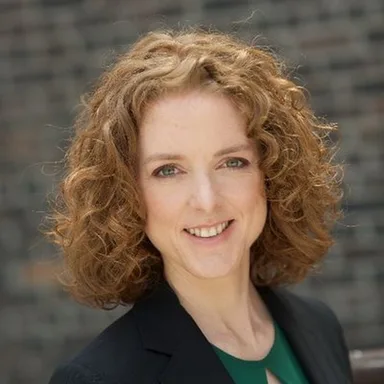
Allison Jaslow Former CEO, Iraq and Afghanistan Veterans of America
Honoring Fallen Heroes and Bridging the Military-Civilian Divide
Allison Jaslow
Allison Jaslow, an Iraq War veteran who stepped down as CEO of Iraq and Afghanistan Veterans of America, tells John Catsimatidis that support for her generation of veterans has changed in recent years. She says there is a big gap between the respect Americans think they show veterans and what veterans feel, and that the military-civilian divide is exceedingly wide.
Key takeaways
- Jaslow said she was commissioned in 2004 and deployed twice to Iraq, including the 2007 to 2008 surge.
- She said many Vietnam-era veterans returned to a country that did not welcome them, unlike her generation.
- Jaslow said philanthropies and corporations prioritized veterans 10 or 15 years ago, but that has changed.
- Jaslow recounted naturalization ceremonies in Baghdad for noncitizens willing to serve before they could vote.
In their words
“I wear the name of a buddy on my wrist every day.”
“One of them hadn’t even reached his 19th birthday. And it’s very important to me that I live a life worthy of their sacrifice.”
“the military-civilian divide is exceedingly wide these days. Gone are the days when everybody’s grandfather served.”
Quotes are word for word from the automated transcript, uncorrected; the summary and takeaways are editorial.
Transcript
Automated transcript · uncorrectedWell, Veterans Day. With us today is Allison Jaslow, and she was a veteran of the Iraq War and a former U.S. Army captain. Well, Allison, give us a report of your days and how you feel being a veteran in your days in Iraq.
Well, first, thank you for having me. I would also say that I am still an Iraq war veteran versus used to being one.
Um, you’re always, once you’re a veteran, you’re always a veteran.
Yeah. Um, you know, it’s funny. It’s been since 2008, since I got off active duty. Um, you know, as you mentioned, I, you know, separated as a captain, um, but I was sworn in as a second Lieutenant in 2004. And, you know, we were in the height of both the Iraq and Afghanistan wars, not just, you know, when I
was commissioned, but also for the duration of the time that I served. So, you know, I had the fortune of doing not one, but two deployments deployed during the surge from 2007 to 2008. You know, and like a lot of veterans, that’s not just my time in uniform, but also, you know, my time deployed was extraordinarily transformative
and is still, you know, very important to, and a big part of who I am. But, you know, as time goes on, you know, your wartime experience, your time in the military, you know, also becomes a much smaller part of you than the life that you’ve lived since.
You know, it’ll be 20 years that I’m out and a couple of years here, you know. So it almost feels like, you know, half a lifetime ago.
And you still run the Iraq and Afghanistan Veterans of America Association.
I actually stepped down as CEO recently. I was first at the organization as the chief of staff and executive director from 2016 to 2018, and then returned to be CEO at the beginning of 2023, which is, you know, it’s the honor of a lifetime to be able to, you know, lead the organization that is the foremost voice
of the post 9-11 generation of veterans. And, you know, I spent time in you know, politics, uh, you know, campaigns in Washington DC on Capitol Hill and to be able to leverage that skillset, you know, on behalf of a community that I belong to, to also advocate for my fellow veterans, uh, was quite the honor. Um, and
I feel very privileged to have had the opportunity to do, uh, you know, no different than I did two tours in Iraq. I did two tours at IAVA as well.
Understood. Um, Tell us, are the American people, we just went through an election, are the American people still appreciate our war veterans that fought for our country and kept our country free?
You know, I appreciate that question. It’s something that I’ve really struggled with in recent years. You know, I think there was so much goodwill for my generation of veterans, you know, in a way that I think was very emotional for the Vietnam era. They, you know, not everybody, but many of them returned to, you know, communities and
a country that, you know, didn’t welcome them in its warm embrace. But it was very different for my generation of veterans. And Especially 10 or 15 years ago, there were a lot of philanthropic organizations and corporations that really prioritized our community. But I think that’s really changed in recent years. And I don’t think the American public means
to not care about its veterans as much as it likes to think it does, but I think that there’s, I think that there’s, you know, a big gap between, you know, what the average American tells themselves in terms of, you know, how much they respect and admire our community and how much, you know, most veterans feel it these days,
just to be honest.
I understand it. And anything else you want to tell all the American people about where the heck we are today?
You know, I don’t have to tell you that this is, you know, quite the time to be living in America, in our country. I think most of us are pretty aware of the fact that we’re living in a historic time that we’re not going to appreciate until, you know, we get some distance from it. But what I would
say motivates me every single day and what I hope would motivate your listeners the ultimate sacrifice for our country is not something that’s abstract to me. You know, I wear the name of a buddy on my wrist every day.
You know, during my first deployment, we lost two soldiers. One of them hadn’t even reached his 19th birthday. And it’s very important to me that I live a life worthy of their sacrifice. And I’ve spent a lot of my life trying to make sure that this country is is a country that is worthy of their sacrifice. And
I hope, whether it’s Veterans Day or, you know, next May on Memorial Day, that your listeners will not only reflect and think about that and their personal responsibility in that regard, but also to, you know, encourage their friends and family to reflect and do the same. You know, the military-civilian divide is exceedingly wide these days. Gone are
the days when everybody’s grandfather served.
Let me ask you a silly question. We were invaded by 20 million migrants during the four years of President Biden. Did that help the divide that you’re talking about? In other words, do you think that the migrants that came in versus immigrants that swore allegiance to America Immigrants swore allegiance to America that came through Ellis Island.
Yeah, I mean, I will say one of the most profound things I experienced while I was deployed was, you know, there’s a place called the Al-Fah Palace, which is on what was called the Victory Base Complex in Baghdad. But, you know, Saddam Hussein had a number of palaces, but it was a big one. It’s where, you know, the
multinational corps Iraq was headquartered during that war. But the palace was also a place where we would do naturalization ceremonies because, you know, there are people who I served alongside who weren’t citizens, who still cared so deeply about this country and wanted to be citizens that they were willing to serve in uniform before they even, you know,
got the privilege to vote. And so, you know, it was, awesome to be, you know, deployed while a naturalization ceremony was happening, you know, in that palace. But I also want our country to be a country where people care so deeply. And I think, you know, you do see people who are risking it all to come here in
a variety of ways.
I appreciate you coming on and I appreciate your honesty. And I want to thank you for coming on and, and thank you for serving our country and keeping our, country safe during your period of time.
Of course. I appreciate you having me and thank you for caring to even do this special. It means more than you know.
Thank you so much.
Sunday, November 8, 2026

Alaska's Election Challenges and the Growing Affordability Crisis
Mike Dunleavy Governor of Alaska
Republicans Must Listen to Voters and Get Back to Problem-Solving
Newt Gingrich 50th Speaker of the House
Poor Messaging and Extreme Rhetoric Hurt Republican Election Results
Nicole Malliotakis U.S. Representative from New York
Voters Are Fed Up With Political Division and Washington Dysfunction
Tom Suozzi U.S. Representative from New York
Securing New York's Northern Border Against Criminal Threats
John Sarcone First Assistant U.S. Attorney, Northern District of NY
Why Democrats Swept Key Races and Republicans Lost Ground
David Paterson Former Governor of New York
New York's Business Community Shouldn't Fear Democratic Dominance
Jay Jacobs Chairman, New York State Democratic Party
The Meaning of Veterans Day and the Importance of Military Service
John Mulholland Retired U.S. Army Lieutenant General
America Must Never Forget Its Veterans and Their Sacrifices
Jack Jacobs Medal of Honor Recipient, Retired Army Colonel

The Intrepid Museum's Remarkable History and Mission to Honor Veterans
Ken Fisher Chairman & CEO, Fisher House Foundation

Recognizing the Value of Veterans in the American Workforce
Bruce Mosler Chairman of Global Brokerage, Cushman & Wakefield

The Path Forward for Republicans After Democratic Election Victories
Jesse Arm Vice President of External Affairs, Manhattan Institute

How NATO Expansion Shaped Relations Between Russia and the West
Kato Hetschinoff President, Russian Heritage
The Fight for Accountability One Year After the Ostrich Culling
Katie Pasitney Spokesperson, Universal Ostrich Farms


What Martian Meteorites Tell Us About the Origins of Life
Steve Kates Space and astronomy broadcaster (Dr. Sky)

Social Media Companies Must Answer for the Youth Mental Health Crisis
Lynn Shaw Founder of Lynn's Warriors

Midterm Election Fallout Triggers Market Selloff and Investor Uncertainty
John Terrett WABC Financial Analyst
