


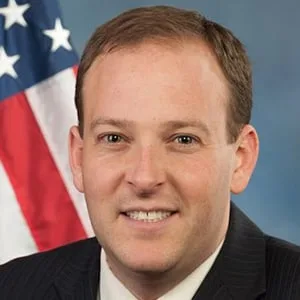
Lee Zeldin EPA Administrator
Rolling Back Regulations and Unleashing American Energy
Lee Zeldin
EPA Administrator Lee Zeldin tells John Catsimatidis that his agency finalized $1.6 trillion of deregulation in fiscal year 2026, mainly through the February repeal of the 2009 endangerment finding and vehicle greenhouse gas standards, and what he calls the largest power sector deregulation in U.S. history. He says members of Congress who disagree with EPA should change the law, and that wind is not baseload power.
Key takeaways
- Zeldin said the February repeal, which also ended a credit for start-stop features, was $1.3 trillion of deregulation.
- He said the power sector action, announced at the G20 in Houston, amounted to over $300 billion.
- He said some in Congress price offshore wind without transmission, storage and firming costs.
- He said the basic question in closing a plant like Indian Point is what will replace it.
- He said EPA approved its part of a small modular reactor project in Tennessee in eight days.
In their words
“So this is all important work, applying common sense, proving you can protect the environment and grow the economy at the same time.”
“I tell them, just change the law. I’ll follow whatever the law states.”
“When the request came in, we were expecting it, and we were able to process it in eight days.”
Quotes are word for word from the automated transcript, uncorrected; the summary and takeaways are editorial.
Transcript
Automated transcript · uncorrectedCalling in this morning is Lee Zeldin, the administrator of the EPA, and he has been one of the most successful people in Washington helping America. I understand that $ 1. 6 trillion in savings for America’s businesses during the last two years. Well, Lee Zeldin, thank you for coming on and And give us an update on the $ 1. 6 trillion. How is this
going to reduce, I guess, energy prices?
Well, it’s great to be with you, John. $ 1. 6 trillion of deregulation finalized in fiscal year 2026. And this isn’t a $ 1. 6 trillion worth of a proposal of saying, yeah, maybe we’ll do this in the future.
No, we.
finalized $ 1. 6 trillion, primarily through two acts of deregulation, even though there were many. The big one this past February announced that the White House of President Trump was a repeal of the 2009 Obama EPA endangerment finding, all greenhouse gas emission standards on light, medium, and heavy-duty vehicles. We got rid of the off-cycle credit, the federal incentive from
the Obama administration to have manufacturers put start-stop features in where cars die at every red light and stop sign. That’s $ 1. 3 trillion of deregulation right there. And then two months ago, while I was at the G20 in Houston, Texas, I announced the largest act of power sector deregulation in U.S.
History.
And that amounted to over $ 300 billion, again, finalized. And we’re talking about work that makes... vehicles, new vehicles more affordable. We’re talking about work that makes more accessible, affordable, reliable, durable baseload power. There was a push for a long time to try to make these power plants go out of existence. There was a lot of effort by the
Biden EPA to get that done. And we’ve been reversing that damage to unleash energy dominance, to help strengthen communities and states and regions across this country to keep you warm when it’s cold, to help cool homes when it’s warm, to be able to get to work, and to lower the cost of those trucks and the transportation of goods.
And that ultimately ends up reducing the cost of living. So this is all important work, applying common sense, proving you can protect the environment and grow the economy at the same time. And we’re following the law as we do it. And it’s a very simple test. Just follow the best reading of the law and no longer go
rogue at these agencies like EPA.
Now, a lot of people are asking, because they know I’m in the energy business, the fact is the midterms, will they affect the EPA at all? Or just tell us, how do we go forward?
You know, my message to members of Congress along the way who might disagree with the decision I make is I tell them, just change the law. I’ll follow whatever the law states. And when we were finalizing, for example, that $ 1. 3 trillion worth of deregulation repealing the endangerment finding this past February, it was quite simply largely due to
just following the best reading of the law. And in that case... I’ll give you that example. Section 111 of the Clean Air Act doesn’t say anything about EPA regulating greenhouse gas emissions to combat global climate change. And if Congress in January or any other point in the future wants EPA to regulate the heck out of greenhouse gas
emission standards to combat global climate change, it’s very simple. You’ve got to change the law. But for me, I believe it’s very important that we follow the best reading of law. And the other thing, too, that we’ve seen with Supreme Court decisions over recent years is there’s something called the major questions doctrine, and it’s from cases like
West Virginia versus EPA. And this is something a lot of Americans are familiar with from another perspective. Congress will have a– someone in Congress will want to do something– but they don’t have the votes to get it done.
So they’ll just pick up the phone and they’ll call their friend down the street who runs a federal agency and they’ll say, well, we can’t get it passed in Congress. Why don’t you do it anyway? But that’s not the way to run government. We elect people to represent us.
We live in a constitutional republic. And when you get to that point where you’re debating over legislation, if it’s a good idea, you could put together the votes to pass it. But don’t be picking up the phone, calling down the street, and asking for people running agencies to do it anyway when you can’t change the law. So
that’s the simple message to members of Congress who are coming in, really, of either party, House, Senate, doesn’t matter. If you disagree with anything they do on any given day, well, it’s easy enough. Just try to change the law.
And I understand that, and I think the people of our country understand that. and to change the law, you need more than 60 votes in the Senate, and the president can still veto it, and then they would need to override the veto that needs 67, I guess, votes in the Senate. Am I saying it right?
Yeah, absolutely. That is a process that’s been around for... a very long time. You know, it can be frustrating when you’re trying to get something done and you don’t have the votes. And, you know, the challenge in that respect is you need to bring your idea to the public and build support and you put coalitions together and
you’re trying to convince Americans to rally behind that particular change. And, you know, I came from the New York State Senate for four years, as you know, before I served in the House of Representatives. And what I saw so often was that somebody would come into some state legislator’s office in Albany, have an idea. It’s not vetted. It’s not debated.
The idea just quickly becomes a bill. The bill goes to the floor for a vote. The bill passes both houses. The governor is signing it. And it has massive consequences for And no one debated it. No one vetted it.
No one approved the language. If you weren’t voting for it and you had a good idea on how to change it, no one was listening to you. It’s a better process when a particular idea can be discussed amongst the American public, can be debated. You have to build support.
You have to get those votes together. So, yeah, if you feel like you have a big idea, you want to run for Congress... Well, just because you get elected doesn’t automatically mean that you get to pass whatever law you want. You have to go out and build a support in order to pass it. I agree.
And I’ve seen that happen in New York with these windmills that got approved on the Long Island coast. And you mean you live on Long Island coast. in the summers sometimes, and before you had to go to Washington, and they’re destroying the coastline, they’re destroying the fishing, and it increases the price of energy like 200%, 300%, and
those windmills never run right.
Yeah, President Trump’s been very outspoken on this. He’s made no secret of how much he agrees with the sentiment that you just shared about And what’s also important here is that what we’re talking about is an intermittent source of energy. It’s not baseload power. And there are people who are in government who will view something like wind
as a substitute for baseload power. So in New York, where they won’t allow the extraction of natural gas, they’re not allowing Constitution Pipeline energy, to be built. They closed down Indian Point nuclear plant. They won’t allow gas hookups on new construction. They’re trying to ban the sale of gas-powered vehicles. And that list goes on. You can’t just say, well,
we’re going to build a windmill and then everything’s going to be okay. You’re not understanding the reality of how much energy is needed to be able to power this particular state and to be able to bring down costs and to have you know, durability and redundancy on the grid.
And the last piece that I see happen too often, this happens also, I’ve seen this firsthand with certain members of Congress, is that they’ll talk about offshore wind and they’ll put a price on it and they’ll say it’s the cheapest form of energy that is out there. And what they will so often do repeatedly, taking advantage of
the fact that a lot of average everyday Americans don’t know the exact cost of each source of power, is that these people who are throwing those numbers out from Congress, they won’t use the all-in cost. They won’t factor in the cost, not just to build a windmill, but everything to do the transmission lines, to store it. You need
to be able to have these storage systems, and the cost ends up adding up significantly, and those numbers just are not uh... given as the all-in costs the firming costs uh... which are a lot higher than the numbers you see thrown around by many of these advocates including inside of congress.
And, you know, we both live in New York State, and the fact of Indian Point, did that have to die? No.
And, you know, it still remains a very controversial decision to this day. You had a massive source of of power for New York. And let’s just say the decision is going to be made, if we’re going to go back in history and we’re going to have this debate all over, if the decision was going to be made
to close Indian Point, here is the very basic third grade or running government 101 question. What is going to replace it? If you’re going to close Indian Point, and Indian Point provides X amount of power, what are you going to do to make up for it? And what happens too often in government is that you have people
who go all in behind closing a particular plant of some sort that exists, and everyone gets so fixated on building the support for closing something that it ends up getting closed. That decision gets punched over the finish line.
And we’re left holding the bag, just the people who are struggling to make ends meet, the people who can least afford to have that impact of closing the nuclear plant. There was no discussion and decision of how to properly make up for it. And that’s just the saddest part of all this. And it’s just one of the perfect
examples of incompetency in government.
I agree completely. The other thing that comes up, and we’re in the energy business, and I believe in coal energy. I believe in oil energy. I believe in SMRs and nuclear energy. A lot of people are saying that under your administration, the Trump administration, and Lee Zeldin and the Department of Energy besides, that you’re pro-energy. But how do
you make long-term investments? not knowing what the future is.
Yeah, I’ll give you a great example. You know, in EPA, by the way, while we have the power to slow things down, we really have the power to speed up projects as well. You just referenced SMR. And most of the people out there are very familiar with what that is for those who aren’t. You know, we’re talking about
small modular reactors. And I’ll give you an example of one project a few weeks ago, Oak Ridge, Tennessee. There was an announcement of a new SMR, the small nuclear site that’s going to be built. And the FERC process, the Federal Regulatory Commission process, ended up taking about 14 months, if I remember correctly. Well, EPA had a piece of
that approval. And on November 24th of 2025, Thanksgiving week, EPA received the request for our approval for our piece of the process. Now, think of how long it might take for the Environmental Protection Agency to approve a nuclear site over past administrations. It could take years, maybe. It might take forever. Maybe you never get the approval. So
we got the request on November 24th of 2025. Eight days later, on December 1st of 2025, the Trump EPA issued our approval on that request. And it wasn’t that we skipped due diligence. We knew that this project was coming.
We leaned into the application and our work before the request came in. When the request came in, we were expecting it, and we were able to process it in eight days. There is so much of that investment coming into the United States right now. It is into the many trillions of dollars. President Trump often talks about it.
I’ve been to a lot of groundbreakings watching this firsthand. all across american that investment continues in the auto industry in the energy industry with manufacturing and more it is uh... so important for there to be speed for it uh...
a permitting process that is faster that cost less and it has more certainty and the more that you are able to deliver on those three things the more that they’ll be even uh... further increased investment in the united states uh... and their and there will never be too much We want to do our part, and again, proving,
as I mentioned earlier, that you could grow the economy and protect the environment. We do not have to choose between those two.
Bottom line, and we’re almost out of time, bottom line is let’s do it now versus waiting for the future and do all improvements to refining the coal industry, the nuclear industry. before something happens?
We need to get maximum investment in America all day, every day. This is something that right now there are so many people so bullish on the direction of this country, and that is why they are investing billions and tens of billions of dollars at a time in projects all across this entire country. And now it’s just important for
certain states and local communities to do their part because there are many states that are pushing out these projects and that investment gets done elsewhere. And once those plants get built in some other state, that’s it. They’re not going to just pick up and move some 500,000 square foot site and put it on the back of a
tractor to move it to another state. So now is the time for everyone to welcome, embrace this investment in America as President Trump talks about this golden age in America. It is important that while the federal government, the Trump administration is doing our part, that states and local communities are doing their part as well so that we are
making our country stronger. Our economy can grow. There are more jobs that are created. The cost of living can go down. In order for our economy to be ripping, everyone needs to do their part. If they raise their hand, they want to run for office or they want to run some agency. Everyone has a role to play. We
certainly want to do our part here at the Trump EPA.
Lee Zeldin, thank you for everything you’ve done for America. Please thank the president for everything, for putting you there to create what’s happening in America. And thanks to our Secretary of Energy.
Well, thank you, John. Yep, Secretary Wright’s done a great job, and I’ll convey your message to the president.
Thank you so much.
Sunday, November 15, 2026

Navigating Senate Rules to Advance Key Republican Priorities
Kevin Cramer U.S. Senator from North Dakota
Washington Must Maintain Pressure on Iran
General David Petraeus Former CIA Director & Four-Star General
America's Military Technology Priorities and the Race to Stay Ahead of China
Michael Dodd Assistant Secretary of War for Critical Technologies
Inside His Prison Years and His Views on Today's Democratic Party
Rod Blagojevich Former Governor of Illinois
Democrats Must Unite and Avoid Internal Infighting
David Paterson Former Governor of New York
New York’s Budget Surplus, Rainy Day Reserves and Fiscal Challenges
Tom DiNapoli New York State Comptroller

Fighting Human Trafficking, Promoting Faith and Reaching Hispanic Voters
Bob Unanue Former CEO of Goya Foods

The Legacy of Stanley Zabar and the Family Behind the Legendary New York Deli
Bill Wachtel Founding Partner, Wachtel Missry LLP

The Growing Financial Struggles Facing Small Business Owners
JT Foxx Entrepreneur & Investor

New Medical Breakthroughs Are Changing Alzheimer’s Diagnoses
Dr. Mason Pimsler Geriatrician, Lincoln Medical Center

Reversing the Effects of Aging and Maximizing Your Healthy Years
Dr. Peter Michalos WABC Medical Expert

The Future of Moon Exploration and Preparing Humans for a Mission to Mars
Steve Kates Space and astronomy broadcaster (Dr. Sky)

Congress Must Act Now to Protect Children from Online Dangers
Lynn Shaw Founder of Lynn's Warriors

Wall Street Weighs Nvidia Controversy Amid Growing AI Investments
John Terrett WABC Financial Analyst
Lee Zeldin
Unleashing American Energy Dominance Through Sweeping Deregulation
Lee Zeldin EPA Administrator
Expanding American Energy Production to Lower Costs and Strengthen the Economy
Lee Zeldin EPA Administrator
America's Energy Dominance and Economic Growth Strategy
Lee Zeldin EPA Administrator
There is no better time for the US to be energy independent.
Lee Zeldin EPA Administrator