


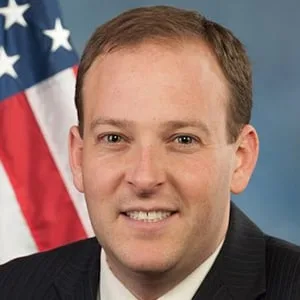
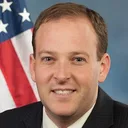
Lee Zeldin EPA Administrator
Expanding American Energy Production to Lower Costs and Strengthen the Economy
Transcript
Automated transcript · uncorrectedSunday morning. Well, what is today is Lee Zelden, a good friend, a longtime congressman in Long Island, now EPA administrator for the last eighteen months. And well, Leezelden, you have accomplished a lot in the last eighteen months, more so than anybody else has accomplished. Can you give all Americans all the accomplishments you have done to make things better?
Well, John, it’s great to be with you, and we’re delivering on the Trump mandate that Americans voted for November of twenty twenty four, and at EPA that takes on a few different ways of implementing that agenda. One applying common sense isn’t too much to ask for for the American public, proving that we can protect the environment and
also grow the economy. On a one year anniversary of President Trump’s term in office, we released a list of our top five hundred environment mental actions from that first year, and we’ve only continued that pace since, while at the same time engaging in what amounts to more deregulation than you have seen in the past across its higher presidencies,
all agencies combined, we inherited a mess, and we’re fixing it. There was an effort by the Obama and Biden administrations to strangle and entire sectors of our energy economy out of existence, and we’re reversing that damage in earnest. Meanwhile, we did an agency wide reorganization. We have saved tens of billions of dollars. We have downsized about a quarter
of the agency, and we’re actually getting more done with less. So you name it. We have been tackling the full at all the aspects of that Trump mandate the American public voted for.
That is phenomenal stuff. Now we are producing more crude oil than ever ever before in the United States of America, And tell us, do we have enough pipelines and are we building enough pipelines? I understand. I see that President Trump is pushing pipelines in the last week or two.
And do we have enough refining capacity to refine all his crude we’re producing.
Well, it’s an important topic. John and President Trump. On the day first day he was sworn back into office, he declares a national Energy Emergency. He creates a National Energy Dominance Council. He brings together epa Department of Energy, Department of Interior, Department of Commerce. All of us work together to implement this. He frequently meets with us together.
And you mentioned the topic of pipelines. When we sit down with the President to talk about pipelines, this isn’t a big picture conversation of what the stats look like nationwide. President Trump wants to know the progress of getting pipelines built.
Whether it’s getting an an LNG pipeline in Alaska along the Trans Alaska Pipeline route, whether it’s getting NeSSI pipeline, and Constitution pipeline built. NeSSI pipeline is going to be done by the end of twenty twenty seven. Constitution pipeline.
New York needs to get out of its own way and get out of the way of this because we need to deliver more natural gas through New York and into New England, trans Western Pipeline in the southwestern United States, and pipelines through the Great Lakes and more so. Yes, there are a lot of pipelines that are getting built.
There are others that are in the process. There are some that we need to get some of these blue state governors out of the way to build more pipelines. We are unleashing energy dominance. We are seeing more of a desire of other nations abroad wanting to look to the United States to be partners with the US and
to get our supply in a way that helps with our national security, it helps with our economy, and I believe it’s better for our environment as well, because we tap into these energy supplies so much better for our environment than so many other countries elsewhere around the world.
A lot’s going in the right direction as far as unleashing US energy dominance. Every single day, we’re looking for a new edge to go further.
Understood and tell us what do we do with refining capacity? Can we increase it somehow? Yeah?
Absolutely. I mean we’re seeing this in one extreme in places like a blue state like California, where they want to use the power of their laws and their regulations to put these refineries out of business. And we’re doing whatever possible to make sure that we are not going to allow California’s policies to make Americans suffer. You have
a lot of red states on the flip side that are absolutely embracing the need to desire. They’re issuing more permits, these refineries are staying alive, and they have a vision for expansion and additional investment. So nationwide, the refineries have strong allies and President Trump and the Trump administration. And at the state level, it really depends on what state
we’re talking about, and whether it is the Gulf of America region or many other red and even purple states elsewhere. They understand the issue, they want to do their part to help tackle it. They’re following their obligations under the Clean Air Act, the Clean Water Act. We’re doing this right for the environment, but it’s heading in the right direction.
I can’t say that that’s the picture for all fifty states because at the same time, we’re dealing with this reality in California trying to go along with that strangle out of the existence entire sectors of our economy. Approach making believe that a intermittent source like WHEND is going to be a substitute for reliable, durable base load power. Uh.
And it’s a foolish approach, and it’s it’s one that can cause a lot of damage. And I believe that the American public is looking loud and clear. They want to protect the environment. They also want to heed their economic concerns and apply common sense with these policies, So refinery is it’s it’s been nothing but progress as far
as the Trump administration goes. The biggest challenge has been breaking through some of that blue state resistance.
And UH, there’s been a lot of controversy between the United States and Canada lately. UH, but I’ve always had a good working relationship with Canada, and Canada wants a good relationship with US. UH. How has it been working with your uh, with your discussions with that.
Yeah, I mean we were I was in Canada for the G seven. We have been involved in meetings together where we were in Mexico where it was Mexico, US and Canada, the Environmental minister and their team from the Canadian government meeting where we’re able to tackle cross boundary issues.
One of the issues that you point out recent weeks where it’s a challenge is that there was wildfire smoke, as you well know, coming across the border, causing big negative impacts to air quality for Americans. It was impacting a lot of cities where you have larger populations, So that ended up spiking that public interest faster and more robustly.
So that level of engagement is a difficult one because we really need and want in that situation, Canada do everything in their power to put out these wildfires as fast as they can, and the strategy over in Canada was to monitor critical assets. They were letting a lot of these fires just burn out of control. The more
that these wildfires spread, and you were talking about several hundred of them that were out of control at one point, it causes a negative impact. And you know, here we are in the United States. You know, we’re not going to just build a you know, sixty thousand foot screen or wall up in the air to prevent it from
coming across the border. So these are difficult conversations, but I would say all and all over the course of the last year and a half, it’s it’s been it’s been good and productive our conversations all across the entire border of the northern US.
Anything else you want to tell to the American people on a Sunday morning, well, you know, would say.
One of the other topics that come to mind that has a lot of interest across the country, as this topic of data centers. There’s been a push from some states where they’re talking about a statewide and moratorium and what I’ve found is that most of this country wants to make sure the United States wins this race to
be the AI capital of the world, that we do not relinquish this to China. At the same time, they have important questions about how data centers get built. The President has this ratepay or protection pledge to make sure that if there’s any movement and an energy build because of a data center project, that movement has to go down,
not up. That has been very successful. We have to make sure that these projects are a net provider onto the grid, not a net taker. And we have to make sure that they are making important reuse one hundred percent recyclable water, by the way, or better if they don’t need water at all, they need to be responsible
users of water. These three aspects that you see of these questions across the country are important for local communities to ask. But what we can’t do is just say, well, let’s not have any data centers built all across the entire country and let’s just let China win. Lastly, I would say, you know, you have some people who might
wigh in on social media saying we don’t want any data centers anywhere in the United States. The problem with that is you’re on your phone here on social media. You need to realize it’s just how much of your life, of our lives rely right now on data centers. So let’s ask the questions, let’s be responsible, let’s do it right.
But let’s make sure that we win this race in the United States. It’s important for us not to see it to try it be a lot harder to try to catch up later.
One last question, energy course keep rising in a place like your own hometown in New York. And the fact is that these windmills, these windmills are creating more damage than the environment along the Atlantic coast. And I know President Trump has been trying to get rid of them or whatever. And it’s also questions the price of energy
to go up. Is there any movement in any direction in that, Well, yeah.
I mean there is no coincidence that New York’s energy bills have been skyrocketing over the course of these last several years. You have policies that are coming out of Albany that are causing it. They have banned the extraction of natural gas. They aren’t improving new pipelines like Constitution Pipeline, which is absolutely necessary. They won’t allow hookups to gas
on new construction. They have set climate goals that they know that are out of reach, but they’ll cause a tremendous amount of economic pain to people who can least afford it. And they talk about the intermittent sources like wind as if it is a substitute for baselok power and it’s not. And they want to know. They want
local control instead of local control and getting these battery energy storages, source systems built, and residential areas and communities where they don’t want it upstate, they’re delivered. They’re dealing with the state putting these solar farms get you jamming locals into accepting these solar farms and communities even though the communities don’t want it. When you add it all up,
it ends up resulting in an energy policy that is bad on the just on that front of energy policy singularly, but also the economic consequences, the impact on cost of living, on quality of life, and a lot of New Yorkers are fleeting as a result, and they’re not looking back.
We made a decision out of EPA earlier this summer with regards to the summer blend of fuel for oil, and you had almost every state in the country go along with it. And as a result, because of that, they had their oil prices go down, not up. New York California examples of two big blue states where they
decide not to go along with it, and as a consequence, New Yorkers Californians had their bills go up, not down in the cost of being able to get gasoline. So you know, these policies, they’re reckless, they’re foolish that they’re causing a lot of damage. A lot of people are complaining about the economic consequences, and they should complain. They
should complain more to make sure that they’re getting the change. And while we might be putting Tommon sense into our decision making in the Trump administration, that needs to happen at the state level in places like Albany as well.
Lee ze Elden, EPA administrator, thank you for your common sense, Thank you for telling the people the truth. And God bless you and God bless America.
Thanks a lot. John
Sunday, August 23, 2026
Iran and Ukraine Are Creating New Challenges for Global Security
General David Petraeus Former CIA Director & Four-Star General
New York's Green Energy Push Is Threatening Grid Reliability
Claudia Tenney U.S. Representative from New York
Investigating Allegations of Non-Citizens Voting in New Jersey Elections
Jeff Van Drew U.S. Representative from New Jersey

Returning Education Control to States and Restoring Title IX Protections
Kimberly Richey Asst. Secretary for Civil Rights, U.S. Dept. of Education

The Rise of Black Candidates and the Changing Landscape of American Politics
David Paterson Former Governor of New York
E-Bike Recklessness Is Creating a Public Safety Crisis
George Borrello Senator from NY

Florida Is a Beacon of Freedom and a Stronghold for Conservative Values
Evan Power Chairman, Republican Party of Florida

From Baseball to Politics and the Fight to Preserve a Republican Majority
Mark Teixeira Nominee for Congress, TX-21; Former MLB Star

Democrats Are Losing Voters by Ignoring Affordability
Jerry Kremer Former NY Assemblyman & Political Columnist

A Common-Sense Republican Campaign Focused on Public Safety and Tax Relief
Michael LiPetri Nominee for Congress, NY-3; Former NY Assemblyman

Greece Faces Growing Tensions With Turkey and Rising Security Challenges
Prince Pavlos Crown Prince of Greece

Taxes and Regulation Are Driving Entrepreneurs Out of New York
JT Foxx Entrepreneur & Investor
Inflammatory Words Can Fuel Violence and Hate
Angelo Vivolo CUNY Trustee; Restaurateur & Philanthropist

The Growing Threat of Antisemitism and Violence Against Houses of Worship
Karen Schneier Dresbach EVP, Appeal of Conscience Foundation


Laser Communication Is the Future of Data Transfer
Steve Kates Space and astronomy broadcaster (Dr. Sky)

Delaying Smartphones Can Protect Children From Online Dangers
Lynn Shaw Founder of Lynn's Warriors

Retail Results, Bitcoin Gains and Major Economic Developments
John Terrett WABC Financial Analyst
Lee Zeldin
Unleashing American Energy Dominance Through Sweeping Deregulation
Lee Zeldin EPA Administrator
America's Energy Dominance and Economic Growth Strategy
Lee Zeldin EPA Administrator
There is no better time for the US to be energy independent.
Lee Zeldin EPA Administrator
