


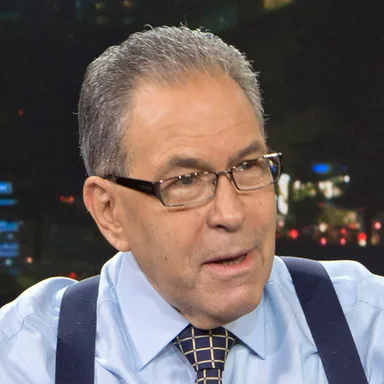
Michael Stoler Real Estate Expert
The Stoler Report with Michael Stoler: Teddy Drucker
Transcript
Automated transcript · uncorrectedGood morning. This is Mike Stoler for the Stolar Real Estate Report. What’s happening in New York City real estate, especially in these buildings which would be considered be in ce your office buildings, not the buildings that are considered true trophies at three hundred dollars of food. So today I have my friend Teddy Drucker, who’s a principal of
Drucker Associates, to talk about what’s happening in the small office building business, the financing business, and the retail business. Thanks for being here.
Michael, It’s always a pleasure to join you. Thank you for having me.
So tell me that you were with me about a year ago. At the same time, what’s happened for the business that you have with your family.
So leasing in New York has picked up a tremendous amount, which is great, and you mentioned at the open of the show these classes be into the office buildings. And one of the things that we have realized in our business, and as you know, we’ve we’ve looked to to we’ve looked to land across the Capital Stack to some of
some other buildings, is it’s one of the most misunderstood parts of the market. These Class B and C office buildings actually operate a lot more similarly to the affordable housing business than they do to the office business. The reason for this is these are small business tenants that once they find good space that their employees can get
too easily, they don’t like to move. So they’re very sticky, they’re very loyal, and they don’t want to pay, as you mentioned, three hundred dollars a foot and a lot for it. They can’t afford it, and a lot of them their businesses are they must be in the office.
Their businesses are almost AI proof because these are companies that don’t have the luxury to work remotely or to outsource AI. So we’re talking about showrooms, we’re talking about podcasting, studios, engineers, architects, firms that actually need real inoffice presence, either in your job site or because of whatever it is that they do.
And the barrier to entry to become a twenty five hundred square foot tenant is a hell of a lot lower than it is to become a two hundred and fifty thousand square for tenant. So when you have one of these spaces that vacates, there are ample companies that would take it to backfill it. And the other phenomenon
within the space is that it’s a very fragmented landlord group. There are very few owners of this product that can put forth a very user friendly product for the tenants to ultimately lease, and that goes very much appreciated within.
The lease in community.
So you may read brokerage statistics about double digit vacancy within the space, but if you really pair it back to who the quality landlords are of these types of buildings, the vacancy rate actually drops substantially. Now, these types of assets have been gone through a massive devaluation period from twenty nineteen to today, and that’s causing a lot of financing
pressures from pre COVID financings that are starting to roll off. The problem is these buildings are small and institutional lenders view it as Class B and C as you mentioned. So where we found interesting opportunities being a solution, being a provider for these owners to help them refinance pre COVID debt recapitalize their buildings in a way that works
for them. And that’s a very important point because the majority of these owners are long term family businesses much like ourselves, and what they care about is very different than what institutional owners care about or funds care about.
They’re not looking to exit the asset.
In three years.
They just want to survive until the next period of time when rates fall and they can refinance out with more traditional financing. And so we found a very interesting niche being a solution for these types of groups to help them work through these problems structure around issues that are unique to these long term family businesses. And it’s
interesting because there’s not a lot of players that are solely focused on the space, So what are you unique? Are there? What’s unique? A lot of them have very long term hold duration, so you know, a capital solution that doesn’t force a major liquidity event in a few years that involves a sale because in a lot of
these instances, these owners have very low tax bases, which makes a sale very challenging to do, especially when you layer on top a lot of financing just in terms of order of operations of government has to get paid before before the bank gets paid. And so having a solution that it won’t necessarily force a sale if there’s
an equity like component to it, is actually quite critical for a lot of these groups. And so you know, a group that has more long dated capital that can be a solution for that is actually quite rare. And also just you know, more high level. There are not a lot of institutional players that realize the durability of
the cash flows of these assets. And as you said, just view it as secondary and tertiary office, which is in our opinion, not the way that that these buildings should be viewed.
So what type of financing are you looking to provide?
We look what we be very flexible. We’ll do anything from traditional high yield credit to preferred equity to selectively in common equity for the red opportunities. These are you know, small balanced deals and these are situations where they’re just there, aren’t The owners don’t know that this is an option that exists.
So how do you get the message across.
A lot of it is doing things like this. It’s direct to owner. It’s a lot of people that you know, we’ve known for a long time. But it’s challenging. It’s not it’s not a traditional market by way of you know, they go and they hire one of the big capital markets advisory firms and they’ll go out and they’ll source
fifteen bids for them. It’s a very it’s a much more opaque part of the market. It’s very fragmented and a lot smaller.
With the competitors.
To you, there are some smaller funds that are in the space that are looking to do similar types of deals, but there’s nobody that’s solely focused on the space. And that’s the gap that we’re looking to fill. And it’s a niche that you know, I think our perspective is very long term owners of this type of product gives us,
gives us a real uh uh value proposition to the ultimate borrowers that we understand their business. We understand what happens day to day in a way that you know, a lot of these bigger firms that are more product diagnostic do not.
So what’s happening in leasing of your buildings.
Leasing is good, Leasing is strong. If you have good product, it will lease rents are not quite what they were pre COVID, but we’re getting there. And as the top end of the market fills up, there’s a trickle down effect and so you know, it starts to fill into the secondary and tertiary product. But for the first time
in a very long time, I would consider this a landlord’s market where you know, landlords have real pricing power, and there’s just not a whole lot of heative space now in our part of the world. In you know, the small batch of office space, there is still a fair amount of vacancy. But again, it really depends on
what quality of offering you’re looking for.
Okay, what type of rents are you seeking? It totally depends.
I mean, it really depends on where I’d say these buildings are anywhere from thirties to fifties. If you have a class B R C asset at a very good location, you can obviously push from there. But it’s constantly changing of a day, and you know a lot of times you have older leases with lower rents that are rolling off,
but it’s there’s real momentum on rents for the first time.
Okay. In addition to the office leasing market, you’re involved with the retail market. Talk to me a little better.
Sure, So we do have some retail in the city, and then we do have some retail on Long Island as well as in Westampton Beach, And so which market would you like me to to cover?
Whichever one you want to?
Okay, Well, well, I know as a West Hampton native yourself, you’re fascinated with West Hampton Beach, so.
Let’s talk about that.
So West Hampton is just a wonderful town. It’s a beach town that’s adjacent to the Hamptons that happens to have the last name Hampton in it.
And what’s happened.
Over the last few years really off of the foresight and brilliance of the ex mayor now town supervisor Maria Moore, who really was the catalyst for all of the growth that’s transpired, is West Hampton is just booming. There’s been so many people that have moved in. There are now real brands and restaurants that are interested in what’s going on,
and for the first time, we’re starting to get inquiries from names that previously would have never considered going anywhere that wasn’t Southampton or points for their east and so it’s very interesting. Now.
At the end of the day, it’s still a small community and as very long term owners there, we’re always very mindful of that and we want to curate a mix of retail that will be additive to our neighbors and to the fellow business owners that a lot of them we consider to be our friends, and we viewed
as a little bit of a responsibility as well. But we have one vacancy right now that we’re in the process of renovating, and we’re very hopeful to soon be able to announce a exciting food use that I think will be great for the town and I think we’ll be very much enjoyed.
Okay, great. So in conclusion, what what do you see acted during the period of time, especially with the lending market.
Well, I think that there’s a lot of there’s there’s a plethora of debt capital out there. Specialty lenders like us, who are focused on a particular niche I think have an opportunity where they can provide a solution and a service to borrowers that need this type of capital that is very unique compared to lenders that are more agnostic
and less product specific. I think if you need financing, it’s a great time to be a borrower. The private capital business on the lending side is quite robust right now. Spreads have tightened a tremendous amount over the past couple of years, and you know, I think what’s going to win the day ultimately for some of the smaller groups
that are getting into the lending business like ourselves, as being very focused on one particular niche that you know really well and can tailor solution. It sets you apart from some of the larger institutional lenders.
Last, come at your third generation. Yes, let’s talk about the first in the second.
Sure. So the first is my grandfather, who was just the best guy. He was the warmest guy, the life of the party, and he just had vision. He didn’t even have a high school education, certainly didn’t go to college.
He started in the textile business and slowly transitioned into the real estate business sometime around the nine teen fifties, and then for the last fifties years or so, my dad, who’s my best friend in the entire world, has run the business and he’s very similar to his father, and he is my life mentor, my best friend, and he
doubles as a father and a brother to me because I’m an only child, and I’ve learned a tremendous amount from him, and I feel incredibly fortunate that I get to work with him every day.
Knowing your father, it’s a great opportunity to work with him because he’s a wonderful guy. Thank you. Michael, thank you again for coming back this year.
It’s a pleasure to be here and I look forward to being here next year.
Okay, take care,
Sunday, August 23, 2026

Expanding American Energy Production to Lower Costs and Strengthen the Economy
Lee Zeldin EPA Administrator

Iran and Ukraine Are Creating New Challenges for Global Security
General David Petraeus Former CIA Director & Four-Star General

New York's Green Energy Push Is Threatening Grid Reliability
Claudia Tenney U.S. Representative from New York

Investigating Allegations of Non-Citizens Voting in New Jersey Elections
Jeff Van Drew U.S. Representative from New Jersey

Returning Education Control to States and Restoring Title IX Protections
Kimberly Richey Asst. Secretary for Civil Rights, U.S. Dept. of Education
The Rise of Black Candidates and the Changing Landscape of American Politics
David Paterson Former Governor of New York

E-Bike Recklessness Is Creating a Public Safety Crisis
George Borrello Senator from NY

Florida Is a Beacon of Freedom and a Stronghold for Conservative Values
Evan Power Chairman, Republican Party of Florida

From Baseball to Politics and the Fight to Preserve a Republican Majority
Mark Teixeira Nominee for Congress, TX-21; Former MLB Star

Democrats Are Losing Voters by Ignoring Affordability
Jerry Kremer Former NY Assemblyman & Political Columnist

A Common-Sense Republican Campaign Focused on Public Safety and Tax Relief
Michael LiPetri Nominee for Congress, NY-3; Former NY Assemblyman

Greece Faces Growing Tensions With Turkey and Rising Security Challenges
Prince Pavlos Crown Prince of Greece

Taxes and Regulation Are Driving Entrepreneurs Out of New York
JT Foxx Entrepreneur & Investor
Inflammatory Words Can Fuel Violence and Hate
Angelo Vivolo CUNY Trustee; Restaurateur & Philanthropist

The Growing Threat of Antisemitism and Violence Against Houses of Worship
Karen Schneier Dresbach EVP, Appeal of Conscience Foundation

Laser Communication Is the Future of Data Transfer
Steve Kates Space and astronomy broadcaster (Dr. Sky)

Delaying Smartphones Can Protect Children From Online Dangers
Lynn Shaw Founder of Lynn's Warriors

Retail Results, Bitcoin Gains and Major Economic Developments
John Terrett WABC Financial Analyst
Michael Stoler
The Stoler Report with Michael Stoler: Eli Weiss and Andrew Albstein
Michael Stoler Real Estate Expert
The Stoler Report with Michael Stoler: Eli Weiss and Andrew Albstein
Michael Stoler Real Estate Expert
The Stoler Report with Michael Stoler: Robin Schneiderman
Michael Stoler Real Estate Expert
