


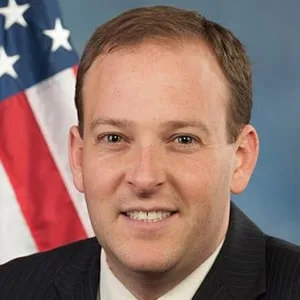
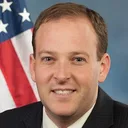
Lee Zeldin EPA Administrator
Unleashing American Energy Dominance Through Sweeping Deregulation
Lee Zeldin
EPA Administrator Lee Zeldin tells John Catsimatidis that his agency has finalized over $1.6 trillion of deregulation in just over a year and a half and will propose reconsidering the Biden administration’s oil and gas methane rules in the coming days. He describes the National Energy Dominance Council’s coordination across agencies and argues that wind is no substitute for baseload power.
Key takeaways
- Zeldin said a new executive order lets Americans use red-dyed diesel, mainly a farm fuel, in highway vehicles.
- He said EPA moved a fuel vapor pressure transition up from Sept. 16 to Sept. 1, adding supply.
- He said Indo-Pacific nations want U.S. energy to diversify supply and rely less on the Middle East.
- He said EPA has proposed repealing the remaining greenhouse gas standards for the power sector.
- Zeldin said battery storage for wind and solar near homes and schools raises environmental and fire concerns.
In their words
“This red-dyed diesel fuel, which is mainly used in agriculture and farms now can be used for the vehicles on the highway.”
“They don’t want to have to rely on the Middle East the way that they had for so long.”
“With regards to the coal industry, we have been reversing damage that we inherited with different rules and regulations.”
Quotes are word for word from the automated transcript, uncorrected; the summary and takeaways are editorial.
Transcript
Automated transcript · uncorrectedSunday morning. Well, with us today is Lee Zeldin, and he’s the administrator of the EPA, and so many things are happening, and America is getting more business-friendly under President Trump and under the direction of Lee Zeldin, the EPA director and administrator. Well, Lee Zeldin, you know, and I can call you Lee because we know each other forever.
Tell us what the heck is going on in the EPA, because you guys, I mean, we’re making big progress on making America better, and I know President Trump has $ 20 trillion worth of new business coming into America. How do we fuel all this business?
Amen. Yeah, so far, while protecting the environment, while delivering hundreds of important environmental wins, EPA has now finalized, not just proposed, EPA has finalized over $ 1. 6 trillion worth of deregulation. One agency in just over a year and a half finalized over $ 1. 6 trillion of deregulation. We just announced I was in Santa Fe, New Mexico the last couple of days.
I’ve been traveling the country a lot. I was in, in the last week, New Hampshire, Maine, Pennsylvania, South Carolina, Arizona, New Mexico. When I was in Santa Fe, New Mexico a couple of days ago, I announced that in the coming days, EPA is going to be Releasing our proposal to reconsider the Biden administration, quad OBC regulations on oil
and gas, methane rules. This was an important ask to make sure that we’re unleashing American dominance, American energy more in our country. It’s important to many states. I would say it’s important all across the U.S., whether it’s larger producers and also the stripper well, the marginal wells, some of the mom and pop smaller producers. producers, too. So
this is a big win. It’s going to help deliver tens of billions of dollars more to the U.S. economy and to the energy sector. Meanwhile, as you well know, President Trump signed an executive order this week that allows Americans to access the red-dyed diesel fuel to allow them to use it in the vehicles that they use on
the highway. This red-dyed diesel fuel, which is mainly used in agriculture and farms now can be used for the vehicles on the highway. So that was a big announcement. But whether it’s building new pipelines, it is making sure that plants that were targeted for closure are able to stay open and building new plants as well to deliver
more reliable, durable baseload power. This has been an effort since the president first came in, and we’re not slowing down.
Understood. Now, the diesel fuel, all of my friends tell me that it’s helping. It’s cutting the price by about 20 cents, 28 cents. I forgot what they told me. And they were looking for any other benefits that we could– because right now, what I said on Fox– I was on Fox the other day, and what I said
on Fox was the price of crude oil is artificially high right now because our enemies are keeping it high. because they want to affect the elections on November 3rd. And right after the elections, I believe it’s going to drop significantly. What else can we do to reduce those costs to the consumer? Anything else?
Well, one of the biggest developments has been what’s gone on in the Middle East through the Strait of Hormuz. The supply is making its way through. We’re getting back to– I mean, these are the highest levels that we’ve seen– since the conflict started in March, for Iran, they’re not getting almost anything through. That number is zero or
close to it. And meanwhile, the U.S. and our allies have been able to get through the supplies at levels that haven’t seen since before the conflict started. So that access is really, that’s been really important. The president’s been taking a number of other asks, a number of other acts.
For us here at EPA, We sped up the timeline with regards to the transition with the re-vapor pressure. That was moved up from September 16th to September 1st. Why does that matter? Well, each day in that timeline meant hundreds of thousands of additional barrels of supply that helps to bring down costs. We’ve seen diesel prices dropping every
day here over the course of the last several days. Those are heading in the right direction in a big way. So that’s good news. It’s been an all-hands-on-deck approach. Really, it started the first moment the president came into office.
Unleashing energy dominance is not just something to look at as far as the next day or week that’s in front of us. But what I have found, and it’s a really big deal for the U.S. midterm, long term, is that around the Indo-Pacific and elsewhere, nations are looking to the U.S., for us to be able to export
our energy supplies to them in ways that have not ever been seen before because they want to diversify their supply chain. They don’t want to have to rely on the Middle East the way that they had for so long.
They want total freedom of navigation, which they know that they can get with supplies coming from the United States. So while we might be looking at the price of diesel here dropping each day over the course of the last several days, and that’s good, mid-term, long-term, as we look into the future... there is a whole lot of
very optimistic projections of how these other countries are going to be leaning towards the U.S. more for our supplies in ways that they haven’t in the past.
I know some of the frustration of the American people, and I talk to them every day, whether it’s business people, whether it’s consumers, is the fact that there is no shortage of oil. North America has never had a shortage.
And yet somebody is influencing the overall system to create higher oil prices. And I guess that’s not your department, but that’s one of the frustrations that we’re having with the overall situation with $ 100 oil and $ 90 WTI and $ 100 Brent.
President Trump should get a lot of credit for doing something that really should have happened a long time before now. The president has brought together a National Energy Dominance Council for the first time There’s an office operating out of the White House, quarterbacking and coordinating efforts between agencies with overlapping equities and jurisdiction in this space. So EPA works
with the Department of Energy, the Department of Interior, the Department of Commerce. I was just speaking to Secretary Lutnick last night about this particular topic. The coordination is robust. We often travel together. Our teams work closely together. And what would happen in the past is that these agencies would all be kind of siloed off in their own world,
working on what is on their plate, oftentimes in conflict, competition, and friction with other agencies that they should be working with as opposed to against. And the president brought everyone together. Day one, national energy emergency is declared. Day one, a national energy dominance council is created. And the president will pick up the phone. He’ll call one of us, and
he’s not just asking people. When he’s talking to me, he’s not just asking about EPA stuff. The conversation will go wherever he wants it to go. And it might be something that is in the Department of Energy or Department of Interior, Department of Commerce or elsewhere, their lane and vice versa in his conversations with the others. And
all of us collectively will meet with the president frequently in the Oval Office, talking pipelines, talking power plants, talking refineries, And policies, foreign policy, we saw a massive win for the president, both from the speed at which he started and concluded the operation in Venezuela, but also what came about it from it afterwards with new agreements and accessing
Venezuelan oil, which has been good for the United States and it’s been good as well for Venezuela, a win-win. and a rebalance of alliances and relationships when you look at it with Venezuela’s past relationships with other countries not called the United States. So the president, he works long hours.
He barely sleeps, if ever. And at all nights, all hours of the day, any night of the week, he’ll pick up the phone and call any or all of us, to be able to move the ball. This isn’t a nine to five presidency. I mean, Joe Biden, I felt like, you know, we had like a three to five presidency.
Other than that, the lid was closed, was called. And, you know, the president was sleeping or eating ice cream or whatever else he was up to. President Trump never sleeps. And and he is making the most of every single day that he’s in the White House to deliver for the American public.
I agree 100 percent. Now, from the EPA point of view, is there any other adjustments you can make to some of the regulations that were irregular that could help the American consumer?
Yeah, right. I mean, we’re doing it all the time. When I said we finalized $ 1. 6 trillion, that is a conclusion of deregulatory efforts. But we have ongoing deregulatory efforts across the agency right now. We are repealing– we’re in the process of– we’ve proposed repealing the remainder of greenhouse gas emission standards for the power sector. We are engaging
in what is the largest power sector deregulatory action. in the history of the country. With regards to the coal industry, we have been reversing damage that we inherited with different rules and regulations. The The average American, when you talk mats, the mercury and air toxic standards, steam electric, ELG, coal combustion, residual CCR, the Clean Power Plan 2.0, these different rules
and regulations were seeking to more than triangulate the coal industry out of existence. The Obama and Biden administrations were saying that the coal workers should just learn to code. They were telling states, tough luck, your plants, your sources of durable baseload power are going to have to close soon.
and they were talking about intermittent sources like wind as if it was a substitute for baseload power, which it’s not, and then using numbers to say, hey, this is what offshore wind would cost, and the number’s not accurate because they’re not using the all-in costs, the firming costs, the money for the infrastructure, for transmission, for storage, for firming,
and all of that adds up, and it’s expensive.
Lee Zeldin, you’re from Long Island. Those windmills they put up are destroying the environment, destroying the fishing, creating a national security problem, and on top of that, killing the environment, et cetera, et cetera. I mean, I can’t believe they did that to us.
Yeah, this is something that President Trump has been really outspoken against. He’s been clear. He’s been consistent. He’s been consistent right across the East Coast and elsewhere. With regards to these offshore wind projects, he doesn’t like them. He doesn’t like the fact that we have Democratic governors who talk about them as if this intermittent source is a
substitute for baseload power, which it’s not. The battery energy storage systems to store wind and solar are being placed in the middle of residential areas. There’s environmental concerns with the placement of those near homes, near schools, near schools. hospitals, near environmental areas that people want to protect, concerns about when they are set on fire, and being able to
put them out and the damage that could be caused in the meantime. So this has been a topic that there is no mystery where President Trump stands. He has backed it up with all sorts of action. Unfortunately, there’s litigation that follows, and as a consequence... There are some activist judges who have tried to put a wrench into
President Trump delivering on that mandate that the American public voted for him on. But every single day he’s fighting to deliver on those promises.
Lee Zeldin, administrator of the EPA, thank you for everything you do for the EPA. And thank you for what you do for America. And God bless you and God bless America. Let’s hope for the best for America. Thank you so much.
Yes, sir. Thank you, John.
Sunday, October 11, 2026
Protecting America From Foreign Threats and Winning the AI Race
Jay Clayton Director of National Intelligence

Protecting Florida's Prosperity From Progressive Policies
Ashley Moody U.S. Senator from Florida

Fighting Inflation, Cutting Taxes and Lowering Energy Costs for American Families
Mike Lawler U.S. Representative from New York

Taking on California's Political Machine With a Plan to Cut Costs and Revive the State
Steve Hilton Candidate for Governor of California

Confronting Russia, Iran and China as Global Threats Intensify
General Jack Keane Retired Four-Star General, U.S. Army
Why Midterm Losses and Impeachment Threats Won't Derail Trump
KT McFarland Former Deputy National Security Advisor

Pushing E-Bike Safety Regulations and AI Safeguards
Julie Menin New York City Council Speaker

Aging Infrastructure and Cyber Threats Put America's Water Supply at Risk
Robert F. Powelson President & CEO, National Association of Water Companies

From Late-Night TV to Novelist With The Refuge
Carly Hillman Novelist; Former Late Show Producer

Taking Control of Aging Through Fitness, Nutrition and Relationships
Dr. Mason Pimsler Geriatrician, Lincoln Medical Center

Voters Deserve a Debate in the 38th Senate District Race
Thomas Ossa President, Rockland News
The Stoler Report with Michael Stoler: Eli Weiss and Andrew Albstein
Michael Stoler Real Estate Expert

Healthy Eating, Stronger Immunity and the Science of Living Longer
Dr. Peter Michalos WABC Medical Expert

The Mysteries of Mermaids, El Niño and the Antarctic Ice
Steve Kates Space and astronomy broadcaster (Dr. Sky)

The Social Reckoning Highlights the Need to Protect Children Online
Lynn Shaw Founder of Lynn's Warriors

Corporate Earnings and Fed Decisions Set the Tone for Wall Street
John Terrett WABC Financial Analyst
Lee Zeldin
Expanding American Energy Production to Lower Costs and Strengthen the Economy
Lee Zeldin EPA Administrator
America's Energy Dominance and Economic Growth Strategy
Lee Zeldin EPA Administrator
There is no better time for the US to be energy independent.
Lee Zeldin EPA Administrator
