


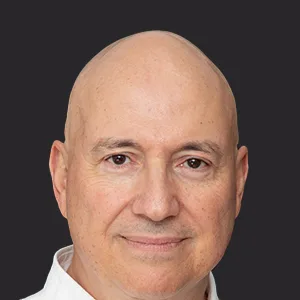
Dr. Peter Michalos WABC Medical Expert
Reversing the Effects of Aging and Maximizing Your Healthy Years
Dr. Peter Michalos
Dr. Peter Michalos, WABC’s medical expert, tells John Catsimatidis about “The Death of Aging,” the new 521-page book he co-wrote, and says aging is basically a systemic coordination failure, like an orchestra in which one player stops playing properly. He says exercise, sleep, gratitude, friendships and a routine help the body work better, and that the goal is not lifespan but more productive years.
Key takeaways
- Michalos said there are three ages: chronological, biological and mental.
- He said 80% of our immunity is in the gut, and 100-year-olds had great gut microbiome diversity.
- He said eating a variety of plants in many colors every day is very important.
- He said a three-year study found omega-3s slowed the biological clock by four months.
- He said people on blood thinners must be careful with CoQ10, omega-3 and resveratrol.
In their words
“It’s like an orchestra, and one of the players stops playing properly. That affects all the other organ systems.”
“the cells sometimes forget how to function with aging. And sometimes they need a reminder and things like exercise and sleep.”
“It’s not about lifespan, but it’s about having more productive years.”
Quotes are word for word from the automated transcript, uncorrected; the summary and takeaways are editorial.
Transcript
Automated transcript · uncorrectedSunday morning, Dr. Peter Michalos, Live Long and Prosper. And he’s got a wonderful new book besides. Well, Dr. Peter, your book, you have to put an addendum to it on how.
To live longer?
Well, there’s 521 pages in our new book, The Death of Aging, and you can get more information at thedeathofaging.com. And why is there so much information? Because as you always say on the show, things are moving at warp speed and we’re learning so much more. Basically, we’re learning that aging, there’s three ages, our chronological age, how many
times we went around the sun, our biological age, the condition of our bodies, and our mental age, how young we feel. And lately, we’re finding things out that it’s basically a systemic coordination failure. It’s like an orchestra, and one of the players stops playing properly. That affects all the other organ systems. Just like if your heart fails,
it affects the lung and the kidney, or if our kidney fails, it affects the lung. So all these organs individually help. If they’re working properly, they help slow down aging. And we now know that we have cells, our cells have information in them called epigenetic information. And basically the cells sometimes forget how to function with aging. And sometimes
they need a reminder and things like exercise and sleep. And we even recent studies having an attitude of gratitude and, and having good friends to communicate with and to talk to, all those things actually help the body work better, having a routine. They found that people who believe in something greater, like a lot of people who gather in churches, for example,
that social interaction, those people seem to do better. as well. And we now know that the organs, when they stop communicating with each other, just like we know there’s a gut-brain axis, there’s a vagus nerve, a highway, the brain connects with the gut. And we now know 80% of our immunity is in our gut. And inflammaging is another
term used, that inflammation occurs. And that’s why gut inflammation, it’s important to control our gut microbiome. And they studied the the poop of 100-year-olds, and they found that they had great diversity in their gut microbiome versus other.
So what does that mean? In other words, you.
Should stick on a larger variety of foods because all the microbiome and everything in your stomach, they all need feeding, and you just can’t feed just a certain part of it.
Right, and different colors. The more colors every day, if you have some broccoli, some nuts, some seeds, different plants, a variety, all those things are very important to help. And the other thing that aging appears in our skin, in the largest organ of our body, our skin, And the sun can damage our skin, and you get breaks
in the DNA. And as we get older, that’s how we get skin cancers. We can’t repair them. And also in our foods, forever chemicals, and all these different chemicals in the United States, we have everything with artificial sugar.
It’s hard to find just real sugar, for example. And, of course, we want sugar in moderation. And we now know the role that if you eat a lot of sugar, it cranks out insulin, and insulin is a growth factor.
That’s why, for example, men who eat a lot of sugar or have a little bit more belly fat, that causes higher insulin levels. And insulin is a growth hormone. It’s basically the taxicab that brings sugar into cells. So that’s why when you have cancer... the cells grow. And that’s why the PET scan to look for cancer is
just basically they give you an intravenous sugar that has a radioactive isotope attached to it that shows up on the scan. So they feed you sugar, it’ll go right to the pancreatic tumor or the ovarian tumor or the lung cancer. And that’s what a PET scan is. It’s basically that.
So let me ask a silly question that maybe other people don’t ask. If you took zero sugar and And I’m assuming fruit is not sugar because it’s natural.
Should I assume that?
Well, it’s a slow... Fruits, for example, are very slow release. The idea is that if you eat too much pure sugar, it causes your pancreas to shoot out insulin. very fast and that’s how you get high insulin levels for example someone can have normal blood sugar and normal hemoglobin a1c but they could still be pre-diabetic because their fasting insulin
level is rising and it makes it look normal but eventually what i’m trying.
To ascertain what i’m trying to ascertain if somehow you got to the point of zero sugar does that mean you starve the cancer.
You can’t have zero sugar. You want it to be slow-release. That’s the point. We need glucose to live.
But can you starve to cancer?
Yes, they did a study at this group out in the West, and they found that they had these clinics where they put people on water fasts with solid tumors, and then they showed before and after scans, and the cancers were slowed down. Initially, they went after them. They tried to take their licenses away until they showed the
evidence that restricting the sugar and doing fasting definitely slowed down solid tumors. But some of the good news is that we now know things like omega-3 fatty acids are help longevity. They did a study and they gave it to people for three years and it slowed the biological clock by four months in a three-year study. So that’s
why the farm-raised salmon, healthy omega-3s. The problem is in the United States, they feed the cows, the chickens, the GMO, genetically modified corn seeds, and they make more omega-6 instead of the good omega-3. They’ve also, in a recent study, found a supplement called Creatine may actually help boost in the immune system. And another study found that vitamin D
slowed the end caps on our chromosomes that show aging called telomeres in another two-year study. And another one that we can take, a vitamin that helps with cellular energy to boost our mitochondria, is called coenzyme Q10. And that moves the problem with CoQ10 and omega-3 and another one for anti-aging resveratrol is if you’re on blood thinners, you
have to be careful because then it can exacerbate the blood thinning effect. So these are all amazing things. And also antioxidants. We now know oxidation is rust. So how do we slow the rust? We take antioxidants, and there are good antioxidants there. out there, and there’s also another class that they’ve discovered called senolytic activators called fisetin and quercetin,
and they clean out the dead and dying zombie cells. So we’re learning so much more, and to learn more, just read The Death of Aging, available on Amazon, and That’s why we spend so much time to share all this great information on how to improve healthspan. It’s not about lifespan, but it’s about having more productive years.
Dr. Peter Mihalos, thank you for your input.
And hopefully before we get to 95, which is a critical age, hopefully there’s a solution.
Absolutely. We’re looking forward to the OSK gene results. And thank you for always getting the truth out on the Cats Roundtable.
Sunday, November 15, 2026
Rolling Back Regulations and Unleashing American Energy
Lee Zeldin EPA Administrator

Navigating Senate Rules to Advance Key Republican Priorities
Kevin Cramer U.S. Senator from North Dakota

Washington Must Maintain Pressure on Iran
General David Petraeus Former CIA Director & Four-Star General

America's Military Technology Priorities and the Race to Stay Ahead of China
Michael Dodd Assistant Secretary of War for Critical Technologies

Inside His Prison Years and His Views on Today's Democratic Party
Rod Blagojevich Former Governor of Illinois
Democrats Must Unite and Avoid Internal Infighting
David Paterson Former Governor of New York

New York’s Budget Surplus, Rainy Day Reserves and Fiscal Challenges
Tom DiNapoli New York State Comptroller

Fighting Human Trafficking, Promoting Faith and Reaching Hispanic Voters
Bob Unanue Former CEO of Goya Foods

The Legacy of Stanley Zabar and the Family Behind the Legendary New York Deli
Bill Wachtel Founding Partner, Wachtel Missry LLP

The Growing Financial Struggles Facing Small Business Owners
JT Foxx Entrepreneur & Investor
New Medical Breakthroughs Are Changing Alzheimer’s Diagnoses
Dr. Mason Pimsler Geriatrician, Lincoln Medical Center

The Future of Moon Exploration and Preparing Humans for a Mission to Mars
Steve Kates Space and astronomy broadcaster (Dr. Sky)

Congress Must Act Now to Protect Children from Online Dangers
Lynn Shaw Founder of Lynn's Warriors

Wall Street Weighs Nvidia Controversy Amid Growing AI Investments
John Terrett WABC Financial Analyst
Dr. Peter Michalos

Cutting-Edge Strategies for Extending Human Health and Longevity
Dr. Peter Michalos WABC Medical Expert
Fighting Cancer and Aging With the Latest Medical Advances
Dr. Peter Michalos WABC Medical Expert
Advances in Lung Cancer Detection and Personalized Treatment
Dr. Peter Michalos WABC Medical Expert
Healthy Eating, Stronger Immunity and the Science of Living Longer
Dr. Peter Michalos WABC Medical Expert
Limiting Sugar and Choosing Whole Foods to Support Healthy Aging
Dr. Peter Michalos WABC Medical Expert
