


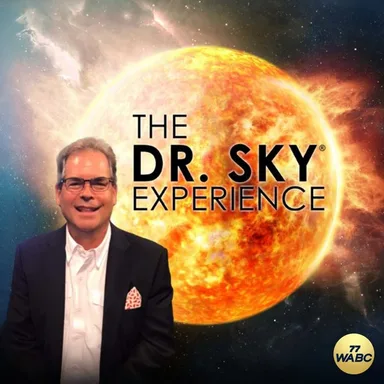
Steve Kates Space and astronomy broadcaster (Dr. Sky)
The Future of Moon Exploration and Preparing Humans for a Mission to Mars
Steve Kates
Steve Kates, the space and astronomy broadcaster known as Dr. Sky, tells John Catsimatidis that NASA, at a news conference with Administrator Jared Isaacman last week, laid out how it plans to get back to the moon, with a base near the lunar south pole and a nuclear-powered rover. He also says Voyager 1 is about to reach one light-day from Earth, some 16 billion miles away.
Key takeaways
- He said a nuclear-powered rover called PROMISE would explore what lies beneath the moon’s surface.
- He said four people spent over a year in a 3D-printed Mars habitat at the Johnson Space Center.
- He said Chuck Berry’s “Johnny B. Goode” has traveled through space on both Voyager spacecraft since 1977.
- He said slow-moving November fireballs, debris from comets and asteroids, may be mistaken for flying saucers.
In their words
“In simple language, that means how we get back to the moon.”
“That’s kind of an interesting psychological challenge, don’t you think?”
“the Voyager 1 spacecraft will be one light day away from us. That’s 16 billion miles, the farthest any man-made object has ever been”
Quotes are word for word from the automated transcript, uncorrected; the summary and takeaways are editorial.
Transcript
Automated transcript · uncorrectedWhat is today is Steve Cates, otherwise known as Dr. Sky, and he really, really tells us what the heck is going on up there. And Steve, what do you have in mind today?
Well, good morning, John. Happy November 15th. Hard to believe it’s that much into the year, but happy Sunday. John, kind of an interesting story today. We talk about the moon and Mars, two of our favorite subjects. Let’s begin, of NASA Administrator Jarrett Isaacman was at a big news conference last week. It was called the Max Power Aerospace Expo,
an air show in Florida. What’s so important about this? They’re talking about plans for the Human Spaceflight Vision Directorate. In simple language, that means how we get back to the moon. And it’s going to be all under the direction of a gentleman named Carlos Garcia Galante. He’ll be the moon base manager for this gigantic mission as we
move toward the lunar surface. Obviously, building a moon base near the south lunar pole is the big deal. But, John, they’re also looking at building, how about this, a nuclear-powered lunar rover called Promise. And this will explore the surface of the moon with unlimited power to find out really what’s underneath the surface of the moon and maybe for
future selection of lunar bases.
You mean the moon is not hollow? I saw that movie where the moon was hollow and there’s a whole base inside of the moon.
Well, John, that was Moonfall. It was kind of an interesting movie. Hopefully we’ll be able to find out the truth as we explore with this amazing nuclear-powered small rover. The government, of course, has looked at providing Blue Origin, I believe with a $ 94 million contract, and eight other companies, John, have selected for the lunar project. commercial payload services. So
we’re heading to the moon. It’s a real serious endeavor. And I’m very proud of this new director, Jared Isaacman. Not only is he an astronaut, but he’s a person that really, in my mind, knows how to balance the story of how to build businesses and also understand space exploration.
So we wish him well, and we wish NASA well also. Here’s something else. You and I talk about Mars. Well, something just happened. It’s called the Mars Simulation Mission. What’s that? It’s a thing called CHIPIA. It’s CHIPIA-2. It stands for Crew Health and Performance Exploration Analog Mission. Sounds like a lot of words. What is it? There are four individuals
who were sealed into this little tiny habitation module, like 1,700 square feet, built by a 3D printer. And the purpose of it, John, is to simulate how humans would react in this over one-year mission. And all is well. And they wanted to see how humans can survive in a near-simulated mission, which would take, say, nine months in the
real one to get to Mars. So this was done at the Johnson Space Center. And imagine, John, you and me and a bunch of people, maybe two others, put into a habitation module. That’s kind of an interesting psychological challenge, don’t you think? Wow. That is incredible.
Well, I will tell you, it is incredible. And I’m still, you know, we joke around about our moon. But I’m still scratching my head about Phobos and the Mars moon. What else do we have today?
Well, the mystery of the week, John. Here’s an interesting, here’s a question. What is the song that has been traveling through space since 1977, among others on Voyager 1 and 2? Well, from the rock and roll world, it’s the iconic Chuck Berry song, Johnny B. Goode. Now, what’s this all about? Both Voyager spacecraft have these golden records
attached to the sides. not only music from not only Chuck Berry, but also music of all kinds, pictures, in case any alien civilization might find it. But, John, here’s an interesting factoid. Tomorrow, on the 16th of November, at 5.16 a.m.
Eastern Standard Time, the Voyager 1 spacecraft will be one light day away from us. That’s 16 billion miles, the farthest any man-made object has ever been, of course, sent out into space. So one light day. But if you were looking at the speed of life, we talk about it on our regular programs, the Dr. Sky Experience, for
everybody on a Sunday morning, if you think you’ve gone fast, John, the speed of light is 670 million miles an hour. Sounds like stuff of Star Trek and beyond, but it’s amazing that celebration will take place with NASA and JPL a spacecraft that was launched, both of them, back in 1977.
Quite amazing, don’t you think?
Dr. Skye, I had dinner in Athens, Greece, to the guy that launched it. And I think he’s still around. Maybe I’ll refer him to you or ourselves. Maybe we can interview him together.
That would be a wonderful honor, John. And we did have a gentleman, John Lombard, who developed with Carl Sagan the Golden Record. We’ve talked about that on our programs. But in closing, John, we always give a little tip of what people can see in the sky. This time in November, we look and we call these things called
November fireballs. What’s that all about? There’s a meteor shower taking place. If you look high up into the east, like around 10 a.m., around midnight, let’s say, you may get to see some of these slow-moving fireballs. Many may misinterpret them as flying saucers, but no, truly. Debris from comets.
and asteroids, and some of them, John, leave a memorable appearance when you see them moving across the sky like something from a Fourth of July celebration. Have a great Sunday. It’s always great to talk with you and the listeners here on the Cats Roundtable.
God bless you and God bless America. Thank you so much.
Thank you, John.
Sunday, November 15, 2026
Rolling Back Regulations and Unleashing American Energy
Lee Zeldin EPA Administrator

Navigating Senate Rules to Advance Key Republican Priorities
Kevin Cramer U.S. Senator from North Dakota

Washington Must Maintain Pressure on Iran
General David Petraeus Former CIA Director & Four-Star General
America's Military Technology Priorities and the Race to Stay Ahead of China
Michael Dodd Assistant Secretary of War for Critical Technologies

Inside His Prison Years and His Views on Today's Democratic Party
Rod Blagojevich Former Governor of Illinois
Democrats Must Unite and Avoid Internal Infighting
David Paterson Former Governor of New York
New York’s Budget Surplus, Rainy Day Reserves and Fiscal Challenges
Tom DiNapoli New York State Comptroller

Fighting Human Trafficking, Promoting Faith and Reaching Hispanic Voters
Bob Unanue Former CEO of Goya Foods

The Legacy of Stanley Zabar and the Family Behind the Legendary New York Deli
Bill Wachtel Founding Partner, Wachtel Missry LLP

The Growing Financial Struggles Facing Small Business Owners
JT Foxx Entrepreneur & Investor

New Medical Breakthroughs Are Changing Alzheimer’s Diagnoses
Dr. Mason Pimsler Geriatrician, Lincoln Medical Center


Reversing the Effects of Aging and Maximizing Your Healthy Years
Dr. Peter Michalos WABC Medical Expert

Congress Must Act Now to Protect Children from Online Dangers
Lynn Shaw Founder of Lynn's Warriors

Wall Street Weighs Nvidia Controversy Amid Growing AI Investments
John Terrett WABC Financial Analyst
Steve Kates
What Martian Meteorites Tell Us About the Origins of Life
Steve Kates Space and astronomy broadcaster (Dr. Sky)
The Bizarre Natural Phenomena That Continue to Puzzle Scientists
Steve Kates Space and astronomy broadcaster (Dr. Sky)
Russian Satellites Track U.S. Spacecraft as Japan Targets Mars’ Mysterious Moon
Steve Kates Space and astronomy broadcaster (Dr. Sky)
Deep-Space Mysteries, UFOs and the Orionid Meteor Shower
Steve Kates Space and astronomy broadcaster (Dr. Sky)
The Mysteries of Mermaids, El Niño and the Antarctic Ice
Steve Kates Space and astronomy broadcaster (Dr. Sky)
Exoplanet Radio Signals, SpaceX’s Heavy Rocket Test and Nuclear Propulsion
Steve Kates Space and astronomy broadcaster (Dr. Sky)
