


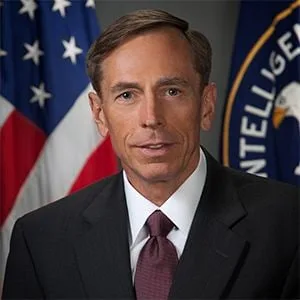
General David Petraeus Former CIA Director & Four-Star General
Washington Must Maintain Pressure on Iran
General David Petraeus
Retired Army General David Petraeus, a former CIA director, tells John Catsimatidis that how the Iran war ends matters, as he wrote in a Wall Street Journal op-ed. He says the minimum goals are freedom of navigation through the strait, neutralizing Iran’s nearly 1,000 pounds of 60 percent enriched uranium and enforceable limits on future enrichment, and that the blockade gives considerable leverage.
Key takeaways
- Petraeus said the U.S. is blockading Iran’s crude exports, which used to be 1.5 million barrels per day.
- He said the U.S. is also blocking Iran’s maritime commerce through the strait.
- He said Iran’s economic situation is already abysmal, with wide unemployment and increasing shortages of many goods.
- He said it would help if China used its influence to lean on Iran.
- He said a third aircraft carrier task force is soon to arrive or may already be there.
In their words
“But I think we should remember that how it ends does actually matter.”
“None of these are regime change, by the way, or endless war.”
“Again, we should stop seeming to be eager for an agreement.”
Quotes are word for word from the automated transcript, uncorrected; the summary and takeaways are editorial.
Transcript
Automated transcript · uncorrectedWith us today is General David Petraeus and a good friend, a four-star general, the head of the CIA. Nobody better qualified to talk about what the heck is going on. And well, General Petraeus, you had a few days ago a op-ed piece in the Wall Street Journal focusing on Iran and the problems we have in Iran and how
to solve the problems and what we should be doing. Would you like to update the American people? Sure.
Thanks, John. Good to be with you. In that piece, which is titled It Matters How the Iran War Ends, I note right at the outset that everyone wants the war with Iran to end. It was an election issue, in fact. I do, too. But I think we should remember that how it ends does actually matter. If we
allow Iran to restore its revenue and maritime commerce, threaten navigation through the strait, rebuild this nuclear program and keep its thousand pounds of highly enriched uranium, our interests would be severely harmed. It would really, in fact, just set the conditions for the next crisis. I point out that there are three essential goals at this point in time.
None of these are regime change, by the way, or endless war. First and foremost, restore freedom of navigation through the strait. Second, account for and neutralize Iran’s nearly 1,000 pounds of uranium enriched to 60%. And third, impose enforceable limits on their future nuclear enrichment. And again, this can’t mean that they get to close the strait at will
or give permission just to favor countries or charge for transit. We need to see true freedom of navigation restored. And the nuclear issue is by no means trivial. 60% enriched uranium is not technically weapons grade. but it actually can be used in a crude nuclear device without further enrichment.
And it can be enriched to weapons grade far more rapidly than ordinary reactor fuel would be. And then there does need to be an agreement on new inspections so that there can be verified removal of the highly enriched material and then cap on future enrichment at civilian levels.
And that’s, I think, these are the minimum. And we have considerable leverage. We now are blockading Iran’s export of crude oil. It used to be 1.5 million barrels per day. That was the significant source of their hard currency. And we’re preventing their maritime commerce, which is somewhere around 80% of their economy, from going through the strait and into
and out of the ports that they have on the Gulf. We should use that while also intensifying our efforts to protect shipping and energy infrastructure, ensure that ships can safely move through the strait. We’re almost at balance between supply and demand when it comes to crude oil, although it’s not as predictable and predictable. as certain as markets would like.
But there has to be an increase, therefore, not just in that, but also in the export of LNG, refined fuels, condensates, and other products that normally come out through the strait. I think that that is doable. And Washington should be providing everything possible to CENTCOM, everything they need, and then also intensify the restrictions on their finances and even on
their ground commerce. All of this, I think, is doable. It gives considerable leverage. And of course, if we can ensure that especially crude oil supply and demand is back in balance globally, We can continue this blockade as long as it takes until Iran recognizes that the current abysmal economic situation, already inflation above 90%, wide unemployment, increasing shortages
of many goods, that they finally have to come to the table seriously and address the three issues that I described at the outset.
The energy, whatever its title is in Iran, I think– He quit the other day, and I don’t know any particular reason. And the other question I have to ask is there’s a meeting going on next week between China and Russia, Putin and Xi, and the United States, President Trump.
Is the big discussion going to be what the heck are you guys doing? Are you going to keep supporting Iran?
I think I’m sure that will be one of the topics. I suspect that Ukraine would be another and perhaps some others. But certainly it would be very, very helpful if China in particular used its influence with Iran to lean on them and explain to them that China would like to buy the 1.5 million barrels per day that they used
to purchase, but are no longer flowing out of the Gulf. And if they would agree to our conditions, which again, these are not extreme conditions. Again, this is not regime change. It’s not an endless confrontation. But these three conditions are the minimum. And these are our national security interests. And again, for all of the sentiment to end the war, which
I share, we should recognize that how it ends really does matter for U.S. national security and economic interests around the world.
And I guess one of the biggest problems are if an Iranian terrorist just puts a thing on his back and just goes and fires at one of the ships. And if terrorism continues... The price of oil is not going to go down.
Correct. And, of course, they’re trying to make transit through the strait difficult. They do attack ships. I am told, by the way, from a very good source, that there are not mines in the water, although Iran says that these are mine straits. We think that that is misinformation trying to scare ships and their crews from going through
the strait. But they have enough other projectiles and other means of making that transit difficult, and CENTCOM, of course, seeking to counter those. So what you’ve seen is a bit of back and forth, not the kind of resumption of full-scale military activity that many thought might happen after the midterms were over. But we have a very, very
substantial amount of combat power out there now. We The third aircraft carrier task force is either soon to be there or may already be there at this point in time. And that is a huge, again, amount of maritime aviation, naval aviation, and there’s a lot of other assets that we have nearby or could bring in very quickly because
of the refuelers that we have throughout Europe.
Understood. Give us your opinion. of what the next step you think the president should do, I guess.
Well, I think he may have already done it, John. You saw where he said, look, Vice President Vance, no more negotiations. We’re just going to sit back for a while. And it may be that that is exactly what he is going to do, with which I agree. Again, we should stop seeming to be eager for an agreement. We
should just continue our blockade on their export of oil and their maritime commerce, continue to intensify the protection of the shipping going in and out of the Strait, and then just sit and wait for them to come and negotiate with us. But this is going to be very important that the new Congress understands what it is the
And hopefully they’ll recognize that these three objectives that I laid out are actually very important, that you just can’t end the war. You have to end it in a way that ensures that our objectives are met.
Understood. General David Petraeus, thank you so much for updating the American people. And I think you’re one of the most common sense people I know. And hopefully our country... I hope we have a solution and bring the price of oil down.
Absolutely, John. Thanks. Always good to be with you.
Thank you, and travel safe, and we’ll talk real soon. You bet.
Sunday, November 15, 2026
Rolling Back Regulations and Unleashing American Energy
Lee Zeldin EPA Administrator

Navigating Senate Rules to Advance Key Republican Priorities
Kevin Cramer U.S. Senator from North Dakota
America's Military Technology Priorities and the Race to Stay Ahead of China
Michael Dodd Assistant Secretary of War for Critical Technologies

Inside His Prison Years and His Views on Today's Democratic Party
Rod Blagojevich Former Governor of Illinois
Democrats Must Unite and Avoid Internal Infighting
David Paterson Former Governor of New York
New York’s Budget Surplus, Rainy Day Reserves and Fiscal Challenges
Tom DiNapoli New York State Comptroller

Fighting Human Trafficking, Promoting Faith and Reaching Hispanic Voters
Bob Unanue Former CEO of Goya Foods

The Legacy of Stanley Zabar and the Family Behind the Legendary New York Deli
Bill Wachtel Founding Partner, Wachtel Missry LLP

The Growing Financial Struggles Facing Small Business Owners
JT Foxx Entrepreneur & Investor

New Medical Breakthroughs Are Changing Alzheimer’s Diagnoses
Dr. Mason Pimsler Geriatrician, Lincoln Medical Center

Reversing the Effects of Aging and Maximizing Your Healthy Years
Dr. Peter Michalos WABC Medical Expert

The Future of Moon Exploration and Preparing Humans for a Mission to Mars
Steve Kates Space and astronomy broadcaster (Dr. Sky)

Congress Must Act Now to Protect Children from Online Dangers
Lynn Shaw Founder of Lynn's Warriors

Wall Street Weighs Nvidia Controversy Amid Growing AI Investments
John Terrett WABC Financial Analyst
General David Petraeus
Iran and Ukraine Are Creating New Challenges for Global Security
General David Petraeus Former CIA Director & Four-Star General
A Strategic Look at Today's Global Security Flashpoints
General David Petraeus Former CIA Director & Four-Star General
The Emerging Era of Drone Swarms and Autonomous Warfare
General David Petraeus Former CIA Director & Four-Star General
Rising Risks in Key Global Chokepoints
General David Petraeus Former CIA Director & Four-Star General
The Operational/Military Campaign Against Iran Is Very Impressive So Far
General David Petraeus Former CIA Director & Four-Star General
Diplomatic Efforts Are Failing to Resolve Escalating International Conflicts
General David Petraeus Former CIA Director & Four-Star General
