


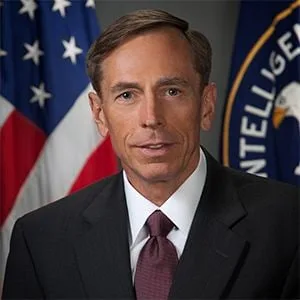
General David Petraeus Former CIA Director & Four-Star General
The Operational/Military Campaign Against Iran Is Very Impressive So Far
Transcript
Automated transcript · uncorrectedSunday morning. What is today is General Petraeus and he was four star general. He was a CIA director. Nobody better than General Portrayers to give you American people on a Sunday morning, where the heck are we? Well, General, I mean a lot of confusion going around. I’ve had several interviews the last few days and a lot of
false information going around in many, many different directions. So I guess the American people are waiting on you to find out what really is going on. Thanks to General Portrays for being available.
Well, it’s always good to be with you, John. Thanks. Look, I think the military campaign, the operational campaign against Iran, is going very impressively. We obviously took out key regime leaders in the very early minutes actually of the campaign.
Have been taking down the air ballistic missile defense. We have air superiority, maybe even air supremary premacy over at least the western part of the country, and we’re working our way into the interior. We’re going after the missile launching, missile launchers, the missiles themselves, and the manufacturing facilities for those.
That was really one of the reasons that a lot of us expected that Israel was going to strike regardless within a month or so. Anyway, I was in Tel Aviv about four weeks ago and got that impression. Then they’re very worried about the reconstitution of the Iranian missile program.
Then going after the drones and the launch sites for those, and also over time the manufacturing facilities there as well, they’ve been problematic. You’ve seen, of course, that the Iranians, I think unwisely expanded their targets horizontal escalation, if you will, beyond just American bases and facilities and Israeli targets two going out after the Gulf States. They even put one
up into Turkey, one n Auserbaijan and hasbala Iron’s proxy in southern Lebanon, put a drone towards the British airfield in Cyprus, and so doing. They’ve had to bring these countries more into the war. I think they hoped that the countries would say Americans, you’ve got to stop. This is bad for business, and that moment may come at
some time, but that is certainly not the case right now. They’ve already been integrated into the air and ballistic missile defenses. We’re all in that together, and I think you may see some of them even contemplate joining the offensive actions in some fashion. So again, the missiles and drones have been absolutely foremost among the target set because they’re the
big retaliatory means. You’ve seen the missile launches cub way way down. The drone strikes are still down a bit, but not that much, so there’s going to have to be worked on there. They don’t obviously have anywhere near the warhead that the missiles do. The missiles have to be taken out, but they still can be very problematic.
And you’ve seen the Iranians go after civilian infrastructure. They hit the Fairmont Hotel, they hit an oil loading location, natural gas, one LNG actually the French base in the region, and the number of other actually civilian infrastructure targets. So this has been expanded well beyond what I think was the expectation. We’ve also taken out over thirty of their
naval vessels. That’s very significant because they’re the ones that can interdict freedom of navigation, some could mine the straight over moves. There have been a number of attacks on ships in the Golf and around the Strait, somewhere around a dozen or so and that has obviously resulted in cessation of most of the exports that go through the
golf in the Strait. Keeping in mind that that’s twenty percent of the world’s crude oil in about twenty percent of the world’s LNG as well, so this is very significant. Asia will feel the impact of this most prominently. They really depend on this. A lot of it does go to the East, but Europe will fuel it as well
to a degree, and also in some special categories like aviation fuel, they depend on some of the distal its and others that come out of the Gulf. So you’ve seen as a result the price of Brent crude, which has stair stepped its way up. It was down in the low to mid sixties prior to all of this happening.
In anticipation of it, it actually went up into the low seventies. A couple of days into the war, it was in the high seventies. One day it went above eighty, then came back. Then it was above eighty, and now it’s roughly up around the ninety dollars per barrel mark.
And I’ll check it very quickly because I always have this open. It’s actually a bit over ninety dollars. Now it’s about ninety two sixty nine per barrel. But interestingly West Texas Intermediate has followed it up. There’s always been this correspondence, but there’s no explanation for that in market terms, because unless you think that it can substitute for Brent
crude as an export. But really the US is not affected by this other than the price going up. We’ll continue to produce fourteen million barrels per day or nearly that, where the largest crude oil producer in the world, will continue to produce the largest amount of LNG export it as well. But so this does have a corresponding effect
on our economy also, and without question, it’s going to pull prices up in a variety of different ways, not just at the gas station. We should note here that we are not actually self sufficient. We are a net exporter of crude, but we have to import a certain amount of heavy crude as we export light crude because
our refineries are configured for that. We get that from countries that are not in the Gulf. We get it from Canada, Mexico and now Venezuela. Again, we’re also continuing to go after regime leaders regime forces, their headquarters, their infrastructure, their bases, their logistical depots, and so forth. We’re gradually working our way to ensure that any remnants of the
nuclear infrastructure that are left over from the Twelve Day War are taken care of. There’s a report, for example, from the International Atomic Energy Agency that there is a stockpile of sixty percent in rich duran and that’s one level below weapons grade underneath the rubble at the s Beahand Nuclear Facility. I’m sure we’re going to burrow through
that with the massive ordnance penetrator are thirty thousand pounds precision munition and take that out. And here, let me just note that we’re able to increase dramatically the number of targets that we hit on a daily basis because we have been successful in creating this are superiority in the areas where we’re flying our non stealthy aircraft. So
until you have done that, until you’ve achieved that, you really don’t want to fly through that airspace with non stealthy aircraft. I’m talking about the B one bombers, the B fifty twos, even some others that you can employ.
Otherwise you’re limited to the F thirty five stealth fighter bomber and the B two stealth bomber that flew all the way from the United States early on and dropped a huge amount of ordinance as well. So all of this is moving along, and as part of this President Trump has been quite clear I think it would except
for maybe the first speech that he made where he talked about regime change being a goal of this operation, I think he’s clarified that correctly to recognize that we actually can’t achieve regime change, certainly not just through the air, and it would be questionable that the ground operation be enormous.
So he has aventually said that it’s really up to the Iranian people. Iranian breakoff elements from the regime, whatever it might be that could topple the regime, with us creating conditions to make internal political change possible, and that recognizes I think that it is possible that when it’s all said and done, and I think he’ll determine when
it’s all said and done, and he’ll declare victory at the point that we have taken care of all these different targets sufficiently, you still could have a regime in charge. You could end up with a hardline successor. The Assembly of Experts was trying to meet the other day to select the successor to Ayatolahamanei, and they got bombed. So
they’re having to look for an alternate place. I guess it’s a bit more secure and deeper underground. But they are generally hardline clerics and presumably would pick someone who’s like them to head the regime. That’s one possibility. You could have a somewhat more pragmatic figure, or even a group a collective leadership arrangement where there might be a
bit more pragmatism. And that’s going to be very important because if you have this again, a very hard line ideological cleric leading for whom success is nothing more than the regime has survived, no matter how much rubble and destruction is around him as he shakes his fist at the world, then you could have the prospect of challenges
in the Golf region for some time. If we have to keep going back and bombing them periodically to deal with whatever threat is emerging missile, drones, nuclear, then you start to challenge the business model for the Gulf states, of course, which are havens. They’re peaceful. They have good governance, rule of law, very high standard of living and all
the rest of that. So that’s how this is moving along. There is talk of some internal opposition. The Iranian Kurds have been featured in this. Keep in mind that there are a number of other There are numerous other minorities.
There are Zaries from Azerbaijan. There’s again the Kurds, There’s the Balouch from Western Pakistan. There are Sunnis. So there are a number of these different groups, any one of which are all could rise up in some fashion, and the truth is you could end up with a civil war as well, although I think that it is more
likely that the regime will survive, and the question will be the character of the new Supreme leader and whether that individual is willing to work with the United States to give up its foolish quest for a nuclear weapon which has brought them so much damage and destruction, and be a reasonable neighbor, responsible state holder, as the saying goes,
or wants to continue this very hardline approach which has brought to Ran again to extraordinary loss, damaged destruction, and the people experiencing poverty at home and isolation abroad.
General is our enemies, you know, whether it’s Russia or China. I mean, it looks like President Trump has allowed the air Force, the Army, the Navy, all armed forces to pull out all stops on this one. Are our enemies surprised at our abilities?
Well, I think the world is very impressed by what it is that we are doing. Keep in mind, of course, we are not using all our capabilities. You know, you haven’t seen the eighty second Airborne Division jump into Tehran or anything like that, and I would not expect to see that. Frankly, I think the President Trump has articulated
many times what he sees as the lessons of Iraq and to a degree of Afghanistan. But no, I think that. You know, when you read the I think very good press, the economists and others, there’s a degree of marvel at the extraordinary capabilities of us. And also I should note Israeli defense forces, what they’ve done is very very impressive. Now,
there are some issues here that do should be identified, and one of those is what’s called the missile math. There is concern. In fact, the reason the President had all the industrial military industrial complex leaders together yesterday was to exhort them to dramatically increase production of critical munitions and weapons systems, especially Patriot, THAD and SM three missile interceptors.
This is the ground system, the terminal altitude area defense system, and then they that is on ships, which is similar to a Patriot. If you look at the numbers that are officially out there, we produced about six hundred and twenty Patriot missile interceptors last year. Those are all around the world. And you look at the number of missiles
that have been sent toward the west side of the Gulf, and at some point, I’m not sure that you can continue to shoot two to take down one, which is a normal protocol. So the missile math is starting to get again a bit worrisome. I think that was one of the factors that led to the end of the
twelve day War. On the twelfth day, I’ve talked to people in Tel Aviv who said, yeah, we were looking at how many interceptors do we have left, and how many missiles and launchers do they have left, and it was getting a bit uncomfortable. So we have to keep an eye on that. Just recognizing how many were produced.
I think the goal is for this fiscal year to have two thousand patriots and again hundreds of these others. But of course we’ve shared some of these with Ukraine. Rightly, they are facing this, but you Crane also has learned how to deal with drones, and we need to learn how to do that as well. In fact, I co
authored an article that was in foreign policy dot com two days ago. You might put a link on it to it on the website that talks about the drone attrition trap, where above all, you don’t want to be in a position where you have to use a missile interceptor which costs two million dollars or more to take
out a drone that cost twenty or thirty thousand dollars. And these are the Iranian shah Head drones, which of course they provided to Russia early on in the war. Then Russia got the means to manufacture them into product improvements.
They put a jet engine on a larger warhead, can fly higher, faster, and so forth, and the Ukrainians who learned how to shoot them down with their own drones. In fact, I went out on a counter drone intercept mission about four or five weeks ago when I was in Ukraine on a frigid night and the skill of
these guys as extraordinary. The lead pilot in that particular crew had taken down over hundred Russian drones. We’re going to have to learn very rapidly how to do this ourselves, and also how to help our allies and partners in the region learn that too.
It’s a new type of war. I understand that it is.
It really is. Yeah, and in Ukraine, which is the future of war. As we’ve discussed before, it’s unmanned systems against unmanned systems. Right now, they’re remotely piloted, but not too far in the distant future, there will be autonomous aerial drones at the very least, and then you can have swarms of drones because you’re not limited by the
number of pilots that you have, and we have to anticipate that rather than react to that.
General thank you for giving us the most complete briefing of the year on a Sunday morning, and let’s catch up again real soon.
Always a pleasure, John, Thanks for the imitation. Thank you
Sunday, March 8, 2026

NY State Per Resident Has The Highest Expenditures For Medicaid By Far In The Country
Dr. Mehmet Oz CMS Administrator

For All The Reasons NY Is Great It Is Also A Target
Jay Clayton Director of National Intelligence

Taking Out Iran's Navy Was More Important Than People Think
Kevin Cramer U.S. Senator from North Dakota
The Iranian Regime Has Been Oppressing The Iranian People For 40 Years
Shar Pourdanesh
The Fact That Liberal Economics And Liberal Politics Parted Ways Is Quite Fascinating
Edward Price

Nothing Is More Important Than A Quality Of Rights For Women
Carolyn Maloney Former U.S. Representative from NY

They Need To Fix The Climate Law In Albany, To Make Life More Affordable For New Yorkers
Paul Zuber Executive Vice President, The Business Council of New York State

Socialist Democrats Applying New Taxes, Scares Off Investments In The City
Steve Fulop President & CEO, Partnership for NYC

SCOTUS Stop Redistricting Case For The 11th Congressional District
Nicole Malliotakis U.S. Representative from New York

If Kristi Noem Had Told The Truth, She Might Still Be The DHS Secretary
David Paterson Former Governor of New York

Is The Median Democratic Voter Moving To The Left, Or Is The Party Being Pulled To The Left
Jesse Arm Vice President of External Affairs, Manhattan Institute


Technology In Medicine Nowadays Could Assist In Calculating Life Expectancy
Dr. Peter Michalos WABC Medical Expert

Pornography And The Harm It Does To Our Children
Lynn Shaw Founder of Lynn's Warriors

The Stoler Report with Michael Stoler: Frank Korzekwinski
Michael Stoler Real Estate Expert

Due To Budget Cuts Last Year, NASA Has Delayed The Return To The Lunar Surface
Steve Kates Space and astronomy broadcaster (Dr. Sky)

Markets Experiencing High Volatility From The Outbreak Of Hostilities In The Middle East
John Terrett WABC Financial Analyst
General David Petraeus
Iran and Ukraine Are Creating New Challenges for Global Security
General David Petraeus Former CIA Director & Four-Star General
A Strategic Look at Today's Global Security Flashpoints
General David Petraeus Former CIA Director & Four-Star General
The Emerging Era of Drone Swarms and Autonomous Warfare
General David Petraeus Former CIA Director & Four-Star General
Rising Risks in Key Global Chokepoints
General David Petraeus Former CIA Director & Four-Star General
Diplomatic Efforts Are Failing to Resolve Escalating International Conflicts
General David Petraeus Former CIA Director & Four-Star General
Ukraine's drone deployment has helped it withstand Russian forces.
General David Petraeus Former CIA Director & Four-Star General
