


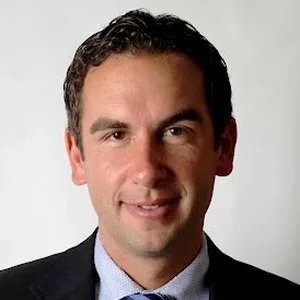
Steve Fulop President & CEO, Partnership for NYC
Socialist Democrats Applying New Taxes, Scares Off Investments In The City
Transcript
Automated transcript · uncorrectedSunday morning. Well, let’s get an update of what’s going on in New York. What is today is Stephen Phillip, and he’s the new president and CEO of the New York City Partnership, the most powerful one in the city and in the country, representing three hundred of the top companies in New York City. Well, Steve, are you getting
your feet wet?
It’s been going well, although it’s a child by fire getting thrown into the deep end here, however you want to frame it, it is. It’s been interesting just because of the tax environment and some of the conversation coming out of City Hall.
So are we doing better or what do you think is going on? Telly? I mean, you know, there’s music playing in Washington, there’s music playing in Aubany, and there’s music playing at City Hall, and there’s different music playing at City Council. So can you what is that for us?
Yeah, let me start by saying that I think all of those agree that we have a very, very fragile economy. You see indicators on the national front, and you see indicators certainly in New York City. And you could say that last year’s economic data being kind of touch and go was a result of maybe a mayor election with
a socialist mayor. Maybe it was tariffs, maybe it was AI, maybe it was all of it. But the first couple months of this year has continued with the up and downs and the concerns. So we have a city hall that’s now proposed, you know, four types of taxes in two months. We’ve had an income tax at five hundred
thousand dollars, We’ve had an income tax at million dollars, We’ve had a real estate tax, and we’ve got a corporate tax. And that type of rhetoric scares away investment, as you know, and we’re doing our best to push back on it. But you know, some of the socialists involved here, you know, seem to think that taxes is
the only solution.
Well, you know, I was on Fox Business on Friday, and I was on Forbes magazine interviewed me and I said, you know, I don’t want to in The New York Times interviewed me and I said, I don’t want to move out of New York. I love New York. And they were testing me on the sensitivity of the taxes.
I said, well, look, I’m in a position where it doesn’t bother me because of my position. But a lot of upper middle class people, I think the problem is they may leave.
What do you think I think that’s true. I think that you know, you don’t need a lot of the super wealthy people to leave to have a huge impact on the budget. So when people say everybody’s gonna stay, well, they’re bluffing. All you need is a handful And the reality is at the top bracket, you’re more than fifty
five percent of your income goes towards the government. So basically, the government’s the majority partner without doing the majority of the work. And to most success people, they would say that’s a formula doesn’t work. What you said about people that make half a million dollars or two hundred and fifty thousand dollars. You know, it’s very, very hard to
raise a family in New York City. There’s no question about the affordability crisis. But you need to grow paychecks and grow jobs in order to create better opportunities. If you squeeze people out and the budget continues to get constraint, then you’re going to see more people leaving, and the spiral downward will only continue.
I agree with you one hundred percent U. Now you also represent all the major banks in New York, and they have all the major banks that you represent. How many employees they have a mania.
We have where we have eight hundred thousand employees. And the reality is that when you talk to these CEOs, there’s several of them that are actively in conversations with regards to you know, growing in Texas. Several of them have said non publicly that they’re not going to add any new jobs in York. And this is all byproducts
of kind of the rhetoric. You know, people like to invest with their stability when they can predict what’s going to happen. It doesn’t need to be a perfect environment, but you know, having some visibility into what’s going to happen or what may happen is important. Now when you have you know, people talking about income taxes and then
lower income taxes and property taxes and corporate taxes, it creates uncertainty and people won’t invest, which is very dangerous for New York.
I understand, and you know, we’re in the building business, and I think I’ve said this to you before. They we can build ninety nine apartments in New York City and once you go above ninety nine, it becomes unfeasible.
So you know, I’m scratching my head what we should do. Maybe we should leave the land empty and worry about it later.
You know, I was the mayor of Jersey City for twelve years and you look across the river and you’ll see those big buildings. We’re building sixty stories, seventy stories. And the reason that we build like that, And a point as a side note that during the campaign, candidate Mamdani used to talk about Jersey City and Tokyo as
models for growth and the reason we’re able to build is we prioritize housing growth And we said, you know what, the community give backs are important, Union jobs of course are important. Some affordable are important. But you know, business people like yourself make decisions based on math, and at some point those projects can’t support all of those things,
and so you got to make choices. If your objective is to grow housing, that needs to be the majority of what you push for, and other things might have to go by the wayside that might be sounding good politically but ultimately are just unaffordable. And those are sometimes things that sound good, like community givebacks or one hundred
percent union labor. If the goal is building housing, we need to prioritize the building housing. And what you just said on ninety nine units versus one hundred units is a huge problem in New York City that PEP developers find it economically advantageous to build ninety nine units because they’re not the whole into all these other rules around
union labor and different sort of obligations. It’s a problem. It’s a problem.
We by the way, we just broke around building another tower in Florida because a lot of less restrictions.
Yeah, yeah, I mean uncertainty in this type of language is very good for real estate brokers in Miami. Becau’s no question about it.
But now last question, because we’re almost out of time, last question. Do you have good communications with city Hall, with with the city council in Albany?
Yes, you know all three? Yes?
Are they are they listening? They do? They understand the problem?
I think the city council, the speaker has been great, she understands it. She’s coming to the partnership to speak to a huge group of CEOs on Monday as a matter of fact. And uh, you know, the governor has been strong you know, City Hall has a different philosophy as it relates to taxes, so we just got to
continue to be public and educate and push the narrative.
Steve Phillip, President CEO of the New York City Partnership, thank you for the update and we’ll talk again real soon and let’s hope for progress.
Thank you. Don
Sunday, March 8, 2026

NY State Per Resident Has The Highest Expenditures For Medicaid By Far In The Country
Dr. Mehmet Oz CMS Administrator
For All The Reasons NY Is Great It Is Also A Target
Jay Clayton Director of National Intelligence
The Operational/Military Campaign Against Iran Is Very Impressive So Far
General David Petraeus Former CIA Director & Four-Star General

Taking Out Iran's Navy Was More Important Than People Think
Kevin Cramer U.S. Senator from North Dakota
The Iranian Regime Has Been Oppressing The Iranian People For 40 Years
Shar Pourdanesh
The Fact That Liberal Economics And Liberal Politics Parted Ways Is Quite Fascinating
Edward Price

Nothing Is More Important Than A Quality Of Rights For Women
Carolyn Maloney Former U.S. Representative from NY
They Need To Fix The Climate Law In Albany, To Make Life More Affordable For New Yorkers
Paul Zuber Executive Vice President, The Business Council of New York State
SCOTUS Stop Redistricting Case For The 11th Congressional District
Nicole Malliotakis U.S. Representative from New York
If Kristi Noem Had Told The Truth, She Might Still Be The DHS Secretary
David Paterson Former Governor of New York

Is The Median Democratic Voter Moving To The Left, Or Is The Party Being Pulled To The Left
Jesse Arm Vice President of External Affairs, Manhattan Institute

Technology In Medicine Nowadays Could Assist In Calculating Life Expectancy
Dr. Peter Michalos WABC Medical Expert
Pornography And The Harm It Does To Our Children
Lynn Shaw Founder of Lynn's Warriors
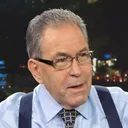
The Stoler Report with Michael Stoler: Frank Korzekwinski
Michael Stoler Real Estate Expert

Due To Budget Cuts Last Year, NASA Has Delayed The Return To The Lunar Surface
Steve Kates Space and astronomy broadcaster (Dr. Sky)

Markets Experiencing High Volatility From The Outbreak Of Hostilities In The Middle East
John Terrett WABC Financial Analyst
Steve Fulop

Tackling Housing Costs and Keeping Jobs in New York
Steve Fulop President & CEO, Partnership for NYC
New York City Business Leaders Confront Economic Competition and Safety Concerns
Steve Fulop President & CEO, Partnership for NYC
NYC Risks Losing Billions as Companies Shift Jobs to Texas, Florida and Beyond
Steve Fulop President & CEO, Partnership for NYC
New York City's Economic Future Depends on Business
Steve Fulop President & CEO, Partnership for NYC
NYC Businesses Struggle Under Rising Costs
Steve Fulop President & CEO, Partnership for NYC
