


Edward Price
The Fact That Liberal Economics And Liberal Politics Parted Ways Is Quite Fascinating
Transcript
Automated transcript · uncorrectedWhat is today is Edward Price, a diplomat, a work for the United Kingdom, for the government, and the head of economic policy during the Brexit years. Well, Edward Price, give us an update. Where the heck are we right now?
What’s going on with the price of a dollar, what’s going on with tariffs? You give the American people an update?
Well, thanks for having me, John, I’m not sure if anybody’s qualified to give a true update. And that’s another way of saying that the international macroeconomy, the picture they’re in is pretty confusing. I mean, on the one hand, in the last ten years or so, we’ve achieved peak globalization.
We had massive economies of scale, we had comparative advantage, we had the United States exporting Fiat currency and the Chinese exporting goods. But somehow the outcome of that globalization wasn’t what political scientists always wanted, right, which was peace.
It was what the political scientists always feared, which is tension and conflict. So the fact that liberal economics and liberal politics parted ways is fascinating. And to answer your question, I think we’re at the moment now, the inflection point in which the United States says, okay, this is a mess.
We’re going to start making moves absolutely.
I mean, my opinion on Brexit was that the fact that the British tell me, if I’m wrong, the British government was being invaded. They woke up one day and they’ve realized that the UK used to be sixty seven percent British, and all of a sudden they woke up one day it was forty seven percent. Am I wrong?
You are right? Yes, that wasn’t the issue with Brexit. I think that it was a much more complicated economic picture, and I think that the fact that the United Kingdom was exporting invisible services capital services to Europe escapes the nis of the general population. So there are many reasons that the British voted for Brexit. But I have to
say that one of the interesting things in retrospect is that those parts of the country that voted against the European Union had the lowest level of immigration. So I think that’s probably an urban myth.
Well, maybe tell us what’s going on in the global economy. There’s were many many rumors that Russia and China in India were trying to get rid of the dollar and change around the global currency. Give us your give us your pulta net.
Well, I think that that the dollar in any long term horizon is in trouble. John. There are too many dollars in existence, at least as measured by the rational size and the rational demand of the US economy. And I’ve written about this actually recently National Review. That comes down to the Nixon presidency. President Nixon is the guy
that moved us from a metallic standard to a fiat dollar, and the implications of that decision have been working through the system ever since. One arguably was the global financial crime when massive US denominated capital flooded back into one of our assets, in this case property, But another is eventually going to be what I call the dollar frown.
And look, we’re already seeing that US treasury yields really rose recently, and that defies what you usually think about, which is a safe haven playbook, which is the dollar smile. And instead there’s a growing thesis which is that there are too many dollars in the world. As I say, and honestly, I don’t know how economic policymakers would fix that,
because it certainly wouldn’t be another round of q E.
Understood. What else do you want to tell you, imagine people now you’re teaching. You’re teaching right now in New York University.
I have been teaching. I’m not teaching this semester, but I have been teaching, and I suppose my general message is let’s keep subtle, let’s be kinder to each other at home. One of the things that worries me is that we’ve got these two great political economists the wrong way around, Hobbs and Rousseau. Hobbs is about power. Russo
is about cooperation. We’ve seen in the last twenty five years to have applied Russo abroad and Hobbs at home. Let’s flip that around. Let’s have Russo at home. Let’s be kinder to each other. Let’s take the temperature down here and a bit more Hobbs abroad, which is basically finding and defeating our enemies.
Understood and well ed. Price. Thank you so much for coming on today, and let’s keep talking and keep the American people informed. And I believe keep being kept informed is more important than anything else.
Oh Amen to that, John, Thanks for having me on. Thank you
Sunday, March 8, 2026
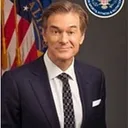
NY State Per Resident Has The Highest Expenditures For Medicaid By Far In The Country
Dr. Mehmet Oz CMS Administrator
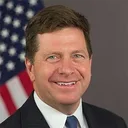
For All The Reasons NY Is Great It Is Also A Target
Jay Clayton Director of National Intelligence
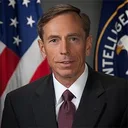
The Operational/Military Campaign Against Iran Is Very Impressive So Far
General David Petraeus Former CIA Director & Four-Star General
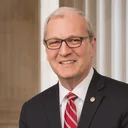
Taking Out Iran's Navy Was More Important Than People Think
Kevin Cramer U.S. Senator from North Dakota
The Iranian Regime Has Been Oppressing The Iranian People For 40 Years
Shar Pourdanesh
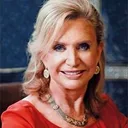
Nothing Is More Important Than A Quality Of Rights For Women
Carolyn Maloney Former U.S. Representative from NY
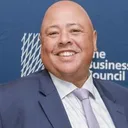
They Need To Fix The Climate Law In Albany, To Make Life More Affordable For New Yorkers
Paul Zuber Executive Vice President, The Business Council of New York State
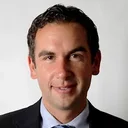
Socialist Democrats Applying New Taxes, Scares Off Investments In The City
Steve Fulop President & CEO, Partnership for NYC
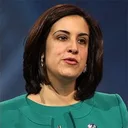
SCOTUS Stop Redistricting Case For The 11th Congressional District
Nicole Malliotakis U.S. Representative from New York
If Kristi Noem Had Told The Truth, She Might Still Be The DHS Secretary
David Paterson Former Governor of New York
Is The Median Democratic Voter Moving To The Left, Or Is The Party Being Pulled To The Left
Jesse Arm Vice President of External Affairs, Manhattan Institute

Technology In Medicine Nowadays Could Assist In Calculating Life Expectancy
Dr. Peter Michalos WABC Medical Expert
Pornography And The Harm It Does To Our Children
Lynn Shaw Founder of Lynn's Warriors
The Stoler Report with Michael Stoler: Frank Korzekwinski
Michael Stoler Real Estate Expert
Due To Budget Cuts Last Year, NASA Has Delayed The Return To The Lunar Surface
Steve Kates Space and astronomy broadcaster (Dr. Sky)
Markets Experiencing High Volatility From The Outbreak Of Hostilities In The Middle East
John Terrett WABC Financial Analyst