


Transcript
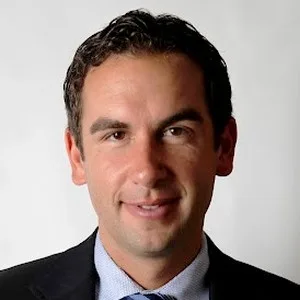
Automated transcript · uncorrectedThe New York City Partnership, they know what the heck is going on in New York and the new CEO, Steve Phillip, he’s got his ears close to the ground. Well, Steve, you represent three hundred biggest companies in New York City.
Tell me what the heck is going on? Is the budget out of whack? I understand there was an article on the New York Post that people are moving out and the budget is even worse shape than they started from.
I don’t know, but I rely on you to tell all the people what’s going on.
But look, the New York Post outlines an article that or data from the CDC, which is a nonpartisan group, which basically said that New York lost more millionaires than any other state in the country and that they’re moving to more welcoming environments. So, you know, why is that important?
It’s important because a lot of the times you get the you know, extreme political fringe groups say well, people aren’t leaving, and the data actually says the opposite. And why did it matter to people if millionaires leave? Is because the New York City and state budget is disproportionately paid for by high income earners. Pay the overwhelming majority
of the overall budget. So if you have less high income earners in the state, there’s less money to pay for all the social services and the programs that are needed to combat the affordability crisis. So it’s a big problem for everybody when you have people leaving.
Now, if I understand the budget correctly, they borrowed eight big and dollars in the state as a one time shot to help the city. And now if eleven Big and more is leaving, does that make next year’s you know, shortfall nineteen billion?
Well, I mean, look, next year is going to be a complicated year. Some of it is going to be predicated done how much does Wall Street grow and how much does the business community grow, because that’s really what bailed out the budget this year. In addition to the governor, the governor has been tremendously generous with understanding the complications
that New York City is in and and frankly, without her help, New York City would be in a much worse position. So, you know, I think the CEOs at the Partnership are grateful for the governor, And you know, I think next year is going to be more complicated, and she’s going to have to be involved as well.
Understood. What else do you want to tell New Yorkers? I mean, I think the data centers tell me about the data centers. There’s a lot of people ready to jump out of windows because they have a lot of money invested in data centers.
Yeah. I mean, look, I last week the governor is announced that she’s a signing an executive order which puts a one year moratorium on data centers, and the CEOs at the partnership and I think most members were opposed to it because a couple of different reasons. The first is that it spends a signal about competitiveness to the
private sector. Other states like Pennsylvania, for example, continue to grow and they haven’t put a moratorium on. They work with the communit needs to find solutions, but they recognize that data centers are important. That’s reason number one. Reason number two is a one year moratorium is going to solve what ultimately the solution will be when you work
closely with the community, which we know is necessary now and these are only going to be needed more in a year. One year moratorium accomplishes nothing. And then the third issue, which really is the most important one, which gets lost in this. It’s really not about a lot of people having investments in data centers. I mean, that’s
not our focus. The reality is that if anybody listening to this broadcast today is has a phone, an iPhone or Samsung. If somebody streams TV, Netflix, YouTube, they rely on data and access to data. And New York needs more access to data in order to keep all of these things moving in a positive way. And when you
constrict access to data, it hurts everybody in that way. So labor and the business community, so the building trades and the business community, we’re aligned saying we don’t think a moratorium is a good thing, but we understand that.
You know, the data centers represent the public AI in many ways, which represents to some of them elimination of jobs. And I understand that frustration, but I don’t think the moratorium on data centers really will achieve anything ultimately understood.
And what is the philosophy behind the Governor’s officeres ondoing that?
Well, I think, look, I think the governor is trying to listen to all different sides. You know, when you look at this issue across the country, you know, people generally speaking have a knee jerk adverse reaction to data centers, and the governor, as you could say that she should.
She’s trying to listen and understand the issue and then find a solution to it. But you know, ultimately the solution is going to be whether data centers get built or they don’t get built. In a one year procrastination or delaying it doesn’t really solve anything. So you know, again, some of this stuff, when attracting investment dollars into a
place like New York is based on how does the private sector feel about investing? Do they trust the government to invest? And you know the signal when you put a moratorium on these sort of stuff for a year or six months is that it becomes a riskier proposition to put your money into New York versus maybe another state.
And that was really our concern around the competitiveness understood.
Well, let’s pray for common sense. Let’s see what the governor’s office does in the next few weeks.
I will say that the governor. Look, the governor has been an ally to the business community, so I just want to be clear that you know, the community, Well, we’re never going to agree on everything, and I think she doesn’t expect us to agree on everything, and there’s no such thing as an elected official that has one
hundred percent agreement from any constituency. By and large, she’s really been sensitive to the interests of the business community and balancing that with the broader communities. So no, here’s a space to where we disagree with her on but we still think she’s done a great job.
Thank you so much, and we pray for common sense, and we hope that our city survived in our state survived. Thank you so much, Thank you right
Sunday, July 19, 2026

The Democratic Party Has Lost Touch with Mainstream America
Newt Gingrich 50th Speaker of the House
Strengthening Fiscal Accountability and America's National Security
Ron Johnson U.S. Senator from Wisconsin
A Conservative Vision for Economic Growth and Fiscal Responsibility
Roger Marshall U.S. Senator from Kansas
Lindsey Graham's Legacy and the Future of New York
George Pataki Former Governor of New York
Confronting the Threats Posed by Iran, China and Global Instability
Brian Mast Chairman, House Foreign Affairs Committee

Advocating for Senior Tax Relief and Tougher Public Safety Policies
Nicole Malliotakis U.S. Representative from New York

Election Integrity Must Be a National Priority
Claudia Tenney U.S. Representative from New York
Federal Prosecution Matters in New York
John Sarcone First Assistant U.S. Attorney, Northern District of NY

Tackling New York City's Housing Crisis and the High Cost of Living
Mark Levine New York City Comptroller

Lessons From 90 Years of Life and Public Service
Andrew Spano Former Westchester County Executive

Congressional Campaign Focused on Law Enforcement and Tax Relief
Michael LiPetri Nominee for Congress, NY-3; Former NY Assemblyman

Trust in Institutions and the Future of American Leadership
Michael Cohen Former Attorney to President Trump & 77 WABC Host

Building Military Readiness for an Increasingly Dangerous World
General John Teichert Brigadier General, USAF (Ret.)
Honoring the Legacy of Detective Steven McDonald
Mary Murphy & Susan Birnbaum Emmy-Winning Journalist & NYC Police Foundation CEO
Politics Behind the Horse Carriage Debate
Christina Hansen Carriage Driver & TWU Local 100 Spokesperson

The Stoler Report with Michael Stoler: Steve Kliegerman
Michael Stoler Real Estate Expert


China's Mini-Moon Mission and Space's Next Frontier
Steve Kates Space and astronomy broadcaster (Dr. Sky)


Steve Fulop

Tackling Housing Costs and Keeping Jobs in New York
Steve Fulop President & CEO, Partnership for NYC
New York City Business Leaders Confront Economic Competition and Safety Concerns
Steve Fulop President & CEO, Partnership for NYC
NYC Risks Losing Billions as Companies Shift Jobs to Texas, Florida and Beyond
Steve Fulop President & CEO, Partnership for NYC
New York City's Economic Future Depends on Business
Steve Fulop President & CEO, Partnership for NYC
NYC Businesses Struggle Under Rising Costs
Steve Fulop President & CEO, Partnership for NYC
