


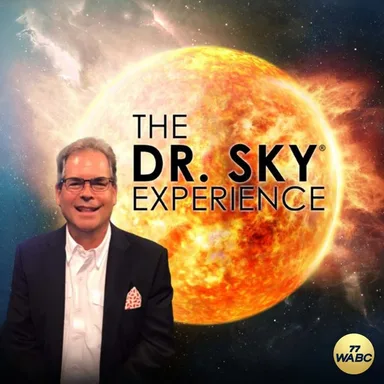
Steve Kates Space and astronomy broadcaster (Dr. Sky)
China's Mini-Moon Mission and Space's Next Frontier
Transcript
Automated transcript · uncorrectedSunday Morning, Steve Tates, otherwise the one who’s doctor Sky. One good friend, one more guy, and I tell us what you have in mind for this Sunday morning.
Well, good morning, John, Good morning Sunday morning to everyone. But here, Joe, we talk a lot of space stories, but here’s one that almost sounds like science fiction. The Earth, from time to time pulls in some of these small asteroids and they get classified as mini moons. Well, here’s the headline story this week. There’s a small little asteroid
maybe one hundred feet in diameter. It was discovered in Hawaii back in twenty sixteen, and it’s Hawaiian name. Here we go, and I’m not an expert in the Hawaiian language, but I’ll do the best I can. It’s officially known as camo O Aliwa and if you translate that from Hawaiian, it means an oscillating celestial object. It rotates every twenty
eight minutes. Not going to hurt the Earth by any means. But what’s interesting is that China has sent the space probe there called TM one two, and it’s actually orbiting this particular little body. Hopefully in the next few months, John, it’ll scoop up some material from it bring it back to Earth because guess what many believe astronomers scientists that
this is actually a piece of the Moon that was blasted off the surface of the Moon, maybe millions of years ago to other big impacts that hit the Moon.
How big is this thing?
Only about one hundred feet in diameter. Isn’t that incredible? A little object one hundred feet in diameter. It’s caught up in kind of the Earth’s gravity. But what’s amazing is the Chinese spacecraft John is actually going to try to scoop up something. It’s going to orbit it for a while to be you know, to make that precise
moment in time. But some believe there’s a large crater on the Moon called Giordano Bruno, and some believe an asteroidal impact hit it maybe millions, maybe billions of years ago. And we’re trying to identify what this material is. But it’s two stories, and one that the Earth occasionally gets these mini moons that lock into our orbit and then
they move away interesting stuff from not only space but also from a strong that’s interesting.
Well, what else is on your mind? Now? Does they pick up from that secondary asteroid will they be able to telephover’s part of the moon.
I don’t know for sure, John, I think chemical analysis. When we went to the Moon, we brought back about eight hundred and forty pounds of moon rocks, and what we found out there is maybe many of those moon rocks are not exactly like that of the Earth. But in this particular case, analyzing it, they will try to
find out if there’s any fact. Similarly, of course, the organic compounds are there because apparently where the Moon came from it wasn’t out of the Pacific Ocean, as we may be heard in school when we were younger. It was an object called thea theoretically an object the size of Mars that hit the Earth and pulled out this
big blob of material, thus faring the Moon itself. So you don’t know. We’ll have to wait and see what the analysis is of this little object called camo O Aliwa hard enough to say twice, don’t you think?
Well? I mean they should make another name. Maybe Sun of Moon. Doesn’t that sound better? Sun and Moon?
Actually it could be daughter of Moon.
Too, yes, but it depends better. What else would you hear? What else is the old mysteries? Of a day.
Well, John, here’s something else. It goes back to Earth with companies that are developing space technology, whether it’s science fiction or not. Let’s start off with a company called Space Mirror the FCC. This is amazing just to prove Space Mirror put in these particular big mirrors in space that you’re unfurled like, you know, a big sheet of
aluminum foil type, and that its purpose would beam down sunlight down onto the Earth in a three mile area, you know, swaps of material or powder on the Earth. Now, this is very controversial because the people in astronomy say, oh no, hell no, we don’t want to do that.
You’re going to ruin the quality of the nighttime sky. But John, isn’t it possible if for certain situations, maybe military purposes or who knows what, you could actually beam down sunlight in a three mile area when the rest of the sky is dark and the rest of the Earth is dark. It’s a concept maybe goes science fiction now,
but you never know, there may be practical purposes.
What say you, Well, you’re absolutely right, there could be some practical purposes. Now, I listened to you every Saturday night of Sunday morning and every Friday night from Saturday morning from twelve to two Eastern time. And thank you for doing it, and you really I guess you move my mind around.
Well, John, We talk about the mysteries of the universe and also jump into time topics of American exceptionalism. Obviously the trademark of this particular station truth justice in the American way. But one closing story that I failed to mention here in the short time is another company called Solar Storms, and that the company called storm Wall is
actually their name. Their purpose would be to put up spacecraft up in the geosynchronous area that’s way up there where it’s twenty two thousand miles where the satellites stay, the big ones in Earth’s stability, and they may inject something called barium and other compounds into the Earth into what we call the magneto shield, this big magneto field
around the Earth that protects the Earth. Why would they do it because their theory states that over time it could, and I use the word could, maybe deflect some of those solar storms that are being pummeled here when we get pumbled from space. Now that sounds real science fiction, but you never know, John, I mean, look, at a
one hundred years since aviation. More than that, maybe the things that we think today are science fiction, but it’s a real serious company that has some serious plans of maybe doing something to limit the amount of solar storm damage because wat John, everything is electronic and we can’t afford to lose the grid or the importance of satellite.
Well, thank you Steve Kates, and we’ll catch up with you again real soon.
Thank you, John, Have a good Sunday.
Sunday, July 19, 2026

The Democratic Party Has Lost Touch with Mainstream America
Newt Gingrich 50th Speaker of the House
Strengthening Fiscal Accountability and America's National Security
Ron Johnson U.S. Senator from Wisconsin
A Conservative Vision for Economic Growth and Fiscal Responsibility
Roger Marshall U.S. Senator from Kansas
Lindsey Graham's Legacy and the Future of New York
George Pataki Former Governor of New York
Confronting the Threats Posed by Iran, China and Global Instability
Brian Mast Chairman, House Foreign Affairs Committee
Advocating for Senior Tax Relief and Tougher Public Safety Policies
Nicole Malliotakis U.S. Representative from New York
Election Integrity Must Be a National Priority
Claudia Tenney U.S. Representative from New York
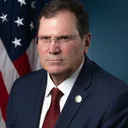
Federal Prosecution Matters in New York
John Sarcone First Assistant U.S. Attorney, Northern District of NY
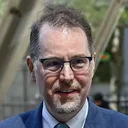
Tackling New York City's Housing Crisis and the High Cost of Living
Mark Levine New York City Comptroller
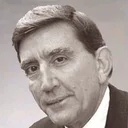
Lessons From 90 Years of Life and Public Service
Andrew Spano Former Westchester County Executive

Congressional Campaign Focused on Law Enforcement and Tax Relief
Michael LiPetri Nominee for Congress, NY-3; Former NY Assemblyman
Trust in Institutions and the Future of American Leadership
Michael Cohen Former Attorney to President Trump & 77 WABC Host
Building Military Readiness for an Increasingly Dangerous World
General John Teichert Brigadier General, USAF (Ret.)
Honoring the Legacy of Detective Steven McDonald
Mary Murphy & Susan Birnbaum Emmy-Winning Journalist & NYC Police Foundation CEO
Politics Behind the Horse Carriage Debate
Christina Hansen Carriage Driver & TWU Local 100 Spokesperson
The Stoler Report with Michael Stoler: Steve Kliegerman
Michael Stoler Real Estate Expert

Steve Kates
Deep-Space Mysteries, UFOs and the Orionid Meteor Shower
Steve Kates Space and astronomy broadcaster (Dr. Sky)
The Mysteries of Mermaids, El Niño and the Antarctic Ice
Steve Kates Space and astronomy broadcaster (Dr. Sky)
Exoplanet Radio Signals, SpaceX’s Heavy Rocket Test and Nuclear Propulsion
Steve Kates Space and astronomy broadcaster (Dr. Sky)
Supersonic Jets, SpaceX’s Next Starship Launch & Trump’s Golden Dome Defense System
Steve Kates Space and astronomy broadcaster (Dr. Sky)
The Science Behind Hurricanes, Cosmic Radiation and the Universe
Steve Kates Space and astronomy broadcaster (Dr. Sky)
Ben Franklin, Mars, and Asteroid Mining
Steve Kates Space and astronomy broadcaster (Dr. Sky)
