


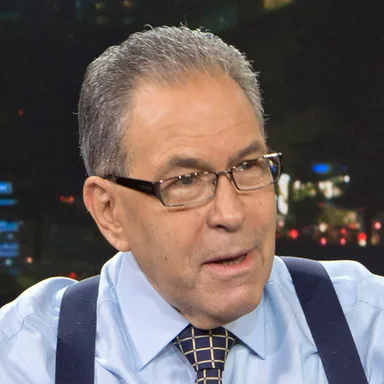
Michael Stoler Real Estate Expert
The Stoler Report with Michael Stoler: Steve Kliegerman
Transcript
Automated transcript · uncorrectedGood morning. This is Mike Stoler for the Stolar Real Estate Report. What’s happening in the residential market in New York City. Lots of new legislation, lots of new taxes, lots of questions are on the market. So today I have a guru on the residential market, both for sale and residential rentals. I have Stephen Klegan, the president of
Brown Harris Stephens Development Marketing. Thanks for being here, Stevens.
Great to be here again, Michael, So tell.
Me what’s going on. We hear about all of these things.
What’s going on? Well, the second quarter just ended, and in the sale market, the biggest headline right now is that half of the dollar volume of contracts sold in the second quarter we’re for apartments priced at ten million or more. The ultra luxury market is just on fire in New York City. And who’s buying mostly local buyers,
actually mostly domestic buyers. It’s not that many Internet national buyers right now. These are mainly primary residences. We have a lot of people who are returning to New York from Florida, moving to New York from the West Coast, and a lot of people upgrading as their situation changes, both financial, you know, or the size of their family,
and they’re looking for the best product available, and there’s some amazing product out there right now, like eleven twenty two Madison Avenue. It’s it’s a boutique condominium developed by Victor Segora, very high end, great floor plans, beautiful finishes.
Another one eighty Clarkson, which the Zeckendorfs and Atlas Capital are developing, setting record prices for downtown Manhattan, and these apartments, according to the developers, are mainly being bought by domestic purchasers.
What’s happening in the Burroughs Well.
Brooklyn is on fire and it has continued to be on fire. Brooklyn has very very low inventory. We saw a little bit of up ticket inventory in the second quarter, but that came from a ten year historic low of inventory.
And condominium Queens is flourishing right now. Long Island City has been very high in demand.
For the last couple of years. A story is highly.
In demand, mostly for real well condo as well, but the majority of the product there is rental. But the condominium market is doing very very well in Astoria, It’s done very well in Long Island City. The fleshing market is also thriving at a lower price point about thirteen hundred of square foot, which is a real value actually
in the city right now, and we need more product.
Frankly, product is low.
We’re at an all time low when it comes to the number of units available in condominium in Manhattan and Brooklyn and Queens. In total, we have about a thirty four month supply of due product in Manhattan, twenty six months supply in Brooklyn, and a twenty six month supply in Queens. That’s about half the ten year average.
So where are they going to build new developments? Is it the Guanas?
This is green Point, Well, Gowanas, certainly, and Gowana is the majority of that product, which is about nine thousand total units either built or planned, is rental with a good majority, not a good majority, but a good portion of that between twenty and thirty percent, depending on the program that they’re built under, being affordable housing, which we
need tremendously in Queens areas like Astoria where he’s seeing development in Maspith right now. You know, basically wherever you can find a subway line, you’re going to find new development. The South Bronx has seen a lot of rental development, not a lot of condigation.
When we talk about the South Bronx, are we talking about month Haven?
Month Haven mostly, Yeah, exactly, and you know there’s been tremendous development there. There’s great value there in rents in the sixty to seventy dollars a square foot range, which you know when you look at Manhattan rents and new development, they started one hundred dollars a square foot and go up to about one hundred and twenty or one hundred and thirty.
The better areas in Brooklyn Gowanas is now in the one hundred dollars a square foot range. Long Island City is ninety dollars a square foot. So if you look at Madhaven, it’s a real value and it’s just across the bridge. There’s a subway stop there. So that’s why you know, those apartments are are in demand right now
and they’re starting to absorb fast.
Anything happening in Roosevelt Island.
Roosevelt Island had some condo development, a little bit of new rental development, but not as much as we’ve seen in the other areas we just mentioned.
Let’s talk about the Fair Act explained to my listeners.
Sure, so the Fair Act was a legislation that was intended to protect tenants from paying real estate brokers high fees, commissions, consulting fees when leasing an apartment. And what the legislation basically says is that if a real estate agent is representing the landlord, which means they either have an exclusive agreement with them or they’re advertising the landlord’s property, then
the landlord must pay their fee. They cannot collect a fee from the tenant. That said, if the tenant responds to an ad for a landlord’s property and doesn’t rent that property, and then the agent takes them to a different property that they have not advertised, then the tenant in most cases is going to be asked to pay
the fee. And it gets very complicated for the tenant because they don’t know which hat. Sometimes the broker is putting on and taking off. Even though the brokers have to disclose and they give disclosure and they explain these things to the tenant, often the tenants don’t understand who when they’re being represented, and when they’re paying the fee
and when they’re not. And what a lot of these legislations have done is what they’ve really done is They’ve limited the availability of supply coming to the market because people won’t necessarily move if they think they have to have an expense, and landlords may not want to pay a fee, so they may be more willing to renew
a lease versus put something back on the market for a higher rent. So it’s constricting supply, which ultimately raises prices for everybody.
What about the pains of terror.
It’s early on in the pieta tear tax. I mean literally yeah, it literally just passed. It’s effective basically today. Its attacks on non resident owners who are not New York State residents, not New York City residents, and they’re not renting their apartment out to a New York City resident or having a New York City family member live there.
And it’s basically an additional annual real estate tax on what the city considers a pietita, which is your non primary residence. And there’s a whole scale of how it works. It’s not based upon the actual sale price of the apartment right now, it’s based upon what the city considers to be market value, which everyone’s trying to figure out
what’s the dollar amount where that kicks in, and no one has an exact answer for it. Some have said five million, some have had said ten million. But it’s basically an additional real estate tax on non residents because the powers that be feel like those folks aren’t contributing daily to the economics of the city and thus they
should pay more real estate taxes. It’s going to be even more complicated for the co ops because co ops are not fee simple properties. Right in a co op, you own shares of stock and a corporation that own the property. So the co ops are actually going to be levied the tax, and then they’re going to have
to go after their shareholders for the money, and that’s going to create a whole logistical issue on its own.
So where do you see rents going. I mean, there’s a rent freeze.
So there’s a rent freeze on rent regulated apartments. There’s no rent freeze, and nor can there be a rent freeze on market rate apartments. Rents continue to rise in New York City because we’re under supplied. It’s a typical supply and demand equation. And what this rent freeze, in my opinion, will do is will exponentially increase rents on
market rate apartments because if rent regulated apartments aren’t vacated because people’s rents aren’t going up, then there’ll.
Be less supply on the marketplace.
And when there’s less supply and continued high demand, as we know from other areas of our economy, prices go up.
And over the last five.
Years, rents have gone from an average of seventy dollars a square foot to well over one hundred dollars a square foot. New projects, new developments that are being projected in Manhattan right now are projecting rents anywhere from one hundred and ten to one hundred and thirty dollars.
A square foot.
In Brooklyn, who are you talking about the West Side.
I’m talking about almost anywhere south of ninety sixth Street in Manhattan. At this point, we’re working on projects in the Financial District, Upper east Side, upper west Side. All of these projects that are beautiful projects, very well amenditized.
They’re all going to be pushing to an average of one hundred and twenty dollars a square foot of more in Manhattan. In Gowanas, you’re at one hundred dollars of square foot trending upwards. In Queen’s and Long Island City, you’re looking at ninety dollars a square foot, so rents are going up and.
All of this legislation.
Is actually having a counter effect of what it was intended to do. It was intended to save people money, and at the end of the day, all of the research, all the analysis points to it actually raising the cost of living in New York City.
With that comment, I’d like to say thank you for being here. You’re not the most happy individual today with regard to the world over there, and it’s difficult, but people want to live in New York and if they’re going to want to live in New York, they can have to pay for it.
That is absolutely true.
So thank you Steve Kliegel for being here today.
My pleasure. Michael
Sunday, July 19, 2026


The Democratic Party Has Lost Touch with Mainstream America
Newt Gingrich 50th Speaker of the House
Strengthening Fiscal Accountability and America's National Security
Ron Johnson U.S. Senator from Wisconsin

A Conservative Vision for Economic Growth and Fiscal Responsibility
Roger Marshall U.S. Senator from Kansas

Lindsey Graham's Legacy and the Future of New York
George Pataki Former Governor of New York
Confronting the Threats Posed by Iran, China and Global Instability
Brian Mast Chairman, House Foreign Affairs Committee

Advocating for Senior Tax Relief and Tougher Public Safety Policies
Nicole Malliotakis U.S. Representative from New York

Election Integrity Must Be a National Priority
Claudia Tenney U.S. Representative from New York

Federal Prosecution Matters in New York
John Sarcone First Assistant U.S. Attorney, Northern District of NY

Tackling New York City's Housing Crisis and the High Cost of Living
Mark Levine New York City Comptroller


Lessons From 90 Years of Life and Public Service
Andrew Spano Former Westchester County Executive

Congressional Campaign Focused on Law Enforcement and Tax Relief
Michael LiPetri Nominee for Congress, NY-3; Former NY Assemblyman

Trust in Institutions and the Future of American Leadership
Michael Cohen Former Attorney to President Trump & 77 WABC Host

Building Military Readiness for an Increasingly Dangerous World
General John Teichert Brigadier General, USAF (Ret.)
Honoring the Legacy of Detective Steven McDonald
Mary Murphy & Susan Birnbaum Emmy-Winning Journalist & NYC Police Foundation CEO
Politics Behind the Horse Carriage Debate
Christina Hansen Carriage Driver & TWU Local 100 Spokesperson


China's Mini-Moon Mission and Space's Next Frontier
Steve Kates Space and astronomy broadcaster (Dr. Sky)


Michael Stoler
The Stoler Report with Michael Stoler: Eli Weiss and Andrew Albstein
Michael Stoler Real Estate Expert
The Stoler Report with Michael Stoler: Eli Weiss and Andrew Albstein
Michael Stoler Real Estate Expert
The Stoler Report with Michael Stoler: Robin Schneiderman
Michael Stoler Real Estate Expert
