


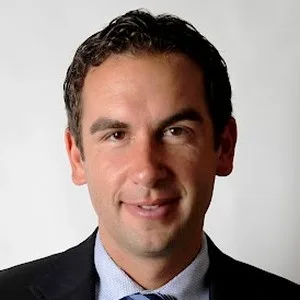
Steve Fulop President & CEO, Partnership for NYC
NYC Risks Losing Billions as Companies Shift Jobs to Texas, Florida and Beyond
Steve Fulop
Steve Fulop, president and CEO of the Partnership for New York City, reviews UN week with John Catsimatidis. He welcomes the mayor’s meeting with President Trump and the proposed Sunnyside housing project, describes a call between 150 CEOs and an Anthropic researcher on AI, and explains why companies that keep a New York presence are choosing to grow in Texas, Florida and Utah instead.
Key takeaways
- Fulop said the mayor’s relationship with the president is a positive; Sunnyside could mean over 10,000 units.
- He said New York’s affordability crisis is tied directly to housing costs and a lack of supply.
- Fulop said about 150 CEOs joined a call with an Anthropic researcher about AI’s impact on the city.
- He said Texas has a deliberate strategy: a Delaware-style court system, a new stock exchange and cheaper housing.
- Fulop said Goldman Sachs grew from 10,000 to 40,000 employees while keeping 10,000 in New York.
In their words
“I mean, the affordability crisis in New York City is directly related to housing costs and a lack of supply.”
“But the biggest challenge for New York is that most of them are choosing not to scale up and invest here.”
“So that means that every job that goes to Texas is really a lost job from here.”
Quotes are word for word from the automated transcript, uncorrected; the summary and takeaways are editorial.
Transcript
Automated transcript · uncorrectedWhat’s going on in New York City? Well, there’s nobody better to talk to than Steve Phillip, and he is the president and CEO of the New York City Partnership, which represents 300 of the largest companies in New York. Well, Steve Phillip, we had UN Week. The streets were a mess.
A lot of meetings, a lot of conferences. Give us an update of what you know.
All right. So I’ll talk a little bit about kind of the partnership in the business community here. I mean, the week started, obviously, with the president meeting with the mayor and Gracie Manchin. You know, it’s really a positive that the mayor has been able to build a good relationship with the president. They announced, obviously, the potential to
work together on Sunnyside. For us, that’s a great thing. I mean, the affordability crisis in New York City is directly related to housing costs and a lack of supply. That could be more than 10,000 units. I think the challenge is going to be time. The president only has two years left in his term. Two and a half.
Two and a half. And these are complicated projects that have taken multiple decades to get to this place. So You know, it’s going to take a lot of pushing, but that would be a great thing for the city if we’re able to see that move forward. And then I would just tell you from the business standpoint, the
other thing worth highlighting is that, you know, the business community met with Jacob Cox, and some people may know who he is. He’s the anthropic researcher from the artificial intelligence company that was the first to– sound the bell around alarm that the companies aren’t doing enough. So interestingly, he asked for an audience with the New York city
business community leadership. And, uh, you know, there were about 150 CEOs on that call. It shows you that people are very interested in how AI is going to impact the city. And, uh, of course the country and globe.
And so, you know, we did that earlier in the week and, and, and that’s on top of terrible week of traffic, John.
Understood. Um, Well, where do we go from here? I mean, I was on Fox last week, and I said that I am glad that the president is meeting with the mayor because in civilization, everybody sits down and meets.
Yeah, I think... it’s a good thing that they’ve built this relationship. I mean, the affordability crisis is something that’s obviously impacting the president’s polling numbers. You see gas prices and grocery numbers, grocery store costs escalating. And people feel that, of course, and they talk about it. But then on a much more local level here in New York City,
housing costs, child care costs, um, are very, very high. So there’s an overlap there around the affordability conversation and being that they’re not the most traditional of, of alliances that you would expect. It, it bodes well for both of them politically. So, um, I think that people should be encouraged that the mayor has that skill. The president
is obviously receptive as it helps him as well. And, uh, the people that will benefit the most, hopefully are residents of New York city.
One of the, you have the pulse of, uh, A lot of large companies in New York and a lot of the large banks have been moving, I guess, people to Texas or Florida, much friendlier environments for business. Give us the pulse of what’s going on. Is the movement continuing?
Is there still a lot of concern?
So I think... I mean, look, it’s a complicated conversation because New York City is still a special place and the most desirable place for young people to be after college. And that’s an important narrative, but it’s not something that is impossible to be changed. Texas is making a real concerted effort, and it’s beyond just taxes. They changed their
entire court system. to make it look like Delaware for more corporate friendly. They’re starting a Texas stock exchange to give access to capital markets. They have cheaper housing costs. So they have a deliberate strategy around this. Now, the impact is... Are some of these major corporations that are in New York City going to pick up and leave permanently?
The answer is probably not because they need to have a presence in New York City. But the biggest challenge for New York is that most of them are choosing not to scale up and invest here. And that means there’s billions of dollars that New Yorkers lose to fund programs.
So if you think about it from, let’s say, Goldman Sachs’ standpoint, 10 years ago, 15 years ago, they had 10,000 employees in New York City. They were a much smaller company. Today, I think there are 40,000 employees, so much larger, and they still have 10,000 employees here, meaning that they’ve been invested.
So as the large companies expand, they may be able to maintain the capacity They’re old numbers in New York. Is that what you’re saying?
Yeah. Yeah, but they’re not building here, growing here. So that means that every job that goes to Texas is really a lost job from here. So even if they’re maintaining or slightly decreasing, it still isn’t good for New York City. The jobs that are going to Texas, really, or Utah or Florida, they should be New York City jobs.
So we’re losing every single time one of those happens.
Understood. Anything else you want to tell the American people, New Yorkers, New York, New Jersey, you know, whatever?
No, I look, I think next week will be a better week now that we have, you know, most of these presidents and prime ministers stop creating traffic on our streets. Next week will be an easier opportunity to move around the city if you’re there. So it’ll be great.
Thank you so much for coming on and keep the pulse going because between yourself and WABC, we transmit what’s going on in our city and our country through you and through WABC. Thank you so much. Thank you.
Sunday, September 27, 2026

Turkey, the Middle East and Cyprus’s U.S. Investment Boom
Nikos Christodoulides President of the Republic of Cyprus

Sounds Off on Iran, the UN and the 2026 Election
James Lankford U.S. Senator from Oklahoma

Sounds Off on the 2026 Midterms and the Battle for Congress
Jim Jordan U.S. Representative from Ohio
Trump’s NATO Strategy: “Europe Is Quickly Getting Stronger”
Matthew Whitaker U.S. Ambassador to NATO
Trump’s Energy Strategy, Venezuela Oil and the Fight for America
Ryan Zinke U.S. Representative from Montana

The Washington Square Park Drug Crackdown: “We’re Going to Do Our Job”
Jamie McDonald U.S. Attorney for the Southern District of NY
Rips UN Walkout on Netanyahu: “Shocked and Appalled”
David Paterson Former Governor of New York

“The Angels Among Us”: Miracles, Visions and Unbelievable Coincidences
Dr. Marc Siegel Physician; Fox News Medical Contributor

Lost Fishing Boat Found 50 Feet From a Block Island Wind Turbine
Mike Lombardi President, Green Oceans

Europe’s Security Crisis: Russian Threats, Narco Networks and Germany’s Shift Right
Jose Santamaria Chief Investment Officer, Fundamental Investment Services

Sounds the Alarm on Cell Phones and the Developing Brain
Dr. Mason Pimsler Geriatrician, Lincoln Medical Center



Supersonic Jets, SpaceX’s Next Starship Launch & Trump’s Golden Dome Defense System
Steve Kates Space and astronomy broadcaster (Dr. Sky)
“We Must Talk About Suicide” and Protect Our Kids
Lynn Shaw Founder of Lynn's Warriors

Markets Tread Water Ahead of the Fed Amid UN Week and Xi’s State Visit
John Terrett WABC Financial Analyst
Steve Fulop

New York City Business Leaders Confront Economic Competition and Safety Concerns
Steve Fulop President & CEO, Partnership for NYC
New York City's Economic Future Depends on Business
Steve Fulop President & CEO, Partnership for NYC
NYC Businesses Struggle Under Rising Costs
Steve Fulop President & CEO, Partnership for NYC
New York's Economic Future Depends on Staying Competitive
Steve Fulop President & CEO, Partnership for NYC
