


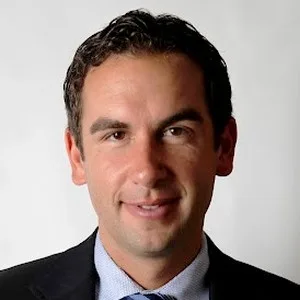
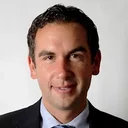
Steve Fulop President & CEO, Partnership for NYC
NYC Businesses Struggle Under Rising Costs
Transcript
Automated transcript · uncorrectedSunday morning. What is today? Steve Phillip, and he is the CEO of the New York City Partnership, the most powerful organization in I guess in New York City represents almost three hundred of the I guess the biggest companies in New York City. Well, Steve, give us an update.
I mean, there’s a lot of people in the real estate industry that are still up in arms. What’s going on in the rest of the industry, And tell us who got kicked off, who got kicked off that consul that the maya has.
Well, look, John, I think there’s two things this week that are worth highlighting. The first is that, Yeah, the mayor sent letters to everybody who’s on this Mayor’s advisory board saying thank you for your service, which was kind of like a kind of bizarre way to approach it because these are people that have been donating money. It’s
al philanthropy, largely the mayor’s discretion. They’ve been doing this to help Post nine to eleven during COVID, So it’s kind of weird to say to people that want to give money just because they’re wealthy or successful, that you don’t want their money. So that’s one thing that happened this week. And then the second thing that happened this week,
which people are talking about is obviously the rollout of kind of the Grocery RFP, and I mean largely people think that, you know, it was a campaign promise that will never be successful because there’s a lot of issues around that RSP. I mean, nobody knows that business better than you, but a lot of talk around seventy million
dollars being spent to subsidize groceries that will probably not be in a successful endeavor. Understood.
So you got the executive what, Yeah, I was gonna say, what do you think about the gro Well, I got you here, what do you think about the grocery initiative?
Well, I’ll tell you that one of the major churches in New York. I’m not going to mention who it was. I guess maybe the city has been going half to them to help us sponsored the good things about giving away free food and my and they asked me my comment, and my comment to the church group was, you’re in
the business of charity and feeding the hungry. So if the mayor or the city hall last year do it, you should go and feed the hungry. What else can I tell the church?
Do you think the free grocery stores that the mayor’s proposing will work?
No? I think eventually it has blown up in every country or every state, in every city in the rest of the country. But it’s a great it’s a great It looks good that you’re feeding the hungry. And I when I spoke to the mayor or, I said, you got to expand it, because feeding the hungry in five
small neighborhoods and spending seventy million dollars for locations doesn’t makes.
Yeah, I think that’s I think that’s largely where people are. And you know, people obviously in need of more affordable groceries, but you know, we maintain the best way to do that is to get them a bigger paycheck and a better job. And uh, you know that’s kind of where the different pep is.
The what cost in New York City and Manhattan where I live and a lot of our stores are that congestion pricing has caused more damage from the state. Then then then then what the mayo wants to do with the with the five stores? You know, you know why I want you to drive up and down first Avenue,
Second Avenue, third Avenue, with Lexton Avenue, Madison Avenue, and see how many empty stores you are. They you cannot go and tout your your your horn and say, oh, congestion pricing is a winner. You know why, because when you figure out how many stores have closed, it’s it’s not a winner. It’s hurked our city.
Yeah, yeah, I mean, look, the mayor implemented, the congestor or the governor implemented congestion pricing largely with the goal of raising money for the MTA. I think the MTA is still struggling as part of the challenge. And you see an article a couple of weeks ago that you know, people aren’t paying fares for buses largely because you know
of this language around the expectation of it being free. So you know, the MTA has big financial problems. Congestion pricing is white yard of New York.
City New York City Housing Authority. I think thirty or forty percent of the people are not paying any rent. What do you do with that?
Yeah, I haven’t seen data around that. I mean I think that you know, look, people, people are struggling, and a lot of these processes that have been in existence for the last twenty or thirty years, probably need to be revisited on how we approach them, what the income levels are, who qualifies, where people drive, how they drive,
where people access grocery stores, how do we cre more jobs? Those are all economic development plans that need to be discussed and explored.
We got thirty four sections. What do you want to tell the people of New York and New York City New York State.
Well, look, I think that you know, there is no question in the business community, there’s a recognition of the fact that you know, it’s a very expensive place to live. And I think that the mayor has been right about identifying the problems. I think that the biggest challenge is what are the solutions. And we’ve never seen anywhere else
in the world that you know, socialism has been a solution that works long term, and so we think that you just got to build better paychecks attract better jobs. It’s a competitive landscape and we’re maintaining our position and pushing on that.
Well. Steve Phullup, CEO of the New York City Partnership, representing three hundred most important, most powerful companies in New York City, thank you so much for coming on this Sunday morning, and let’s keep let’s keep our listeners involved, let’s keep everybody, all our businesses involved, and thank you for what you do. Thank you
Sunday, August 9, 2026
A Return to Mainstream Conservative Principles
Mike Pence 48th Vice President of the United States
Rebuilding Pennsylvania's Economy and Defense Industry
Dave McCormick U.S. Senator from Pennsylvania
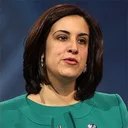
Fighting for Public Safety and Taxpayer Accountability
Nicole Malliotakis U.S. Representative from New York
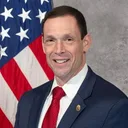
The DEA's Fight to Dismantle Cartels
Frank Tarentino DEA Associate Chief of Operations, Northeast Region
NYC's Second-Home Tax Faces Legal Challenge
Randy Mastro Partner, Dechert LLP; Former NYC First Deputy Mayor

A World on the Brink of Global Conflict
General Blaine Holt Brigadier General USAF (Ret.)

Mass Migration Threatens Europe's Future
Nile Gardiner Director, Margaret Thatcher Center for Freedom
Declassified Files Reveals Need For FBI Accountability
John Solomon Founder & CEO, Just the News

New York's Debate Over End-of-Life Care
Dr. Mason Pimsler Geriatrician, Lincoln Medical Center
The Stoler Report with Michael Stoler: Henry Rosenwach
Michael Stoler Real Estate Expert


The Cosmic Bubble Protecting Earth
Steve Kates Space and astronomy broadcaster (Dr. Sky)


Steve Fulop
Tackling Housing Costs and Keeping Jobs in New York
Steve Fulop President & CEO, Partnership for NYC
New York City Business Leaders Confront Economic Competition and Safety Concerns
Steve Fulop President & CEO, Partnership for NYC
NYC Risks Losing Billions as Companies Shift Jobs to Texas, Florida and Beyond
Steve Fulop President & CEO, Partnership for NYC
New York City's Economic Future Depends on Business
Steve Fulop President & CEO, Partnership for NYC
