


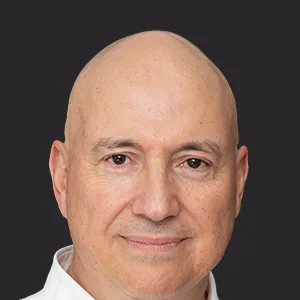
Dr. Peter Michalos WABC Medical Expert
New Technology Could Transform Cancer Screening
Transcript
Automated transcript · uncorrectedWell, live long and prosper What do we do to live longer? Well? What is today is doctor Peter Mirelos like every Sunday, Well, Doctor Midlos, give us some ideas. Well.
Today, John, we’re going to everybody’s been talking about artificial intelligence, and today we’re going to talk about the exciting, amazing things that are happening in medicine and artificial intelligence and the places where it does have good applications, and also some of the new cancer testing to find cancers early which helps improve the prognosis. So what’s really amazing is
that a Mayo Clinic study in April twenty twenty six found that AI that read cat scans of pancreatic cancer patients that were sixteen months old when they were read as normal bio radiologists, the AI found the cancer early in seventy three percent of cases and they looked at two thousand patients. So imagine that the AI, because it
has so many millions of pieces of data and pixels in it contains all that information, it was able to find the cancers much earlier. And then in the around the world. There was a study published in Lancet and they did a study called Panorama where they found that AI found cancers on a higher percentage rate than radiologists
reading the X rays. So that’s pretty amazing, and that’s a good application for AI that will scan ultrasounds, cat scans, MRIs, and it’s going to basically act as a screening tool to flag subtle abnormalities that it’s fine, So then the radiologists will be told by the AI, I think you should look at that kidney, or I think you should
look at that liver. So that’s happening now as we speak, and it’s pretty exciting. And some of these new radiology centers that are opening around have like state of the art equipment, and the MRIs now because of AI, are also faster, so you don’t have to sit in that tube for a longer period of time. And when you
walk into some of these it’s like a Star Trek version like Swanger and the series opening up a new one out here in Long Island, and you look at some of these centers inside and the state of the art equipment that they have is unbelievable. And also, as we both discussed in the past, you can go get
an MRI or CAT scan for five hundred dollars instead of paying thousands of dollars at some of these other places. So people can also who don’t have insurance will have access to get these earlier count diagnosis of cancer. There’s also a new technology that can actually it’s called photon count.
Are we in star trek remode now? And because similar.
To what’s going on, yeah, because they’re going to have the you know, handheld scanners are quite unbelievable. Like even for ultrasound. There’s a team of scientists from NASA who created patch ultrasound and you just put it on the body.
In fact, this company and they are basically let’s say you’re delivering a baby. You don’t know the position of the baby. They just you can’t have an ultrasound text standing in the obstetrical room. They just put the patch on the belly and it sees exactly and you’re seeing it on the screen where the baby is exactly. Or
in the battlefield in trauma, somebody gets shot in the abdomen or a car accident, the text in the ambulance can just put on this patch and it’ll see is there blood is there not blood? So you don’t have to you’re bleeding out, you don’t have to go to the ar wait till you go to cat scan, and
then go to the operating room. The ultrasound will tell the er doctors there’s someone coming in. The ultrasound patch shows that there’s blood in the belly, straight to the operating room and that’s going to say lives. And even for if you’re in a remote place like a cruise ship or in a small little island in Greece or somewhere,
if they have access to this, the AI will actually be able to read it and say there’s a tumor, there’s a there’s bleeding, there’s fluid. So this is pretty amazing real Star Trek technology. I think of you know bones doctor Bones on Star Trek, just using those portable ones.
And they even have now ultrasound machines that don’t even have a wire on them. They can a doctor can actually take out his phone, look at the images and hold it over someone’s abdomen. And the other thing is this new technology photon counting has reduced the blurring and the image noise, and it’s made things so much clearer
that now you have to you can use less dye when you have to have a cat scan with IV contrast, and it improves the spatial resolution, and it’s improving diagnosis and getting it much fast, so we’re predicting prognosis and we can follow treatment response. And there’s even a company called Pernuvo MRI that does full body scans and they’re
actually finding scans and MRI doesn’t have any radiation, so it doesn’t have any of the risks. Another major improvement is this new it’s right here in New York actually one of them, these new mammograms where normally you have to compress the breast and it’s painful and women don’t like it. This basically a cat scan machine. The woman
lies down flat and there are two open holes and the breast hangs painlessly just with gravity, and the breast as it’s hanging down is imaged without compressing it, without altering it. It’s painless, and you basically get the same amount of radiation, no different than a mammogram. It’s only seven seconds and you get three D real images of
the breast and women are starting to you know, hopefully insurance companies will be covering this and it’s going to be a fast, painless way and less traumatic for the woman to have a mammogram. In addition, the other amazing things we’ve talked about on this show are getting better and better. These multi cancer early detection liquid biopsies, which
is basically with one tube of blood and you can find circulating tumor DA and A and one of them is called cancer Guard, and it actually can find floating free tumor cells and sometimes it even can pick it up really early and just find these things called epigenetic changes in the DNA that are suggestive of cancer. And
for those who are scared to have a colonoscope, like a lot of my friends that I keep pushing, I tell them, at minimum, just send off a little stool sample the tests that exist, and it’s called color guard, and you send a sample off and you can find changes of cancer inside the poop sample, and then you
know that you have to get a callinoscopy. So that’s the way that’s non invasive, and it’s a lot less traumatic, especially for people in their seventies and eighties who are at higher risk for having these things, and you can do it without a difficult situation. So some of these tests.
Doctor Milos, it seems like the most important part of this conversation. We are moving into the space age of medicine with AI and not having to sit in that stupid MRI two for forty eight minutes. But how do you locate the right place to go to so you don’t suffer?
Well, that’s why you have to keep listening to WABC and follow the WABC website where we have all these different medical tips and medical shows. And also I summarize all this stuff in the new book that I’m coming out on the Death of Aging, hopefully in the next two weeks on Amazon, where we have an entire chapter
on imaging, what to look for, what to ask for, and you know, the basics, like you know from men. You know it starts with the prostate test if it’s elebrator, what tests to get MRI and you can even have MRI guided ultrasound biopsy.
I mean, is there a way to google or whatever? Do your think is to go and say where are the most modern MRI machines?
Ever, Unfortunately, John, it’s very difficult to filter out what’s real on the Internet. And unfortunately a lot of doctors they work for a certain healthcare system. They’re not allowed to tell you to go, for example, to this new mammogram machine, you know, they’d get in trouble. They only can refer within their system, and unfortunately that’s part of
the problem when you see all these different health systems. Those doctors are employee physicians and they’re not allowed to end out, just like the person working at the McDonald’s cannot tell people, I think you should go to the Burger King because they have a better burger. And that’s what’s happening in medicine too. So unless you have a
you know, unless you keep listening to WABC, you’re not going to hear about all these exciting, new, amazing things happening in medicine.
Doctor Peter Mirlos, thank you for coming in today and God bless you and God bless America.
Thank you John for always getting the truth out on the Cats round Table.
Sunday, August 9, 2026

A Return to Mainstream Conservative Principles
Mike Pence 48th Vice President of the United States

Rebuilding Pennsylvania's Economy and Defense Industry
Dave McCormick U.S. Senator from Pennsylvania
Fighting for Public Safety and Taxpayer Accountability
Nicole Malliotakis U.S. Representative from New York

The DEA's Fight to Dismantle Cartels
Frank Tarentino DEA Associate Chief of Operations, Northeast Region


NYC's Second-Home Tax Faces Legal Challenge
Randy Mastro Partner, Dechert LLP; Former NYC First Deputy Mayor

NYC Businesses Struggle Under Rising Costs
Steve Fulop President & CEO, Partnership for NYC
A World on the Brink of Global Conflict
General Blaine Holt Brigadier General USAF (Ret.)

Mass Migration Threatens Europe's Future
Nile Gardiner Director, Margaret Thatcher Center for Freedom

Declassified Files Reveals Need For FBI Accountability
John Solomon Founder & CEO, Just the News
New York's Debate Over End-of-Life Care
Dr. Mason Pimsler Geriatrician, Lincoln Medical Center

The Stoler Report with Michael Stoler: Henry Rosenwach
Michael Stoler Real Estate Expert
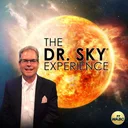
The Cosmic Bubble Protecting Earth
Steve Kates Space and astronomy broadcaster (Dr. Sky)


Dr. Peter Michalos

Advances in Lung Cancer Detection and Personalized Treatment
Dr. Peter Michalos WABC Medical Expert
Healthy Eating, Stronger Immunity and the Science of Living Longer
Dr. Peter Michalos WABC Medical Expert
Limiting Sugar and Choosing Whole Foods to Support Healthy Aging
Dr. Peter Michalos WABC Medical Expert
Protect Your Skin From UV Radiation and Reduce the Risk of Skin Cancer
Dr. Peter Michalos WABC Medical Expert
