


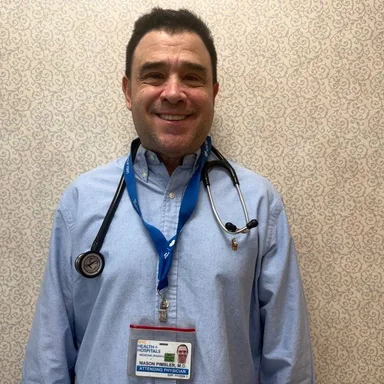
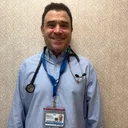
Dr. Mason Pimsler Geriatrician, Lincoln Medical Center
New York's Debate Over End-of-Life Care
Transcript
Automated transcript · uncorrectedAssisted death a new law in New York State. Well, what the heck is going on with us today is doctor Mason Pimslar, and he wants to talk about it. Well, doctor Pimsla, what the heck is going on?
Good morning, John, this is a beautiful Sunday. Say well, the landscape is changing in New York for medical and legal landscape for terminally ill New Yorkers. And this applies just to New Yorkers. Other states have it. So in New York, what they have had for people that have terminal illnesses such as cancer, multiple sclerosis where the nervous
system goes down, or paralysis where they can’t move. You know, there are some people that are wheelchair bound and they just don’t want to live because of the pain. So in New York, Kathy Hochel in February approved a bill that’s called the New York Medical Aid in Dying Act.
It became effect a day before yesterday. So I wanted to do this with you because it’s fresh off the presses. And what it is is that it gives certain terminally ill meaning people that have less than six months to live.
I want to emphasize that six months to live. The legal option. They can legally do this now, so you don’t have to do it in back alleys, have people do it in their homes with no professional support. The legal option to request medication from their doctor, just as they would an antibiotic for a simple sinus infection, but
the difference they have to administer it themselves to the patients, so the doctor can give them the prescription, but it is against the law for the doctor to admit minister the medication.
In other words, one of the things that people will concern about because I’ve seen it happen. Many doctors are friends of mine. I’ve seen it happen. I might maybe you’ve seen it happen where there is sons and daughters that stand and hire a ten million dollars and the mother or the father might live another two or three years,
and they read after ten million dollars.
Now, brilliant, exactly, john So the law put a protection for that because you need two witnesses to sign this paper along with the patient. So the patient has to say, okay, mister Johnson says I’m suffering so much much you as a physician, and another physician said, I have less than six months to live. I’m tired. I don’t want this
toxic chemicals of chemo. I’m using cancer now as an example in my body. So I need two witnesses. I’m going to go to my son. Who who’s going to inherit my fortune if there’s a fortune. But you can’t do that. The law says they cannot be a witness.
The person that inherits your state or has any financial interest upon your death, you cannot be a witness. So you need two separate witnesses besides the two doctors. So they can be neighbors, they can be friends, they can be strangers, they can be strangers that you pick and they have to write out that you told them that
you want to die through this new law.
But that and it has to be two independent people that do not have a financial financial stake inness And those two independent people, if they do something wrong, they can be prosecuted.
Right, they can be prosecuted. The doctors there is immunity under the law. There is immunity where they cannot be prosecuted. If I’m talking now just to doctors, not the witnesses that you just said. But I think the witnesses too have the immune as long.
Because if the witnesses have the immunity, it’s no damn good because if I was going to inherit ten million dollars, I’d say to the witness, there’s there’s one hundred thousand dollars in it for you.
You’re right, but they cannot get it has to be clearly stated that the witness, and it has to be two witnesses too. They can have no financial interest upon the deal.
But if you know one hundred dollars underneath the table, what.
The heck good?
Why should they have immunity? Why should they have it’s.
I agree they should not have immunity if there’s any shenanigans going on where they are getting any money where that would motivate them to do this. That’s correct, that’s correct. That one n correct.
There should be no part of the bill I don’t like.
You’re right, no, that was that. And also well, the good thing also is that they it’s videotaped as well. What they state has nothing to do with what you just said with the immunity. But that’s one thing that should be. It has to be totally clean. Hands has to be anything.
Else, anything else that people should know.
Well, you know, the only thing else is that in New York there are other ways to hosp You have hospice which is a supportive care which we’ve always had if you don’t want to do the dying, where we can try to convince the basion and to do. And the other thing is powered of care, which gives them pain, medications,
musical therapy, other ways to deal with the suffering that is short of killing yourself, because that’s that’s a fatal that’s final.
Understand, Doctor Mason, Doctor Mason Primsla, thank you for bringing all people up to date the and you did the right thing. You told you both ways, and between the two of us we did the right right thing. Thank you so much.
And I want to thank you for donating your time to get this across and your airspace to get this across to the public, because no one’s done it so far. No one has gotten this I approved across on any radio or any TV station the way you just did it.
God bless you, and God bless America.
Thank you so much, and your family. Thank you. Jump
Sunday, August 9, 2026
A Return to Mainstream Conservative Principles
Mike Pence 48th Vice President of the United States
Rebuilding Pennsylvania's Economy and Defense Industry
Dave McCormick U.S. Senator from Pennsylvania
Fighting for Public Safety and Taxpayer Accountability
Nicole Malliotakis U.S. Representative from New York
The DEA's Fight to Dismantle Cartels
Frank Tarentino DEA Associate Chief of Operations, Northeast Region
NYC's Second-Home Tax Faces Legal Challenge
Randy Mastro Partner, Dechert LLP; Former NYC First Deputy Mayor
NYC Businesses Struggle Under Rising Costs
Steve Fulop President & CEO, Partnership for NYC

A World on the Brink of Global Conflict
General Blaine Holt Brigadier General USAF (Ret.)
Mass Migration Threatens Europe's Future
Nile Gardiner Director, Margaret Thatcher Center for Freedom
Declassified Files Reveals Need For FBI Accountability
John Solomon Founder & CEO, Just the News
The Stoler Report with Michael Stoler: Henry Rosenwach
Michael Stoler Real Estate Expert
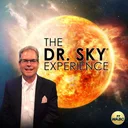
The Cosmic Bubble Protecting Earth
Steve Kates Space and astronomy broadcaster (Dr. Sky)

Dr. Mason Pimsler
Taking Control of Aging Through Fitness, Nutrition and Relationships
Dr. Mason Pimsler Geriatrician, Lincoln Medical Center
Sounds the Alarm on Cell Phones and the Developing Brain
Dr. Mason Pimsler Geriatrician, Lincoln Medical Center
Questioning the Reliability of Modern Medical Tests
Dr. Mason Pimsler Geriatrician, Lincoln Medical Center
Protecting Yourself From Legionnaires' and Cyclosporiasis
Dr. Mason Pimsler Geriatrician, Lincoln Medical Center
Expanding Medicare Access to Weight Loss Medications
Dr. Mason Pimsler Geriatrician, Lincoln Medical Center
Bringing Preventative Healthcare to the South Bronx
Dr. Mason Pimsler Geriatrician, Lincoln Medical Center
