


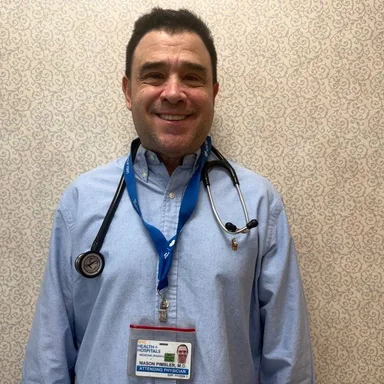
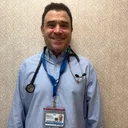
Dr. Mason Pimsler Geriatrician, Lincoln Medical Center
Questioning the Reliability of Modern Medical Tests
Transcript
Automated transcript · uncorrectedLabor Day weekend, Sunday morning. Well, what is today’s Dr. Mason Pimsleur? And he has some things to say that some of these tests that were being recommended may not be all that good. Well, Dr. Mason Pimsleur, tell us, tell us which ones are you upset about that the people might not be getting what they think they’re getting?
Good morning, John. Beautiful Sunday today.
Well, the first one that’s been all over the news is the SHIELD, which is a colorectal cancer blood test. And basically, people are going to jump at it because you don’t have to do bowel prep. You don’t have to go under a local anesthesia. So it’s an easy test to do. However, the problem with it is that
it doesn’t show precancerous lesions, which are the most dangerous because those precancerous lesions is what leads to cancer and you got to cut them out if you have them. So, you know, the sensitivity also, if you even have colon cancer and you get tested by this is only 83% for stage three to stage four. And so there’s two
things of it. One is, can it pick up precancerous lesions, which is the most important thing, because you want to cut them out before they become cancer. And then can it detect cancer? And the sensitivity, again, is 83% to detect it. But the best test to do if you don’t want to do a colonoscopy, which is the one
where you do the bowel prep, anesthesia, is the virtual colonoscopy. With the CAT scan, it has become so good, the virtual colonoscopy. You still have to do the bowel prep, but it can pick up precancerous lesions. It can’t take them out, but it can pick it up, and then you can have it taken out after if someone is
really adverse to going for a colonoscopy at first with anesthesia. Because some people, you know, don’t want to do anesthesia.
Look what happened to Joan Rivers. So they get scared with that stuff. Well, you know, it was horrible.
Joan Rivers was a personal friend to me and my wife Margo. And she lived around the corner from us. And it was shocking what happened to her. She did not have to die. She did not go to a regular doctor. She went to the discount doctor around the corner or something like that.
You are 100% right.
I know that.
She could have gone to a hospital.
And she’ll be alive today still.
I do believe that because she went to some ambulatory center. They didn’t have a proper, as far as I know, and I don’t want to say anything out of that, is that she didn’t have an anesthesiologist.
She had a nurse anesthetist. And you’re right. You’re right. I don’t think that was in the news, actually. That’s absolutely correct.
She could have gone to an ambulatory hospital where they do the procedures, like at Columbia or at wherever, NYU. But she didn’t have to die.
No, she didn’t. It was preventable. That was a shame.
What else would you like to tell Sunday morning? What else would you like to tell the American public?
So there’s a new, you know, it’s not so new. It’s out there for several years. With our mental health illnesses becoming very prevalent, and it crosses every socioeconomic status, is that psychiatrists that I think are doing it more for business are are promoting a test. They say it’s a DNA test that can tell you, it’s called the
gene site test. that can tell you what type of antidepressant you can do without trial and error.
It is called the gene site.
And it’s a test where they take a blood and their psychiatrists are saying, we can tell you exactly which medication your body will work with best and help you. But it’s really not true because you only have a limited amount of antidepressants antidepressants, SSRIs, selective serotonin reuptake inhibitors, or SNRIs, selective norepinephrine reuptake inhibitors. And this blood test
cannot tell you exactly which one will work for you. And if you look at the statistics on that, it’s true. And it’s very low. So it’s trial and error. So this is all a lot of money for really not much gain. And it’s a shame, especially with the gene site, with people suffering from the depression and the anxieties and stuff,
going for this blood test and wasting the money. They still have to try the medications, and it may take two or three to work. The blood test will not tell them exactly which one will work. So if it did, I think we would cure a lot of these people quickly, and they wouldn’t have to suffer.
And we’re not doing that. So that’s something also.
Dr.– Primsler, thank you so much for your update, and we’ll look forward to talking to you real soon.
Thank you so much, Sean. Thanks for getting all this out because people can’t get all this information. Not everyone can get cable for this.
You’re getting real good information, you and Margo. Thank you. Thank you.
Sunday, September 6, 2026

Reflecting on His Father's Legacy and His Own Recovery
Hunter Biden Attorney & Author; Son of Joe Biden

Pushing for Common-Sense Immigration Enforcement and National Security
Jim Jordan U.S. Representative from Ohio

Using American Energy to Drive Growth and Lower Costs
Kyle Haustveit Under Secretary of Energy, U.S. DOE
Making the Case for Free Enterprise and Limited Government
Andy Barr U.S. Representative from Kentucky; nominee for U.S. Senate

The Threat of Foreign Influence in U.S. Elections
Claudia Tenney U.S. Representative from New York

Making New York More Pro-Business and Energy Independent
Bruce Blakeman Nassau County Executive; nominee for Governor

A Fire Commissioner's Firsthand Account of 9/11
Thomas von Essen Former FDNY Fire Commissioner

Unlocking Opportunities for Americans on Disability Benefits
Jim Allsup Founder, Chairman & CEO, Allsup LLC
The Best Career Paths in an AI-Driven Economy
Denis Mezheritskiy President, ROI Advisors, Inc.
Protecting American Lobstermen From Costly Federal Regulations
Bonnie Brady Executive Director, LI Commercial Fishing Assoc.

Protecting Houses of Worship From Hate and Violence
Karen Schneier Dresbach EVP, Appeal of Conscience Foundation

Processed Foods and Mental Healthcare Failures Threaten Public Health
Dr. Peter Michalos WABC Medical Expert

The Search for Dark Matter and the Mysteries Hidden Beneath Antarctica
Steve Kates Space and astronomy broadcaster (Dr. Sky)

The Rising Threat of Sextortion Targeting Young Boys
Lynn Shaw Founder of Lynn's Warriors

Apple's New Direction, G20 Tensions and the Markets Ahead
John Terrett WABC Financial Analyst
Dr. Mason Pimsler
Taking Control of Aging Through Fitness, Nutrition and Relationships
Dr. Mason Pimsler Geriatrician, Lincoln Medical Center
Sounds the Alarm on Cell Phones and the Developing Brain
Dr. Mason Pimsler Geriatrician, Lincoln Medical Center
New York's Debate Over End-of-Life Care
Dr. Mason Pimsler Geriatrician, Lincoln Medical Center
Protecting Yourself From Legionnaires' and Cyclosporiasis
Dr. Mason Pimsler Geriatrician, Lincoln Medical Center
Expanding Medicare Access to Weight Loss Medications
Dr. Mason Pimsler Geriatrician, Lincoln Medical Center
Bringing Preventative Healthcare to the South Bronx
Dr. Mason Pimsler Geriatrician, Lincoln Medical Center
