


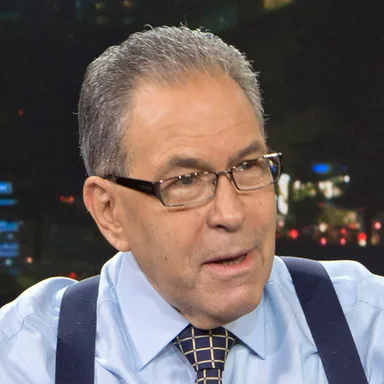
Michael Stoler Real Estate Expert
The Stoler Report with Michael Stoler: Joe Harbert
Transcript
Automated transcript · uncorrectedGood morning, this is Mike Stoler for the Stoler Real Estate Report. What’s happening in the commercial office leasing business? Seems to be vibrant. Lots of things taking place. Prices are going up. Vacancy is going down. Sub-lease space is down.
So what do we expect for the balance of 2026? Is it going to be a record year for us? I don’t know the answer, so I have my friend Joe Harbert, who is the principal president of Harbert Analytics.
Thanks for being here, Joe.
Thank you, Michael.
So since you’ve been a veteran of this business for many years, what do you see happening this year?
It’s a very strong year. You know, contrary to what people believe, the summers are not silent. And this summer in particular is vibrant, as you said. Leasing activity is occurring at a crazy pace, and we’re probably on par to do– a record year this year for office leasing in Manhattan.
What do you attribute this to?
There are three things that are driving the market. One is that the financial service sector recovered out of COVID more quickly than the other sectors. It’s always been a strong part of the leasing activity in Manhattan, generally a third to 40%. And the law firms have picked up the pace quite a bit this year. and we’re seeing
a lot of activity on the part of the tech firms, in particular AI.
Where are they leasing space? All over the city, or is there any predominant area?
The AI firms in particular, like the glass and steel buildings for certain things, the larger ones, if you look at a tech firm and consider Salesforce or some of those, They’re in the glass and steel buildings. But these AI firms really want to be in Midtown South. They want to be in the brick and mortar buildings. So that’s
where we’re seeing a lot of the activity. Midtown South in the last month really topped out the entire market.
What are the rents in Midtown South?
It’s a really big surprise for most of us, which is that buildings that were probably in the 60, 70, 80 range are now demanding over.
$ 100 a What about near our studios over here on 3rd Avenue, which used to be called the Countess Row? Yes.
Well, 3rd Avenue, in historical terms, never achieved what others did.
Park Avenue, Madison, 6th in particular.
But we’ve seen that 3rd Avenue has picked up the game, and we’re seeing rents over here almost around $ 100 as well. We just saw on 6th Avenue, which is corporate row, as always, rents north of $ 125 a foot, and you’re seeing rents on Park Avenue at over $ 200 a foot.
Recent deal just done this past week closed at 375 Park for $ 230 a foot.
The big question is how can somebody afford to pay these rents today? Especially the AI companies who have limited experience.
Well, they have limited experience, but they have funding. They get all their series funding and they’re They’re doing what happened in 2000, right? Remember what we had with Silicon Alley, with all these firms that got their initial funding, and they’re just spending it down.
So what do you see happening in the legal business? Because there have been a lot of mergers and a lot of changes taking place. There are.
That’s an interesting point. And we see that it’s a vibrant business because they’re supporting the financial service sector, and now they’re supporting the AI sector. AI is really about a third of the marketplace right now.
They’ve already leased more space this year than they did all last year.
Are people working from home these days? What’s the statistic on that?
Well, if you listen to Jamie Dimon, of course, I’m a Jamie Dimon fan. He wants people back in the office. Everybody in the financial service sector came back to the office sooner than the rest. And so we’re still seeing a four-day week.
It’s really difficult. That’s what we’re seeing.
People who are on a three-day week with two days from home. So people are back to the office. And if you’re going to be in the office three to four days a week, you still need the space.
You need the space, but you also need living space. Where are these people living?
Well, if you’re in the financial service sector, it’s probably a little bit easier because the salaries are high. People are finding it challenging. I’ll give you just a personal example. I have two young sons, 22 and 25. One of them just wanted to relocate from the south, from Raleigh, and he can’t make it in Manhattan.
So he’s moved to Astoria.
So I think Queens is going to see a resurgence because Brooklyn has gotten too expensive.
Do you think we’re going to see anything happening in Staten Island?
I laughed when I saw that the proposal is to put big housing in Staten Island. I don’t think the islanders of Staten Island are going to be happy about So I don’t think it’s going to hit Staten Island.
But remember, Staten Island.
Historically was a place where office workers and middle class people and sanitation workers, cops, firemen would afford to have a house. So, you know, I think the encouraging thing is that everybody’s focused on housing because it is a huge problem in New York.
What about the Bronx where there’s housing? It’s a little better, but the rates are up.
The rates are up, too.
So I think Bronx will be the beneficiary as well as Queens. I think Queens obviously has some cachet to it that the Bronx doesn’t have.
There’s no South Queens. There’s a South Bronx.
Very interesting. So I have a question. It relates to your two sons and their friends. How are people getting jobs?
Jobs are a challenge right now. My son, both of them college graduates from very nice schools. My son got a job in the South and then was able to transfer to the North because he’s working for a global company.
My other son is out there hunting, searching, having a hard time. And I have friends that I’ve been helping lately who have found the job market not vibrant, not reflecting what we’re seeing in terms of leasing activity and pricing, but struggling.
To find jobs. really good employment.
What’s your thoughts about retail?
Retail. You know, retail is very steady.
You know, we see restaurants opening every day. Williamsburg, hot, still three or four new leases in the last month. And we’re seeing Soho, still vibrant. A little softness in Queens. That’s what I’m seeing right now.
What about Red Hook?
I lived in Red Hook.
So for a native Red Hooker, What’s your thoughts about it? People are very positive about it.
I’m very positive about it, too. It wasn’t positive when I was there. I was at the tail end of what was called Carroll Gardens, which really was Red Hook. And now this is Red Hook proper that we’re talking about.
So I’m optimistic about all of Brooklyn. Look, if we can rent space and find people housing in Bushwick, we can certainly.
Do Red Hook.
Why do you have this opinion about Red Hook? Greenpoint.
Well, the location. They’re located. Right.
And anything that’s near a subway.
It’s right there.
That’s the key.
And it’s just south of Carroll Gardens. You’ve got that whole community of Carroll Gardens, Boreham Hill, downtown Brooklyn, Brooklyn Heights.
It’s all connected.
Last question. What is Harvard Analytics doing these days?
We’re very busy.
Actually, so we haven’t had problems finding employment. We’re doing a lot of consulting work for smaller retail firms. We’re doing executive coaching for real estate brokers and teams. And we’re doing what we call organizational development to try to help smaller firms compete with the larger ones.
And I’m very happy to know you, and I’m very happy that you’re busy.
I am thrilled to be here.
And I hope to see you later on in the year. Thank you.
We will indeed. Thank you for the opportunity.
Sunday, September 6, 2026

Reflecting on His Father's Legacy and His Own Recovery
Hunter Biden Attorney & Author; Son of Joe Biden

Pushing for Common-Sense Immigration Enforcement and National Security
Jim Jordan U.S. Representative from Ohio

Using American Energy to Drive Growth and Lower Costs
Kyle Haustveit Under Secretary of Energy, U.S. DOE
Making the Case for Free Enterprise and Limited Government
Andy Barr U.S. Representative from Kentucky; nominee for U.S. Senate
The Threat of Foreign Influence in U.S. Elections
Claudia Tenney U.S. Representative from New York

Making New York More Pro-Business and Energy Independent
Bruce Blakeman Nassau County Executive; nominee for Governor

A Fire Commissioner's Firsthand Account of 9/11
Thomas von Essen Former FDNY Fire Commissioner
Unlocking Opportunities for Americans on Disability Benefits
Jim Allsup Founder, Chairman & CEO, Allsup LLC

The Best Career Paths in an AI-Driven Economy
Denis Mezheritskiy President, ROI Advisors, Inc.
Protecting American Lobstermen From Costly Federal Regulations
Bonnie Brady Executive Director, LI Commercial Fishing Assoc.

Questioning the Reliability of Modern Medical Tests
Dr. Mason Pimsler Geriatrician, Lincoln Medical Center
Protecting Houses of Worship From Hate and Violence
Karen Schneier Dresbach EVP, Appeal of Conscience Foundation

Processed Foods and Mental Healthcare Failures Threaten Public Health
Dr. Peter Michalos WABC Medical Expert

The Search for Dark Matter and the Mysteries Hidden Beneath Antarctica
Steve Kates Space and astronomy broadcaster (Dr. Sky)
The Rising Threat of Sextortion Targeting Young Boys
Lynn Shaw Founder of Lynn's Warriors

Apple's New Direction, G20 Tensions and the Markets Ahead
John Terrett WABC Financial Analyst
Michael Stoler
The Stoler Report with Michael Stoler: Eli Weiss and Andrew Albstein
Michael Stoler Real Estate Expert
The Stoler Report with Michael Stoler: Eli Weiss and Andrew Albstein
Michael Stoler Real Estate Expert
The Stoler Report with Michael Stoler: Robin Schneiderman
Michael Stoler Real Estate Expert
