


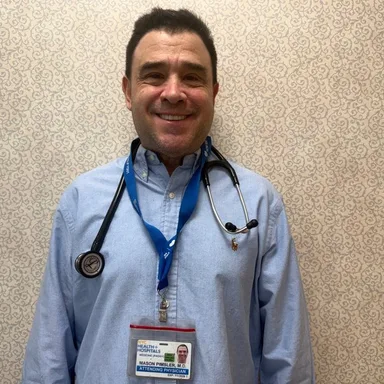
Dr. Mason Pimsler Geriatrician, Lincoln Medical Center
Fighting Cancer Through Prevention, Nutrition and Medical Innovation
Dr. Mason Pimsler
Lincoln Medical Center geriatrician Dr. Mason Pimsler tells John Catsimatidis that cancer is becoming an epidemic and that, even with immunotherapy and chemotherapy, it is still not being beaten in 2026. He says the human papillomavirus vaccine is very effective at preventing several cancers, and that there are only three treatment vaccines right now, for metastatic prostate cancer, early-stage bladder cancer and advanced melanoma.
Key takeaways
- Pimsler said Provenge, made from a patient’s own immune cells, can help metastatic prostate cancer patients live longer.
- He said BCG is injected into the bladder for non-muscle invasive bladder cancer in the early stage.
- He said Moderna and Merck are doing these cancer vaccines and are the leaders right now.
In their words
“We have immunotherapy, we have chemotherapies, but we’re still not beating it. We’re still not beating cancer in 2026.”
“this vaccine, if people would get it, is very effective at preventing cervical cancer, anal, vaginal, penile, and certain head and neck cancers.”
“If we could do it for COVID... We can do it for cancer. I really believe it.”
Quotes are word for word from the automated transcript, uncorrected; the summary and takeaways are editorial.
Transcript
Automated transcript · uncorrectedWith us today is Dr. Mason Pimsleur, and he’s with the New York City Health and Hospital Corp. And he’s got a lot of experience and a lot of common sense. And Dr. Pimsleur, what would you like to talk about today?
So today, I think it’s a good topic that the listeners will.
Like on this Sunday morning.
It has to do with cancer because cancer is becoming such an epidemic.
All types of cancers.
And that, you know, in 2026 in March, President Trump signed into law and backed a $ 200 million partnership with the National Cancer Institute of Health dedicated exclusively to accelerating therapeutic cancer vaccines. So. This, what we’ll talk about is cancer vaccines, another way to try to beat cancer. We have immunotherapy, we have chemotherapies, but we’re still not beating it. We’re still not beating
cancer in 2026. So we don’t have that many vaccines, but we do have some vaccines. The first thing is we have preventive cancer vaccines that people could get, especially one is called human papillomavirus vaccine that protects against the human papillomavirus, which is a cancer. Like if you looked at actor Michael Douglas, more than likely, this is how
he got his throat cancer through sexual activity. And this vaccine, if people would get it, is very effective at preventing cervical cancer, anal, vaginal, penile, and certain head and neck cancers.
And this came out probably in about 2007. It’s a preventive vaccine. Preventive. So that’s something very important.
So you can actually get a vaccine to prevent cancer? Yes. Yes.
And that’s the human papilloma. And it’s a virus that is sexually, it’s caused sexually, whether through anal, oral, or regular sexual activity. And all, you know, younger children are getting it. Adults can still get it. And it’s very protective because, again, we’re seeing more, which is very interesting, John.
We’re seeing more of an uptick in throat cancers and head and neck cancers. And this can prevent it.
Well, let me ask you a question.
And I’ve talked about it with several doctors, including Dr. Milos. If you have a tumor or you have cancer, the thing that feeds tumors and feeds cancers is sugar. So if you have a little bit of cancer, you should cut out sugar down to zero.
I agree 100%. I have discussed this. And, you know, when you get diagnosed with cancer, there’s a test that they use to see how the cancer is doing. It’s called the PET scan, positron emissions test. And you know what that test is based on? Sugar uptake in the cancer cells. They give you an injection and it’s based
on sugar uptake. And so I do believe in that. I do believe in that a hundred percent eliminate sugar.
If you have cancer, even if you don’t.
Have the cancer, a lot of people probably haven’t talked about it, but starving the cancer could help a little bit.
Agreed. Agreed. Especially with cancer. We’re in a jungle.
Anything goes because we just, you know, don’t have the most therapeutic or most, the greatest treatments for a lot of cancers. Some we do, but for majority, we don’t still in 2026. Cancer is still cancer. But that was very, that’s a great point with the sugar. Because if people look it up, your listeners look up the PET scan,
which is used to follow cancers. What they’re doing is injecting like a sugar molecule and see how the tumors uptake it.
So I believe in that wholeheartedly.
Anything else? What else would you like to tell people? What else? What other tips can you give them?
So the other thing, wait, I’m sorry, John, what other tests? Tips. Tips.
Well, I wanted to say the prevention I was giving you was the vaccine, but there are some treatment vaccines out there now.
One is called Cipolosello, or I’m going to use.
The brand name of it, Provenge for prostate cancer. And you had an employee that had metastatic, your host, Bernie McGurk. And there is an approved cancer vaccine for metastatic prostate cancer called Prevenge. And it has shown to extend life in one of the latest studies by 30 months. What it is, it’s personalized. they harness a patient’s own immune cells.
So say for instance, patient X had prostate cancer and it was metastatic, meaning what does metastatic mean? Meaning that it’s outside of the prostate. It goes to the bones, the lymph nodes, other places. So they harvest one’s own immune cells and immune cells are our own natural cells that fight against infections and cancer. And then they make
this in the lab, they make this vaccine and it can help people with metastatic prostate cancer live longer.
So that’s a good one, because.
There’s only three right now, only three of the cancer vaccines right now. And thankfully, Trump put in two hundred million dollars in March of twenty twenty six.
We hope we get more. But there’s another one for bladder cancer.
BCG, if you have bladder cancer, is originally made for cancer. Tuberculosis. Now what they do is they inject this vaccine into the bladder, non-muscle invasive bladder cancer that’s in the early stage.
And it could really, really help.
And there’s another cancer vaccine for melanoma. You know, we like to get our sun tans.
And being from Greece, the.
Beautiful country, in the sun, in the sunshine, you know, if you don’t wear the proper sun protection, hats, stuff like that, you’re at high risk to get skin cancers. And if you get advanced melanoma, there’s a vaccine called Limgic.
For that as well. So we do have three vaccines out there. We need more. We need more.
If we could do it for COVID... We can do it for cancer. I really believe it. And it’s Moderna and Merck that are doing these vaccines, actually. They’re the leaders right now.
Well, Dr. Mason Pimsleur, thank you so much for coming on and thank you for the advice. And I hope all our listeners live at least 10 years longer.
Oh, absolutely. And like we say, to 100, if at least. Thank you so much. Thank you, John, so much.
Sunday, November 1, 2026

Safeguarding Critical Infrastructure in the Age of AI
Jay Clayton Director of National Intelligence

The Fight Against Socialism and the Crisis at the Southern Border
Chris Smith U.S. Representative from New Jersey


The Stakes of Election Day and the Fight Against the Left
Randy Fine U.S. Representative from Florida
Backing Bruce Blakeman and Making the Case for Change
Nick LaLota U.S. Representative from NY
Alaska Ballot Scandal Raises Questions About Election Integrity
David Paterson Former Governor of New York

The Stakes for New York and the Need for Voter Turnout
George Pataki Former Governor of New York

Pushing to Rein in Spending and Reverse New York's Policies
George Borrello New York State Senator

His New Memoir and the Lost Art of Political Compromise
Andrew Spano Former Westchester County Executive

Polling Uncertainty and the Unpredictable Road to Election Day
Jerry Kremer Former NY Assemblyman & Political Columnist


His Challenge to Langworthy and His Vision for NY-23
Aaron Gies Nominee for Congress, NY-23

Central Park Horse Carriage Ban May Be Tied to a Real Estate Grab
John Samuelsen International President, Transport Workers Union


New York Voters Need More Than Political Meet-and-Greets
Thomas Ossa President, Rockland News


Cutting-Edge Strategies for Extending Human Health and Longevity
Dr. Peter Michalos WABC Medical Expert

The Bizarre Natural Phenomena That Continue to Puzzle Scientists
Steve Kates Space and astronomy broadcaster (Dr. Sky)

Putting Students Ahead of Technology in America's Schools
Lynn Shaw Founder of Lynn's Warriors

Dr. Mason Pimsler
Taking Control of Aging Through Fitness, Nutrition and Relationships
Dr. Mason Pimsler Geriatrician, Lincoln Medical Center
Sounds the Alarm on Cell Phones and the Developing Brain
Dr. Mason Pimsler Geriatrician, Lincoln Medical Center
Questioning the Reliability of Modern Medical Tests
Dr. Mason Pimsler Geriatrician, Lincoln Medical Center
New York's Debate Over End-of-Life Care
Dr. Mason Pimsler Geriatrician, Lincoln Medical Center
Protecting Yourself From Legionnaires' and Cyclosporiasis
Dr. Mason Pimsler Geriatrician, Lincoln Medical Center
Expanding Medicare Access to Weight Loss Medications
Dr. Mason Pimsler Geriatrician, Lincoln Medical Center
