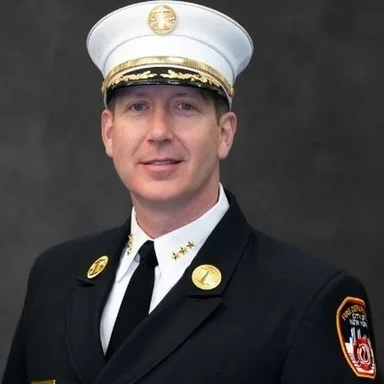
Michael Kavanagh
FDNY Chief Fire Marshal Michael Kavanagh tells John Catsimatidis that just over 400 fires in 2026 were related to lithium-ion batteries, compared with just under 300 last year. He says fires outside buildings and homes have risen significantly, so it appears the messaging about storing and charging batteries outside is working, and asks people to dispose of them properly, as fires are occurring in garbage and sanitation hoppers.
Key takeaways
- Kavanagh said problems can arise from defective products, damaged batteries, improper charging, incompatible chargers or unsafe modifications.
- He said he doesn’t think indoors versus outdoors is the problem, but outside is always safer.
- He recommended batteries with safety certifications such as UL, and not charging while sleeping or away.
- He said not to charge or store e-bikes or scooters where they can block an exit.
- He said to stop using a battery that is swelling, leaking, unusually hot, smelling strange, hissing or smoking.
In their words
“these lithium ion batteries, they’re a part of everyday life, especially in the e-bikes and the scooters.”
“it appears that our messaging about storing and charging the batteries outside is working.”
“stop using the battery immediately. We want to make sure they evacuate and call 911.”
Quotes are word for word from the automated transcript, uncorrected; the summary and takeaways are editorial.
Transcript
Automated transcript · uncorrectedSunday morning, with us today is Chief Fire Marshal Michael Kavanaugh, and he reports to the fire commissioner. And we heard that lithium battery problems in our city are up, up, and up. And Fire Marshal Kavanaugh, tell us what the heck is going on. Sure, John.
Thanks for having me. We are seeing an uptick in the incidents involving lithium-ion batteries in 2026, where just over 400 fires were related to lithium-ion battery fires, compared to last year where we saw just under 300.
Understood. And what is causing that? I mean, I thought, I mean, last year everybody says we’re going to be more careful, we’re putting out more, you know, notices. What’s going wrong?
So we’re continuing our safety messaging and getting that messaging out to New York City residents. But these lithium ion batteries, they’re a part of everyday life, especially in the e-bikes and the scooters. And problems can arise when they have defective products, damaged batteries, if they’re improperly charged or somebody uses an incompatible charger or make unsafe modifications to these products.
So we want to make sure that we have safe products, safe charging practices and safe storage. What we are seeing, John, is that the incidence of non-structural fires, fires that are outside of buildings and homes, that’s what’s risen significantly. So it appears that our messaging about storing and charging the batteries outside is working. We just want to ensure that
people continue to follow that and dispose of these products properly because we’re seeing them occurring in garbage and in the back of sanitation hoppers.
Understood. What should people be doing? What should they watch out for? Is there a label that you have to watch out for? What is causing the problems, doing it indoors versus outdoors?
Well, I don’t think indoors versus outdoors is the problem. It’s always safer to try to do these things outside, charging and storing. Listen, we want to recommend to people, again, use certified batteries. with safety certifications such as UL, follow the manufacturer-recommended battery process and charger, never use the damaged battery or incompatible batteries, and don’t charge while sleeping or
away from the device.
Understood. In other words, you shouldn’t charge it indoors and while you’re sleeping because if there’s a problem, then you might not wake up in time. Exactly, John. Exactly.
So listen, we want to recognize the warning signs. We want to let people know if they have a battery that’s swelling, if it’s leaking, if it’s unusually hot or giving off strange odors, hissing or smoking, stop using the battery immediately. We want to make sure they evacuate and call 911. Stop using the battery immediately.
Understood.
Don’t try to repair it. Dismantle it yourself.
Anything else you want to tell all Americans, all New Yorkers?
Well, John, just remember these things. We want to make sure that New Yorkers are buying properly certified batteries. Use the manufacturer’s recommended charger. Again, don’t charge or store these e-bikes or scooters where they can block an exit. You don’t want to block your regress. And never leave a battery charging while you’re sleeping or away. We want to
make sure our fellow New Yorkers are safe. If they follow the safety messaging FDNY continues to put out, they can go to FDNYsmart.com. dot org for further information. And we want everybody to stay safe. And I appreciate you having me on today.
Thank you, Chief Fire Marshal Michael Cavanaugh. Thank you so much for coming on. And please thank your fire commissioner, Lillian Monsignore, too, that always works with us, too.
Of course, you know, I will. Thank you again, John. Thank you.
Sunday, November 1, 2026
Safeguarding Critical Infrastructure in the Age of AI
Jay Clayton Director of National Intelligence

The Fight Against Socialism and the Crisis at the Southern Border
Chris Smith U.S. Representative from New Jersey


The Stakes of Election Day and the Fight Against the Left
Randy Fine U.S. Representative from Florida

Backing Bruce Blakeman and Making the Case for Change
Nick LaLota U.S. Representative from NY
Alaska Ballot Scandal Raises Questions About Election Integrity
David Paterson Former Governor of New York

The Stakes for New York and the Need for Voter Turnout
George Pataki Former Governor of New York

Pushing to Rein in Spending and Reverse New York's Policies
George Borrello New York State Senator
His New Memoir and the Lost Art of Political Compromise
Andrew Spano Former Westchester County Executive

Polling Uncertainty and the Unpredictable Road to Election Day
Jerry Kremer Former NY Assemblyman & Political Columnist


His Challenge to Langworthy and His Vision for NY-23
Aaron Gies Nominee for Congress, NY-23

Central Park Horse Carriage Ban May Be Tied to a Real Estate Grab
John Samuelsen International President, Transport Workers Union

Fighting Cancer Through Prevention, Nutrition and Medical Innovation
Dr. Mason Pimsler Geriatrician, Lincoln Medical Center

New York Voters Need More Than Political Meet-and-Greets
Thomas Ossa President, Rockland News


Cutting-Edge Strategies for Extending Human Health and Longevity
Dr. Peter Michalos WABC Medical Expert

The Bizarre Natural Phenomena That Continue to Puzzle Scientists
Steve Kates Space and astronomy broadcaster (Dr. Sky)

Putting Students Ahead of Technology in America's Schools
Lynn Shaw Founder of Lynn's Warriors