


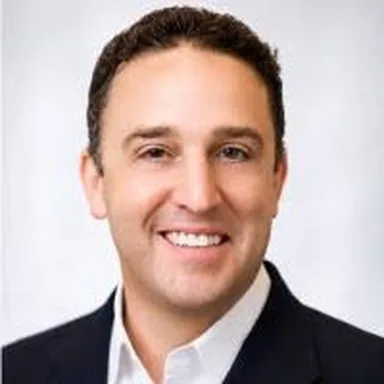
Jose Santamaria Chief Investment Officer, Fundamental Investment Services
Europe’s Security Crisis: Russian Threats, Narco Networks and Germany’s Shift Right
Jose Santamaria
Jose Santamaria returns with a European security briefing for John Catsimatidis: Russian jets intercepted near Sweden, a CIA warning about Russia’s shadow fleet in the south, and what he describes as Iranian and Venezuelan funding of radical groups in Spain. He also discusses Moroccan drug networks, the far-right AfD’s regional win in Germany and why some eastern Europeans see Putin as a stabilizing figure.
Key takeaways
- Santamaria said Russian jets have been intercepted near Sweden and the CIA has warned of shadow-fleet attacks.
- He said Iran has funded separatist groups in Europe, including in Spain.
- Santamaria called the Mexico, Cuba and Spain connection a “second axis of evil” for drug money.
- He said Morocco is to Spain what Mexico is to the United States for trafficking networks.
- Santamaria said the AfD won a German state election and that the party is pro-Russia.
In their words
“So I think the security situation in Europe is getting quite difficult at the moment.”
“Germany is moving to the right very quickly.”
Quotes are word for word from the automated transcript, uncorrected; the summary and takeaways are editorial.
Transcript
Automated transcript · uncorrectedSunday morning. What’s going on in Europe? Well, our new correspondent and good friend, my friend Jose Santamaria, wants to bring us up to date. He’s from Spain originally. He’s the chief investment officer for Fundamental Investments. an advisory group based in New York. Well, Jose Santamaria, you seem to have your ears to the ground in Europe. Give us
your evaluation. Ever since the UN conference, ever since we took over Denmark and they realized, not Denmark, we took over Greenland from Denmark, the security aspect of it, and we’re going to ensure Europe to be safe. Do they realize what President Trump has accomplished.
That is correct, John. I think in Europe there’s a number of developments coming from the northern countries as well as the southern countries. The number one issue threat right now is the fact that a number of Russian jets have been intercepted in the Swedish border. And that’s a threat.
We also know that in the South, there is a concern, a warning by the CIA that Russia, through its shadow fleet, may attack Southern European countries. So I think the security situation in Europe is getting quite difficult at the moment.
Understood. And what is your pulse on this? What’s going on with Iran? We all listened to the Iranian ambassador speaking at the United Nations. He seemed very, very nervous. He seemed like both sides might be against him and both sides might kill him. But you give us your evaluations.
Well, remember that there’s a left, a radical left connection between Iran and some of the terrorist groups, Hezbollah and Hamas. And there are as well connections into European politicians. Iran has certainly funded separatist groups in Europe. in certain regions, not only in Spain, in other places. And I think that the actions by President Trump are not only cornering Iran,
they’re also cornering a lot of these radical left groups, which, by the way, have found financing, as you know, in the case of Spain, from narco states in Latin America, particularly Venezuela. So that’s a game changer, in my opinion, to Iran because its ability to damage, Western civilization, it’s coming down very quickly. Pay attention to Cuba, because Cuba is,
I call the connection between Mexico, Cuba, and Spain, I see it as the second axis of evil. There’s been a lot of drug money coming and going, and I think what President Trump has done is really put that second axis of evil at risk.
Well, you know, I had the Cuban ambassador here. He was in our office last week and he says that they are deeply against drugs and there’s no drug problem in Cuba.
Well, if you look at the networks that some of the Spanish judges are pursuing and trying to restrict drugs, you will see connections not just with Cuban agents and some politicians. You will see that as well into Morocco, members, different members of different groups in the civil society. It’s what they call it. Maxine, which is a group of
people very close to the king, whether industrialists, entrepreneurs, members of the army. So there is a network. There’s a clear network that is trying to take advantage of Europe and breaking Europe. Now, one of the … I.
Heard it’s mostly from Mexico these days.
Mexico is to the U.S., but Morocco is to Spain and the rest of Europe. And those networks are finding that by doing cross-border trade, helping each other, they may be able to survive a little longer if it wasn’t for our president in the U.S. that is doing a great job in fighting these criminal organizations.
Understood. Anything else you want to tell the American people?
Take a look at what has happened with the German elections. The far-right party, the AFP, has actually won one of the regional elections, one of the state elections, and the jump is very significant. This party maps exactly with what used to be Eastern Europe. And the issue, when you look 50, 60 years later, is was Germany able to
integrate Eastern Europe? Or has that created a gap that they haven’t been able to close? Germany is moving to the right very quickly. This is a group that is pro-Russia, pro-Putin. I heard that.
The extreme right, the extreme right in Germany is pro-Russia, pro-Putin.
Yes, but you have to also look at what they see to the west of Europe. They see a divided France. They see a divided United Kingdom. Nobody would trust the Spanish president right now, as you know. So it’s very understandable that some of these old Eastern European countries see Putin as an element of stability. And I think Trump
does see Putin as a stable politician, for sure. Understood.
I don’t like it, but he’s been there, you know, defending his country.
Jose Santamaria, thank you for coming on this Sunday morning, and we’ll catch up with you again real soon.
Yes, John, absolutely. My pleasure.
Sunday, September 27, 2026
Turkey, the Middle East and Cyprus’s U.S. Investment Boom
Nikos Christodoulides President of the Republic of Cyprus
Sounds Off on Iran, the UN and the 2026 Election
James Lankford U.S. Senator from Oklahoma
Sounds Off on the 2026 Midterms and the Battle for Congress
Jim Jordan U.S. Representative from Ohio
Trump’s NATO Strategy: “Europe Is Quickly Getting Stronger”
Matthew Whitaker U.S. Ambassador to NATO
Trump’s Energy Strategy, Venezuela Oil and the Fight for America
Ryan Zinke U.S. Representative from Montana
The Washington Square Park Drug Crackdown: “We’re Going to Do Our Job”
Jamie McDonald U.S. Attorney for the Southern District of NY
Rips UN Walkout on Netanyahu: “Shocked and Appalled”
David Paterson Former Governor of New York
NYC Risks Losing Billions as Companies Shift Jobs to Texas, Florida and Beyond
Steve Fulop President & CEO, Partnership for NYC

“The Angels Among Us”: Miracles, Visions and Unbelievable Coincidences
Dr. Marc Siegel Physician; Fox News Medical Contributor
Lost Fishing Boat Found 50 Feet From a Block Island Wind Turbine
Mike Lombardi President, Green Oceans

Sounds the Alarm on Cell Phones and the Developing Brain
Dr. Mason Pimsler Geriatrician, Lincoln Medical Center



Supersonic Jets, SpaceX’s Next Starship Launch & Trump’s Golden Dome Defense System
Steve Kates Space and astronomy broadcaster (Dr. Sky)

“We Must Talk About Suicide” and Protect Our Kids
Lynn Shaw Founder of Lynn's Warriors
Markets Tread Water Ahead of the Fed Amid UN Week and Xi’s State Visit
John Terrett WABC Financial Analyst
Jose Santamaria
Spain’s Immigration Crisis and Europe’s Border Battle
Jose Santamaria Chief Investment Officer, Fundamental Investment Services
Spain's Rising Crime and Immigration Challenges
Jose Santamaria Chief Investment Officer, Fundamental Investment Services
Spain Faces a Growing Security and Migration Crisis
Jose Santamaria Chief Investment Officer, Fundamental Investment Services
The economic impact of migrants in the EU.
Jose Santamaria Chief Investment Officer, Fundamental Investment Services
