


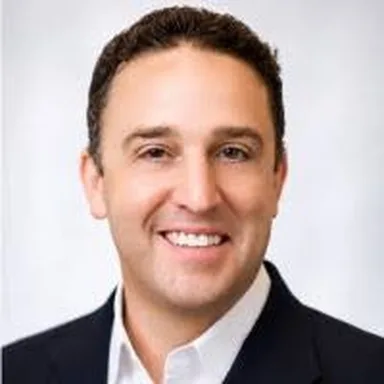
Jose Santamaria Chief Investment Officer, Fundamental Investment Services
The economic impact of migrants in the EU.
Transcript
Automated transcript · uncorrectedWith us today is Jose Santa Maria, a good friend, an international private banker and chief investment officer from my fundamentals dot net. Jose, this is the new year. It’s twenty twenty four. So many things have happened over the last few years. So many things are happening internationally. Give us your view of what the heck is going on
in the world money wise.
Thank you, John, It’s great to be with you. I think we have seen a correction or lowering of interest rates, which have allowed the stock market to do very well in this part of the world. But we have also seen a process of radical extremism and terrorism, and I wanted to draw some parallelisms with what happened in Spain
and in Europe with terrorism in the eighties and the nineties, and how it could eliminated or people simply did not support those terrorist ideas any longer.
Jose, Uh, it seems like the world of Europe and the world in America two different worlds. Europe is uh has open borders and so many people are coming in from all over the world. In America is trying to duplicate them by keeping their borders open. What would give us the results of what’s happening in Europe.
Well, I think you have a state of welfare in Europe which is probably to the lot and as a result, it has invited a lot of people to cross the borders. But the reality is that part of that movement is the fact that there’s no economic development in certain regions of the world near Europe outside Europe, and what has
accelerated those migratory movements are the fact that not only you don’t have economic development or sufficient economic development, you also have political wings that have militarized and have gone through academia universities and ended in mainstream and become terrorist movements.
And that makes people simply not one police in those regions of the world and run away into Europe, which is despite all the issues, still a safe haven for many people.
In Spain, France, Germany, Italy. The amount of people moving in for the rest of the world is tremendous. How is it changing the French way of life, the German way of life?
Well, a couple of things. We had a keep economic crisis in Europe in the seventies as a result of oil prices. Remember Europe does not produce oil. It has to import oil and that created a lot of instability, particularly social instability. Over the past decade, I think there’s been significant economic accomplishments and that is making people move
and want to be part of Europe. But that brings along a lot of different views and the different ways of doing things and seam life. And I think Europe has to and have the ability to digest to a certain extent a certain number of people. And certainly certainly it has the forces and the political will to absorb
as many legal and legitimate immigrants as possible as long as the economy is don’t growing and keep on strengthening, and that’s critical to that integration process. But along the way there’s an element of risks in that process, and as you very well know, it comes with anything that has to do with radical views or extreme mistviews or
certainly terrorist views. Absolutely understood.
And given the internet. Monetary I mean, I think the US dollar is still think it represents of the currency of the world, well almost eighty eight ninety, I don’t remember the exact number, and the euro is that number.
Two You what do people own as far as and what do people want to own as far as world currencies?
Well, I think the dollar was critical in stabilizing the world economy after World War Two, and I think the result of it is being a success beyond what economies at the time which has thought. I think the part of our monetary policy in the US obviously is to drain liquidity to control inflation. But at the same time
you have to provide with the dollars and liquidity outside the US, because it’s part of the way the US contacts geopolitical and UH and UH at the strategic policy around the world, and and and therefore, I would expect the dollar to naturally weaken versus the versus the Euro over the next couple of years, but not necessarily against
the certain currencies emergent currencies which are very close, like the Pexican pestle, which should do really well.
But the dollar is still king. And UH. Who is the number of two currency in the world right now? Is it the euro or is it the end will Well?
I think the number two currents in the world is certainly certainly the Euro. I have no no doubt.
Of that understood. What else would you like to tell you the American people?
I think that something that is very important for people to know, and I draw some parallelism with terrorism that we had in Europe and in Spain in the eighties and the nineties is what has happened recently in Israel, and I think it is critical. There’s a number of things that are really important. First of all, people that
work take that have to be liberated absolutely. Second of all, we cannot have different views on the fact that terrorism is terrorism, particularly academia, but not only. We all have to be very firm against terrorism of any sort and any form. And I think you Spain in particular, but also Germany and our Land. We got rid of terrorism
because people got fed up with it didn’t contact to any solution, and I think it became clear that the political way was the right way and not the viron the way. And I think economic development will help improve relationships.
It happened in Europe, it happened in Spain. The support of France was critical to eradicate Torourism. As much as we’re seeing now certain countries that the Kataries and even Saudi Arabia supporting and trying to uh not support and actually intermediate in this process of liberating or the kidnapped people, I think we all have to put our grain into
this process, but we definitely have to be at to understand that terrorism has to be condemned. One can justify it or support it, not even and people already our talk universities in.
The US understood. I’m referring to my notes, and the US currency is fifty eight percent right now, your Euro is twenty one percent, the Japanese yen six percent, British pound five percent, and Chinese is three percent. But thank you so much for coming on, mister Santa Maria, and we look forward to talking again on which way the
world is going. Thank you so much.
Thank you, Joe, have a one today.
Sunday, January 7, 2024
Mayor Adams and his executive order was ignored.
David Paterson Former Governor of New York
Congressional delegation (60 members) at the border.
Peter King Former U.S. Representative from New York
Now the migrants are bused to New Jersey and take the train here.
Alfonse D'Amato Former U.S. Senator from New York

Published Best/worst dressed list. January 6 fraud.
Roger Stone Political Strategist & Consultant

Who is paying the Houthi terrorists?
General John Teichert Brigadier General, USAF (Ret.)

Long-term Covid, and Ozempic side effects differ for men and women
Dr. Peter Michalos WABC Medical Expert
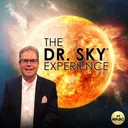
Earth closest to the sun this week.
Steve Kates Space and astronomy broadcaster (Dr. Sky)
Jose Santamaria
Europe’s Security Crisis: Russian Threats, Narco Networks and Germany’s Shift Right
Jose Santamaria Chief Investment Officer, Fundamental Investment Services
Spain’s Immigration Crisis and Europe’s Border Battle
Jose Santamaria Chief Investment Officer, Fundamental Investment Services
Spain's Rising Crime and Immigration Challenges
Jose Santamaria Chief Investment Officer, Fundamental Investment Services
Spain Faces a Growing Security and Migration Crisis
Jose Santamaria Chief Investment Officer, Fundamental Investment Services
