


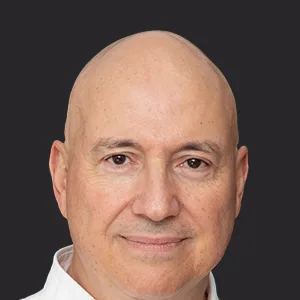
Dr. Peter Michalos WABC Medical Expert
Cancer Vaccines Could Change the Future of Medicine
Dr. Peter Michalos
Dr. Peter Michalos tells John Catsimatidis about personalized cancer vaccines, including a Merck partnership on a melanoma vaccine that he says cut deaths and recurrence by 49% in a 1,100-patient study. He reviews screening options from Cologuard to multi-cancer blood tests, explains how Right to Try gives patients access to trial drugs, and repeats his lifestyle advice.
Key takeaways
- Michalos said research suggests half of cancers could be prevented through lifestyle, diet and environment.
- He said the personalized vaccine is made from the patient’s own tumour and given with Keytruda.
- Michalos said versions are now being developed for lung, bladder and pancreatic cancer.
- He said smoking cuts life by up to 10 years and 3.5-plus drinks weekly raises breast cancer risk.
- Michalos said Right to Try lets patients receive a phase three trial drug before FDA approval.
In their words
“And then they make a custom vaccine for your specific tumor.”
“The right to try has changed everything”
“I think it’ll be approved in the next three to five years”
Quotes are word for word from the automated transcript, uncorrected; the summary and takeaways are editorial.
Transcript
Automated transcript · uncorrectedSunday morning. Well, it wouldn’t be Sunday without Living Long and Prospering. And before we go to church today, we got Dr. Peter Michalos with us. And he’s traveling, but he’s still with us. And Peter Michalos, what is your tips today on living long?
Well, today, John, we’re going to talk about a very important topic. One of the top things that affects longevity is cancer. And as we age, as aging accelerates, our system is unable to clean up cancer cells. And cancer develops as cells accumulate damage over time from toxins and various salts, chemicals, or food. And research suggests that 50%
of the cancer could be prevented if we optimize our lifestyle, our diet, our gut microbiome, and environmental factors like clean air, clean water. And basically, some exciting things that I’ll share with our audience is that Merck announced a partnership with a vaccine company with a new medicine, a vaccine called Intisaram.
And what they do is, let’s say you have a cancer, a skin cancer, like a melanoma. They actually take your own cancer, and they bring it to the lab. They look at it. They study the surface of it from the biopsy of your own tumor. They see the unique patterns on the surface of the tumor, like the notches
on a key. And then they make a custom vaccine for your specific tumor. And they actually reduced death rate by 49% and recurrence by 49%, which is a lot in 1,100 patients. And now they’re actually making them for lung, bladder, and pancreatic cancer, which is going to be pretty amazing that these things will happen.
Well, 49% is a pretty good batting average.
Yeah, no, that’s good. But then they also gave it along with a medicine called Keytruda that’s been around, which is an immune-boosting drug that basically turns on your immune system and tells your immune cells, hey, you need to start waking up and going after the— the cancer cells.
But meanwhile, until all these amazing things happen, we need to do things to help prevent getting cancer because the next five years are going to be really big for a lot of treatment. So meanwhile, don’t smoke because we now know smoking cuts our lives up to 10 years.
That’s a lot. Drinking alcoholic beverage, more than three and a half glasses a week. It’s been proven now, especially in women, breast cancer goes up. Get your testing. Get your colonoscopy. If you don’t want to get a colonoscopy or you’re at higher risk, you can get now a poop test called the Cologuard. They take a sample of
your poop and the tumor antigen. They find it in the poop, and they can tell you whether you need to have a colonoscopy, and that can save your life. There’s even tests now, regular blood tests like the CEA test, which can test for colon cancer. There’s a blood test called alpha-fetoprotein that can check for things like testicular and
liver cancer. And, of course, they have these blood tests like Galleri and CancerGuard, which can test for up to 50 cancers. They find circulating tumor antigen. And they’ve even made dramatic improvements in the mammogram. Instead of a woman having a breast squeezed in the mammogram machine, they have one where you just lie flat and the breasts are
freely suspended, and it scans the breast in 3D. And they’re getting better images, so they’re going to be able to pick up birth cancer earlier. So these things are really amazing that are happening as medicine moves at warp speed. And, you know, a lot of this thing has happened because of what happened with Operation Warp Speed, where all this
research was accelerated. into figuring out these types of new vaccines. So sometimes from a bad thing like COVID, the outcome is all these new amazing things. And also what the president has done and Secretary Kenney in lowering drug prices, where people now have access to many of these more medicine.
So all these things are very positive. That’s why we dedicate an entire new chapter in our new book with my co-author, Dr. Magdalena, called The Death of Aging, which is available on Amazon. And I spent a whole chapter just on the cancer and cancer vaccines and cancer prevention.
And as we always talk about on your show, about the Mediterranean diet, clean living, olive oil, clean fish, salads, multiple greens, all these things help.
I want to point out one more important thing. is all these vaccines, how long, two things, how long of a waiting period before they’re approved by the FDA, number one. Number two, are they approved, if we wanna fly to London Or Germany, can we get it done if we’re not approved by the FDA? And number three, can we
use them based on the fact that President Trump signed into law that if you have a serious problem, a disease or cancer, that you could use an experimental drug?
Exactly. That’s what I was going to say. The right to try has changed everything because now, let’s say this is in a phase three clinical trial, this new vaccine for melanoma. So if I have melanoma now, I can apply the right to try and say I would like to try this and I can get it and have
it administered before it is FDA approved. So that’s a game changer, and that’s why so many people out there, you’re hearing more and more stories that because of Right to Try, they were given hope. They were given the option, and they ended up extending their lives, and many of them are still alive, and they’re all saying thank you
for that opportunity. So a lot of amazing things have happened in America. Health care and, you know, vaccines are a very important part of longevity.
So why do you expect them to get approved?
I think it’ll be approved in the next three to five years, just like I’m hoping once the OSK Yamanaka factors that make our cells go younger, all these things will be obsolete. Because if we’re made younger and you don’t age as fast, guess what? You don’t get the cardiovascular disease, the diabetes. Absolutely right. the Alzheimer’s, so that’s
going to change everything.
Dr. Peter, thank you so much for calling in. Be careful on your traveling. The world is dangerous, and we love you, and the world needs you.
Thank you, John. That’s why I did a whole chapter on travel tips in the new book, The Death of Aging on Amazon, and thank you for always getting the truth out on the Cats Roundtable.
Sunday, September 27, 2026

Turkey, the Middle East and Cyprus’s U.S. Investment Boom
Nikos Christodoulides President of the Republic of Cyprus
Sounds Off on Iran, the UN and the 2026 Election
James Lankford U.S. Senator from Oklahoma
Sounds Off on the 2026 Midterms and the Battle for Congress
Jim Jordan U.S. Representative from Ohio
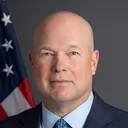
Trump’s NATO Strategy: “Europe Is Quickly Getting Stronger”
Matthew Whitaker U.S. Ambassador to NATO
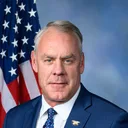
Trump’s Energy Strategy, Venezuela Oil and the Fight for America
Ryan Zinke U.S. Representative from Montana
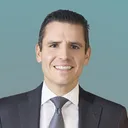
The Washington Square Park Drug Crackdown: “We’re Going to Do Our Job”
Jamie McDonald U.S. Attorney for the Southern District of NY
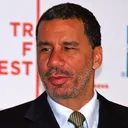
Rips UN Walkout on Netanyahu: “Shocked and Appalled”
David Paterson Former Governor of New York
NYC Risks Losing Billions as Companies Shift Jobs to Texas, Florida and Beyond
Steve Fulop President & CEO, Partnership for NYC

“The Angels Among Us”: Miracles, Visions and Unbelievable Coincidences
Dr. Marc Siegel Physician; Fox News Medical Contributor
Lost Fishing Boat Found 50 Feet From a Block Island Wind Turbine
Mike Lombardi President, Green Oceans
Europe’s Security Crisis: Russian Threats, Narco Networks and Germany’s Shift Right
Jose Santamaria Chief Investment Officer, Fundamental Investment Services
Sounds the Alarm on Cell Phones and the Developing Brain
Dr. Mason Pimsler Geriatrician, Lincoln Medical Center

Supersonic Jets, SpaceX’s Next Starship Launch & Trump’s Golden Dome Defense System
Steve Kates Space and astronomy broadcaster (Dr. Sky)
“We Must Talk About Suicide” and Protect Our Kids
Lynn Shaw Founder of Lynn's Warriors
Markets Tread Water Ahead of the Fed Amid UN Week and Xi’s State Visit
John Terrett WABC Financial Analyst
Dr. Peter Michalos
Healthy Eating, Stronger Immunity and the Science of Living Longer
Dr. Peter Michalos WABC Medical Expert
Limiting Sugar and Choosing Whole Foods to Support Healthy Aging
Dr. Peter Michalos WABC Medical Expert
Protect Your Skin From UV Radiation and Reduce the Risk of Skin Cancer
Dr. Peter Michalos WABC Medical Expert
Processed Foods and Mental Healthcare Failures Threaten Public Health
Dr. Peter Michalos WABC Medical Expert
