


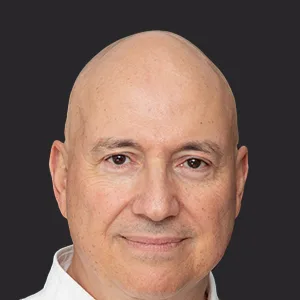
Dr. Peter Michalos WABC Medical Expert
Protect Your Skin From UV Radiation and Reduce the Risk of Skin Cancer
Dr. Peter Michalos
Dr. Peter Michalos explains to John Catsimatidis why ultraviolet exposure is cumulative and how it leads to melanoma, basal cell and squamous cell cancers. He recommends SPF-rated sun shirts, wide-brimmed hats, polarized sunglasses, mineral-based sunscreen and regular skin and eye checks, and describes the foods and supplements he says support the skin.
Key takeaways
- Michalos said UV damage adds up over a lifetime and shows first on ears, nose, hands and shins.
- He advised a yearly dilated eye exam because melanoma can also form in the back of the eye.
- Michalos said to avoid the sun between noon and 3 p.m. and to use mineral-based sunscreen.
- He said light-skinned people should get body checks two or three times a year.
- Michalos said wild salmon, avocados, olive oil, leafy greens, vitamin C and omega-3s help the skin.
In their words
“And our skin is a reflection of what’s happening inside our bodies.”
“You have to start young, putting on the mineral-based sunscreen and protecting them from cumulative exposure to light and wearing hats even on small children.”
Quotes are word for word from the automated transcript, uncorrected; the summary and takeaways are editorial.
Transcript
Automated transcript · uncorrectedWell, Sunday morning with us today is Dr. Peter Michalos. Well, live long and prosper. And Dr. Peter, what can we do today to make us live a little bit longer?
Well, John, one of the things that people always look at when they are trying to determine our age is they look at the condition of our skin. And our skin is a reflection of what’s happening inside our bodies.
And we now know that ultraviolet radiation from the sun is cumulative and it adds up and it collects. And the people you know who spend a lot of time in the sun who don’t have the protection of, for example, Mediterranean skin or melanin in their skin, they get more damage.
And we now know that the cumulative exposure can result in things like melanoma, basal cell, squamous cell, which are skin cancers and melanoma can be very dangerous because it can spread to different parts of the body and it can kill you and squamous cells can also go to regional lymph nodes and that’s why it’s so important to
protect our skin and that’s why wearing things like sun shirts that have actual spf rating which tells you how much it protects you sun hats wide with a brim a cap is not enough annual body checks. If you have light skin, you have to do it like two or three times a year. If you don’t, at least
once a year, have a body check and look at certain parts of the body that are more susceptible. Like I was talking to leading dermatologist Kenneth Mark, who’s a Mohs surgeon and does skin cancer, that the top of the ears are a big problem, the nose, the cheeks, the top of the hands and the thin skin on
our shins are common places where people develop cancer. And like, for example, even the eyelid is a place where people get cancer. And someone sent me a picture today of a lady and it was a classic on an edge of an eyelid. And you could see rough spots on the edge of the eyelid and you actually can see
a patch of loss of eyelashes, loss of hair. That’s also a sign of cancer because wearing sunglasses sometimes is enough because the sun comes in through the side. And that’s why wearing polarized sunglasses that block UVA and UVB. Also, it can cause melanoma in the back of the eye.
So that’s why having a dilated exam with your ophthalmologist at least once a year to check the back of the eye to make sure you don’t have any tumors, because it looks like a little brown mushroom that it can grow in the back of the eye, though it’s not that common. It can happen. Other things we can
do to protect our skin are use sunscreens that are mineral-based. Avoid the ones that say nanoparticles or microparticles because those are like microplastics. Also, avoiding the sun between 12 and 3. The other thing you and I have talked about is the gut-brain axis, but there’s a gut-skin axis. If you eat something bad and have an allergic reaction, where does
it show up sometimes? You get a skin rash or it shows up on the skin. So that’s why eating good farm-to-table organic food helps the skin. The foods that help the skin stay and look healthier are wild salmon that’s not farm-raised, things like avocados, green tea, extra virgin olive oil, green leafy vegetables, sweet potatoes. Those are all
things that strengthen the skin. And also taking, if you’re going to do supplements, vitamin C helps collagen repair, and omega-3 fatty acids help collagen repair. And also they found that when they studied the poop of centenarians, people lived to be 100, they have good bacteria in their gut.
So taking a probiotic that’s soil-based, that mimics what the centenarians have, that’s also been found to be helpful with the skin. Also, for the skin protection in the summer, avoid polyester shirts, polyester underwear. Why? Because they don’t breathe, and under that moisture of the polyester, you get more yeast and skin irritations, and that’s why it’s better to
wear a cotton shirt in the summer or materials that breathe. In the winter, wool is good, cashmere is good, and they’re readily available at a fair price. And also the other area that people can tell your age from your skin damage is the top of the hands. And that’s why every day before you go out, if you put
a little sunscreen moisturizer on the top of your hands, you wipe a little on the top of your ears. If you’re bald like me, I put on the top of my head, back of my neck, and that helps to decrease the chance of getting exposed to too much UV light, which can be very damaging and result in
the in skin cancer. So the skin is a reflection of our inner cells. And we now know that we have DNA repair mechanisms. And as we age, those mechanisms to fix the cells that were damaged by the UV, it gets more difficult. So that’s why we have to stress our immune system less by staying out of the sun,
like we said, between noon and three, wearing a protective hat, protective sunglasses, especially for small children and babies. You have to start young, putting on the mineral-based sunscreen and protecting them from cumulative exposure to light and wearing hats even on small children. And these are some of the things you can do. And actually, myself and my co-author, Dr. Maglano,
we did a whole chapter on skin, skin protection, in our new released book on Amazon called The Death of Aging. because skin is a very important area and an important organ that we must protect.
Understood. Now, is there a time period that if you’re going to stay in the sun, because we all need a little bit of vitamin D, is there a time period that it’s better to be in the sun than not?
Yeah, early in the morning when sunrise until around 11, 11.30 is okay, but then when sun peaks, That’s when the solar rays are at their maximum. And then 3 o’clock to 6 o’clock is a great time to be on the beach where you’re not getting fried by all of that UV energy because all this light energy does damage
to the skin. And you can see the people who were on boats didn’t wear sunscreen, didn’t wear hats. They look much older than their age. And, for example, women who’ve stayed indoors, for example, wear hats with a brim.
Sometimes they can look 10 years younger because you don’t get the wrinkling of the skin, especially if you come from an area where you have very light eyes and light skin. Because the lighter your skin is, you have less protection from UV light. And that’s why most of the skin cancers occur in people, for example, Irish people,
in Germans, English, Scottish people. Those people who didn’t evolve near bright sunlight, they don’t have as much protection. So when they’re brought to a sunny climate, they get more skin cancers. And you can also even buy sun shirts, which I buy frequently. I go to Greece and it has SPF 50, and I tell people with small children
to buy the kids sun shirts to protect them from that cumulative exposure.
But when you go into an ordinary store, they don’t know the difference, ordinary vendors. So I guess you would have to buy that on the Internet where you could specify what you really want to buy.
Right. There are specialty shops, like, for example, in Long Island where beach communities are. They do sell... SPF shirts, but you’re right. A lot of times I buy mine online from Australia or New Zealand because there it’s mandatory.
Even on the beaches, they have little pumps with the sunscreen. And in school, they teach the kids from a young age how to protect themselves from the sun because the sun is very strong in places like New Zealand. Interestingly, they get more cancers on the right side of their face and arm because they drive on the right side.
In the United States, we usually get our first skin cancer on the left arm, left face, and our first cataract on the left because we drive on the left because we get hit with the UV on the left.
So that’s another interesting fact. Dr.
Peter, we are out of time. Thank you so much for calling in this Sunday morning, and we’ll talk again real soon.
Thanks for always getting the truth out on the Cats Roundtable and read The Death of Aging on Amazon.
Sunday, September 20, 2026

Exposing Anthony Fauci in New Book 'Why Fauci MUST Rot in Prison'
Peter Navarro White House Senior Counselor for Trade & Manufacturing

The GOP’s 2026 Agenda and the Battle Over America’s Political Direction
Joe Gruters RNC Chairman

Arizona’s Political Battle Over Elections, Water and Development
Andy Biggs U.S. Representative from Arizona; nominee for Governor


A Plan for a Safer New York and Lower Taxes
Bruce Blakeman Nassau County Executive; nominee for Governor

The New World Order and the Challenge Facing Western Democracies
Ido Aharoni Aronoff Former Israeli Consul General in New York

His Campaign for Congress and the Fight for House Majority Control
Michael LiPetri Nominee for Congress, NY-3; Former NY Assemblyman

Trump-Xi Summit Raises Questions About China and Global Security
Gordon Chang China Analyst & Author

Inside Iran’s Opposition Movement and the Fight for a Secular Republic
Alireza Jafarzadeh Deputy Director, National Council of Resistance of Iran

The Democratic Party’s Identity Crisis and Its Working-Class Disconnect
Hank Sheinkopf Political Consultant

House Vote Advances the Fight to Keep AM Radio in New Cars
David Donovan Senior Policy Adviser, NYS Broadcasters Association

Spain’s Immigration Crisis and Europe’s Border Battle
Jose Santamaria Chief Investment Officer, Fundamental Investment Services

Hildebrandt’s Celebrates 100 Years of Ice Cream and Family Tradition
Zack Sarf Co-Owner, Hildebrandt's Ice Cream

The Science Behind Hurricanes, Cosmic Radiation and the Universe
Steve Kates Space and astronomy broadcaster (Dr. Sky)

Open-Air Prostitution and Human Trafficking Crisis on Queens’ Roosevelt Avenue
Lynn Shaw Founder of Lynn's Warriors

Interest Rates and Global Markets Amid U.S.-China Trade Tensions
John Terrett WABC Financial Analyst
Dr. Peter Michalos

Limiting Sugar and Choosing Whole Foods to Support Healthy Aging
Dr. Peter Michalos WABC Medical Expert
Processed Foods and Mental Healthcare Failures Threaten Public Health
Dr. Peter Michalos WABC Medical Expert
