


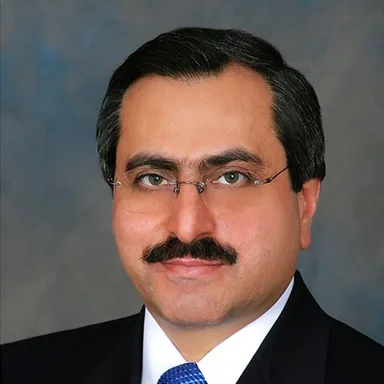
Alireza Jafarzadeh Deputy Director, National Council of Resistance of Iran
Inside Iran’s Opposition Movement and the Fight for a Secular Republic
Alireza Jafarzadeh
Alireza Jafarzadeh of the National Council of Resistance of Iran talks with John Catsimatidis ahead of the UN General Assembly, where Iran’s president is due to speak and Iranian Americans plan a rally. He describes the opposition platform led by Maryam Rajavi, argues the regime is weaker than ever, and says the solution lies with the Iranian people rather than outside arms or troops.
Key takeaways
- Jafarzadeh said the NCRI seeks a secular, democratic, non-nuclear republic with gender equality and religious freedom.
- He said Maryam Rajavi has committed to elections within six months of the regime’s fall.
- Jafarzadeh said regime officials concede it has the support of no more than 4% of Iranians.
- He said the opposition asks for no money, arms or troops, only recognition of Iranians’ right to resist.
- He said the regime has executed political prisoners since March and that this shows weakness.
In their words
“The regime has rejected it because the consequences of peace for the regime is greater than the consequences of war.”
“You cannot kill the whole nation, the whole country of 91 million people.”
“When a nation decides to change its future, it will happen. It’s just a matter of time.”
Quotes are word for word from the automated transcript, uncorrected; the summary and takeaways are editorial.
Transcript
Automated transcript · uncorrectedWell, what’s going on in Iran? With us today is Alireza Jafarzadeh. Well, I think I said it right. Well, Alireza, did I say it right?
Perfect. It’s Ariza Jafarzadeh. This is the best pronunciation I’ve gotten the whole day.
All right. Thank you so much. And you’re Deputy Director of the United States Office of the National Council of Resistance of Iran. And you’re also an author. You’ve written The Iranian Threat. So would you bring all Americans up to date? Because nobody really understands what the heck is going on. Absolutely. Absolutely.
And of course, the New Yorkers are used to, this time of the year, seeing the UN General Assembly leaders from various countries around the world are coming to New York. This year is going to be the 81st year that the General Assembly is meeting. Now, there’s going to be the leader of the Iran regime, the president of the regime,
coming to town to speak. That’s why there’s going to be a huge rally by thousands of Iran and Americans from all over the United States coming right in front of the U.N., the dark hammer show plaza, saying that this is the president of the regime, not the people of Iran, that Iran does have an alternative led by
a woman, Mrs. Maryam Rajavi, that has wanted to see a free Iran, a democratic Iran, a republic form of government based on separation of religion and state, gender equality, freedom of religion, freedom of political parties, and a non-nuclear republic Iran, a country that would in the future support peace in the Middle East with abandoned terrorism and with
abandoned threatening others, including you know, abandoning the killing of their own people. So it’s a huge thing that’s happening this coming week in New York. But I think, as you said, the American public should know that whenever they hear Iran, they shouldn’t come to their mind that Iran is represented by the Ayatollahs. Instead, they should start thinking
about the people, those who are fighting for change, and they want to bring about freedom and democracy in Iran.
Understood. Now, the price of oil is over $ 100 a barrel. The interest rates are going up. The speculation is, and what we’ve talked about, is that the evil empire, whether it’s Russia, China, Iran, North Korea, are all spiking oil, which causes temporary inflation, which causes the interest rates to go up, just to create a problem for the elections
on November 3rd. What is your opinion?
Well, certainly I’m sure that, you know, everybody has their own agenda in the region, political agenda here in the United States and other places. But I think if we look at things in the big picture, this is not a problem that the world is facing just, you know, this year or, you know, regarding an election cycle. The
mullahs have been in power since 1979. They have been threatening the world for progress. over 47 years, 46 years, and there must be a solution to it because the threat of the Iran regime really affects the whole region, the whole world. We’re not just talking about the nuclear weapons program. We’re talking about their missile program is threatening everybody,
their terrorism. The way they’re using terrorism as a tool to give them leverage, to raise the prices of oil and food and everything around the world clearly shows that the regime ruling Iran is not just the enemy of the people of Iran, where people are being killed by this regime, but they’re threatening everybody else. And that’s why
I think it’s so important that people would look at the problem with an eye to look for a solution. you know, we can’t just repeat about the threat of the regime. Instead, we should be thinking, okay, what’s the solution?
And I think after over a year of war and all the tensions and everything happening there, it becomes very clear that, first of all, this regime has never been so weak as, you know, they are now, that the Iranian society is really explosive because we have had several rounds of major uprisings in Iran since 2018 in all
31 provinces, and also the fact that the regime doesn’t want peace. You know, President Trump offered peace. The regime has rejected it because the consequences of peace for the regime is greater than the consequences of war. So what do you do? You look at the people of Iran who want to end the rule of the clerics. That’s
where the Iranian opposition comes into picture as a solution. As sometimes, you know, we don’t ask for money or arms or boots on the ground, none of those things. What we’re saying is that they recognize the right of the people of Iran who want to end the rule of dictatorship in Iran, and just recognize their right to
fight the IRGC, and the fact that there is an alternative there. This is where I would focus. If I were any, you know, if I were a politician, Democrat or Republican, wherever in the United States, you know, think about the future of this country, the future of the region and all of that. And this way you can
think about the solution. Interestingly, the organized opposition is led by a woman, Mrs. Maryam Rajavi. She’s very capable, a woman who introduced a platform for the future of Iran. She has announced the NCRI, which is the parliament in exile that she heads, provisional government for transition from theocracy to democracy. She has promised and committed to three elections
within six months after the fall of the Ayatollahs, so you wouldn’t be replacing one dictatorship with another. Instead, you would have two elections. That’s where the representative government by the people would be really a government that would enhance not just the lives of Iranian people, but enhance peace and security around the world.
Understood. Now, all kinds of rumors around that the Kurds are being armed by the CIA, or that the people of Iran are being armed, or... What you hear is the pulse of what you hear, what is going on in the streets of Iran.
That’s a great point you raise, because obviously, John, you know, the Ayatollahs have all kinds of interests to, you know, spread rumors so that people would be afraid to touch anything. And then the end result would be, let’s just deal with the Ayatollahs who are already in power. Let’s just not rock the boat. The reality is that Iran is
in an explosive situation. You know, we have 90-plus million population of Iran. The vast majority of them are young, below the age of 30. They are adamantly opposed to the Ayatollahs. The regime’s officials concede that the regime doesn’t have the support of more than 4% of the population.
And those 4% are the ones who are actually benefiting from the resources and the rule of the ayatollahs. And that society, no matter what the regime does, it doesn’t alter the reality that the people don’t want this regime.
You know, the regime started executing political prisoners since March of this year in the middle of the war. And most of those prisoners belong to the main Iranian opposition movement, the MEK, which is the same movement that exposed the nuclear sites of Iran that is now fighting the regime as acting as an engine for change in Iran. No
matter what the regime does, the people remain committed to change. There are all kinds of protests going on across the country. So everything is driven by the people inside Iran. And those things that, oh, you know, this country or that country are arming people, are doing this and that, is nonsense. Because, you know, arms are there. The people have access there.
If they want them, you know, they can confront the Revolutionary Guards as they have been doing. They’ve been trying to, the people have been trying to disarm the Revolutionary Guards, confront them, fight them during the protests. There is a very organized indigenous force fighting the regime for over four decades.
So the rumors that we hear is that the Iranian guard killed 50,000 Iranians that were protesting. Well, how many did the protesters kill in Iranian Ghats, in your opinion?
Well, you know, when it comes to, you know, upheavals and changing the system, there is always a breaking point. You know, the regime, of course, they’re in charge because they have the military, they have the money, the resources. resources, they control everything. But at some point, the whole thing, it’s like breaking a dam. And so that’s what the
regime is so worried about. And of course, the regime has killed so many. I don’t know the numbers, but definitely thousands upon thousands of people were killed. But the regime is creating a lot of more enemies, a lot of more commitment among the young people who have nothing else to lose. You cannot kill the whole nation, the
whole country of 91 million people. And that’s why the regime is so paranoid and afraid of its own population. Why would you go and execute political prisoners who have done nothing but having views and opinions that wants change in Iran, you go and kill them. This is a sign of vulnerability. This is the sign of weakness. And
this is the sign that the society is receptive to all these new ideas. Remember, change has come all over the world. You have had great empires from the Soviet Union and others. The whole thing collapsed. when people revolted, people said, this is enough. And that’s what has happened since a long time ago. Unfortunately, the world hasn’t been
in par with the realities on the ground, and they keep giving legitimacy to the regime. You made just some examples you mentioned earlier, and trying to work with the regime, give them money and resources. These are all counterproductive, not just for the people of Iran, but for the rest of the world. But I can tell you this, you know,
none of those efforts to appease the regime are going to last very long. When a nation decides to change its future, it will happen. It’s just a matter of time.
It looks like the rest of the evil access, whatever you want to call it today, is helping Iran create the problems in the Strait of Hormuz, causing the price of oil to go up.
Oh, definitely. I’m sure there are players there who are collaborating with the regime. But I think we can play a big role in just, you know, shifting that momentum, showing the world that this regime doing all of these things out of weakness and vulnerability. Remember, the supreme leader of this regime is gone. They have not been able
to replace him. And, you know, the son is nowhere to be found. No one has seen him. No one has even heard his word or seen his handwriting. And you have the only thing you hear from Iran coming is the discontent population. That is very young. It’s all over the country. You have these resistance units. These are
mostly young people that are organized by the main Lenin opposition, the MEK, in all 31 provinces. Now, things could be, you know, start very small. It’s always like that. You start small and you build momentum and the underdog eventually wins.
That has been the case for all the major political changes throughout the history of It’s the underdog that wins. And now it’s the momentum that has significantly shifted. And that’s what I want to tell the American public. Look for the people of Iran. Look for the organized opposition.
Look for women who are leading this movement because this regime is so misogynist. On the other side, it’s not a coincidence that the main organized opposition is led by women. You know, just earlier this month, the MEK, which is the main organization fighting the regime, elected its new secretary general.
It’s a female leader, you know, younger, and she is the 10th. successive Secretary General of the movement since 1989, what does it tell you? It tells you that a generation of women are standing up in an organized way, fighting the regime. And this regime that doesn’t consider women, even second-class citizens, are going to be swept out of power,
led by women.
Well, thank you for calling in this Sunday, and Alireza Zaga. I don’t know. Did I say it any better?
Perfect. This was even better.
Thank you so much, and let’s catch up again real soon.
Thank you so much, John. You’re doing a great job with your shows, educating the American public. Keep doing the great work you’re doing. I’m always very appreciative of being on your shows.
Thank you so much.
Sunday, September 20, 2026
Exposing Anthony Fauci in New Book 'Why Fauci MUST Rot in Prison'
Peter Navarro White House Senior Counselor for Trade & Manufacturing
The GOP’s 2026 Agenda and the Battle Over America’s Political Direction
Joe Gruters RNC Chairman
Arizona’s Political Battle Over Elections, Water and Development
Andy Biggs U.S. Representative from Arizona; nominee for Governor
A Plan for a Safer New York and Lower Taxes
Bruce Blakeman Nassau County Executive; nominee for Governor
The New World Order and the Challenge Facing Western Democracies
Ido Aharoni Aronoff Former Israeli Consul General in New York

His Campaign for Congress and the Fight for House Majority Control
Michael LiPetri Nominee for Congress, NY-3; Former NY Assemblyman

Trump-Xi Summit Raises Questions About China and Global Security
Gordon Chang China Analyst & Author
The Democratic Party’s Identity Crisis and Its Working-Class Disconnect
Hank Sheinkopf Political Consultant
House Vote Advances the Fight to Keep AM Radio in New Cars
David Donovan Senior Policy Adviser, NYS Broadcasters Association
Spain’s Immigration Crisis and Europe’s Border Battle
Jose Santamaria Chief Investment Officer, Fundamental Investment Services

Hildebrandt’s Celebrates 100 Years of Ice Cream and Family Tradition
Zack Sarf Co-Owner, Hildebrandt's Ice Cream

Protect Your Skin From UV Radiation and Reduce the Risk of Skin Cancer
Dr. Peter Michalos WABC Medical Expert

The Science Behind Hurricanes, Cosmic Radiation and the Universe
Steve Kates Space and astronomy broadcaster (Dr. Sky)

Open-Air Prostitution and Human Trafficking Crisis on Queens’ Roosevelt Avenue
Lynn Shaw Founder of Lynn's Warriors
Interest Rates and Global Markets Amid U.S.-China Trade Tensions
John Terrett WABC Financial Analyst
Alireza Jafarzadeh
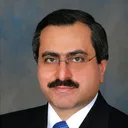
Alireza Jafarzadeh Speaks at the CATS Roundtable Radio Show
Alireza Jafarzadeh Deputy Director, National Council of Resistance of Iran
