


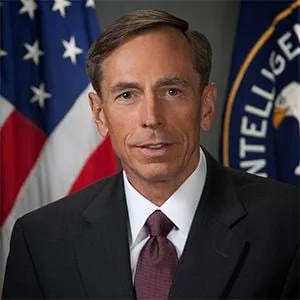
General David Petraeus Former CIA Director & Four-Star General
A Strategic Look at Today's Global Security Flashpoints
Transcript
Automated transcript · uncorrectedHow we use electricity can be smarter, cleaner and greener. At Electric Garland we can help guide you there. Our net zero hub as all you need to know about smart meter plans, home EV chargers, solar panels, heat pumps and much more, making your usage clearer, your trips greener, your home cozier, and your world brighter. Find our net
zero hub at Electricarland dot.
Ie, Sunday morning, what’s going on in the world? Well with us today? Is General David Patres Well first, at General head of the CIA. There’s nobody better to talk to you on a Sunday morning and know what the heck is going on than the General. Well, uh, General Patress, you give the market people an update?
Well, perhaps we could start with a Memorandum of Understanding between the US and Ron, which was a potential significant tactical achievement but seems to have increasingly uncertain strategic prospects. The MoU did halt the fighting, largely reopened the Strait, created a diplomatic space, but recent Iranian statements concerning their authority over transit through the Strait, together with other actions,
often in fact contradicting what it is that President Trump or our negotiators announced after one of the sessions. Together, all of this gives I think considerable pause. There are several realities that are becoming clear. First, that most consequential issues remain unresolved. They include short and long term control over the Strait. The RGC says, the Lamic Revolutionary Guards
course says, we have no involvement in this whatsoever. Despite establishing a contact group between Iran and the US to facilitate the freedom of navigation. The Iran nuclear program includes enrichment, limits, verification, and inspections. One of the earlier early achievements was that the Iranians were going to allow the International Atomic Energy Agency inspectors to return. That was then denied later on.
What do we do about sanctions, relief, frozen assets, the missile and drone programs, and Iran support for destabilizing regional proxies. We should be very clear. Second that implementation, not announcement now is going to determine success, and every subsequent Iranian action should be judged against the agreements objective of reducing tensions and restoring freedom of navigation. So we should have
pretty disciplined realism about this. It should be judged neither by hopes invested in it, or skepticism surrounding it as well, but by Iran’s actions in the weeks and months ahead, and so far those have been a bit concerning, more than a bit understood.
And I mean there’s several sides and Iran, I mean, who’s really in charge, who’s calling the shots? And I tried to calm people down because I guess that one attack that happened last week on a cargo vessel, it wasn’t authorized by anybody. It looked like it was coming from a single entity.
Well more recently, just in the last twenty four hours, there were apparently four drones launched against vessels. Three of them were knocked down one hit. And that’s sort of frozen all the energy and activity around the clearing out of the vessels inside the Gulf and even replacing their crews who had been stuck on board there for a
number of months. The fact is that it appears there is a tug of war inside Tehran between the new Supreme Leader and the Islamic Revolutionary Guards Corps on the one hand, very hard line, and then the president and the negotiating team which appeared to be making agreements in the consultations and negotiations, which then in summer number of
cases have been then rejected or contradicted by statements by the IRGC. So this is difficult. You know, these are tough negotiations to begin with, but it’s even tougher if the negotiators can’t count on support back in their home country capital.
So how many people have to agree? Is it the the I guess, the Mullas and in the army and the Iranian God.
Well, it’s the Islamic Revolutionary Guards. That is, of course the regime protection, for it has its own army navy air Force in addition to the normal army Navy Air Force, the arteche they appear to be the leader of the IRGC and the new Supreme Leader, who has always been close to the IRGC, appeared to be having linked arms.
And then again the President and the negotiators and Speaker of the Parliament seemed to be a bit more on the moderate side, noting that they’re all hard lines. So this is all relatively speaking, and that’s difficult, and I can only imagine the frustrations on the part of President Trump and of his negotiators.
Now, in addition, Lebanon and Hesbala. What the heck is going on there? I mean, it seems like the Israelis had them surrounded for a while, and I think the President asked them to stand down a little bit.
Well, what’s happened is that Keep in mind, this all began when Habolla very very substantial attacked Israel some months back. Israel responded, and this time Israel’s gone into Lebanon and taking control of some of the territory from which his Bulah has been shooting at the villages and towns in northern Israel, many of which have had to be evacuated
yet again, as they were in the months after the ten to seven attacks. And so they’re trying to push them back, to get the Lebanese army to come in and occupy those areas, to keep his Bulla from being able to return to them. And now the Iranians want to use the Memorandum of understanding to lever us to
lean on the Israelis and say, well, you know, stop shooting at these guys. Even if they shoot at you, have some restraint because it’s undermining the possibilities of the negotiations. I think President has been fairly judicious in doing that.
But this is putting Israel very very difficult situation. They have not finished, they have not achieved the objectives they set out to attain when they launched these operations into Lebanon, into his Bulla controlled territory. The Lebanese military is not capable of disarming Hisbullah, despite agreements between the Lebanese government and Israel historic in that regard, but they’re just limits
to how much the Lebanese military can do. And Israel gets shot at, they should respond. But now you have this additional factor that that could undermine the negotiations in the wake of the Memorandum of Understanding, which some people have actually labeled the Memorandum of misunderstanding because it appears that the Islamic Revolutionary Guards Corps is interpreting it very
differently from the way it was interpreted by the US negotiators when it was reached I understood.
Russia to Ukraine, is there any hope there for peace?
Very much? Yes, very very much, John. Ukraine is on the verge of being isolating the Crimean Peninsula, the occupied by Russia Crimean Peninsula, to the extent that there has been a declaration of emergency for the entire peninsula. So the summer tourisms are all trying to get back to Russia.
The beaches are going to be emptied. Essentially, Ukraine is taking apart the Russian oil storage facilities and refineries in Crimea, to be sure, but also coming the refined products. Going into Crimea, there’s limited ways in. You can either take a ferry. That have knocked out three of the ferries recently, the Kirch Straight Bridge, the Pride of Putin, which has
a railroad that’s not operating anymore, but the roads and they now can hit that. And so there were such long gas lines in Crimea that the government there won’t even sell gas to civilians. So you can see the extent to which this is again isolating Crimea. Then the route that comes in from southern Ukraine. You can go
from the Russian Federation across the occupied southeastern part of Ukraine and then down into Crimea from the north. They’ve knocked out the bridges there, the roads, even the supplementary the Pontoon bridges the Russians have built, and they also you may recall, in the past week or so, hit the Moscow refinery. It is offline, huge plumes of smoke
and flames, and there are gas lines as far east in the Federation as Siberia, so they are really taking the fight to the Federation. They’re going after the air and ballistic missile defenses which prevented them from doing that before.
Now Moscow is beginning to pull some of those defenses from the front lines and other areas to Moscow so they can keep the capital free of this kind of activity. And yet Ukraine is going after and now they’re starting to isolate the front lines to a degree as well by the developed longer range Ukrainian drones that can get
into the rear areas where you have the logistical bases and so forth, and those are no longer safe for Russian vehicles and headquarters and depots. So this is quite a significant development. Also, an announcement that the Ukrainians killed or seriously wounded thirty one thousand and five hundred Russians in the past month all start to see it’s very
serious stuff. And you can start to see that when the US reimposes the sanctions on Russia’s sale of oil, which we lifted because of concerns about Brent Krude, because of the strait of our most being blocked for so long, and then if we could ever do the package of sanctions in the Senate, supporting reportedly by ninety out of
one hundred senators, we could really do enormous damage to the Russian economy, the war economy, which has already sustained enormous damage by repeated rounds of EU sanctions. At the same time that the EU is in the midst of providing the early tranches of ninety billion euros of financial and economic assistance that is an enormous lifeline to Ukraine.
So a lot of really positive developments in terms of perhaps offering the possibility that Vladimir Putin might actually have to seek a cessation of hostilities, perhaps as much as does Ukraine. So we have to see how this evolves in the months ahead, whether Ukraine can just continue the pressure so that Russia cannot get back on its feet
in terms of air and ballistic missile defenses, which are right now depleted enough that Ukraine is having this enormous impact deep into the Russian Federation and again isolating the Crimean peninsula, and perhaps they have to start withdrawing elements from locations where they just no longer can sustain them, so again quite a very important development. We need to
be careful as always because the Ukrainians on their side have an achilles heel when it comes to ballistic missile defense, especially getting the missile interceptors because of course of the heavy usage of them in the conflict with Iran, and also Russia is now starting to manufacture jet powered Shahead drones, which makes it more difficult for the piston driven Ukrainian
drone interceptors to be as effective as they have been, knocking down over ninety percent of those drones.
General David Patrias, thank you for the update for all the American people, and you really provide a great service. And thank you for everything you’ve done for our country and continue to do for our country.
That privilege. Sean, thanks always great to be with you.
Thank you so much,
Sunday, June 28, 2026

West Virginia's Economic Revival Through Energy and Industry
Patrick Morrisey Governor of West Virginia
Energy Prices and Iran Remain Central to U.S. Policy
Newt Gingrich 50th Speaker of the House
His Vision for Election Integrity and America's Future
Roger Marshall U.S. Senator from Kansas
A Call for Renewed U.S.-Cuba Dialogue and Cooperation
Ernesto Soberón Guzmán Cuban Ambassador to the United Nations
Celebrating America's 250th While Addressing New York's Challenges
Nicole Malliotakis U.S. Representative from New York
The Rise of the Left and the Demand for UFO Records
Timothy Burchett U.S. Representative from Tennessee

Protecting Taxpayer Dollars Through Accountability and Oversight
Timothy DeFoor Pennsylvania Auditor General
Low Primary Turnout Is Reshaping New York Politics
David Paterson Former Governor of New York
A Blueprint for New York's Economy and Public Safety
Bruce Blakeman Nassau County Executive; nominee for Governor

The Enduring Influence of Ronald Reagan on American Politics
Roger Zakheim Washington Director, Reagan Presidential Foundation

Legal Questions Surround New York's Rent Stabilization Decision
Sherwin Belkin Co-Founding Partner, Belkin Burden Goldman LLP

Democratic Socialists Gain Ground in New York's Primary Elections
Jesse Arm Vice President of External Affairs, Manhattan Institute

Honoring D-Day Veterans at a Historic 82nd Anniversary Tribute
Peter Palivos Attorney & Philanthropist

More New Yorkers Are Moving to Florida
Spero Georgedakis Founder & CEO, Good Greek Moving & Storage


The Essential Habits for Heart Health and a Longer Life
Dr. Peter Michalos WABC Medical Expert

Ancient Planetary Collisions, Ocean Mysteries and the Tunguska Event
Steve Kates Space and astronomy broadcaster (Dr. Sky)

Holding Big Tech Accountable for Protecting Children Online
Lynn Shaw Founder of Lynn's Warriors
General David Petraeus
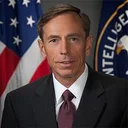
Iran and Ukraine Are Creating New Challenges for Global Security
General David Petraeus Former CIA Director & Four-Star General
The Emerging Era of Drone Swarms and Autonomous Warfare
General David Petraeus Former CIA Director & Four-Star General
Rising Risks in Key Global Chokepoints
General David Petraeus Former CIA Director & Four-Star General
The Operational/Military Campaign Against Iran Is Very Impressive So Far
General David Petraeus Former CIA Director & Four-Star General
Diplomatic Efforts Are Failing to Resolve Escalating International Conflicts
General David Petraeus Former CIA Director & Four-Star General
Ukraine's drone deployment has helped it withstand Russian forces.
General David Petraeus Former CIA Director & Four-Star General
