


Transcript
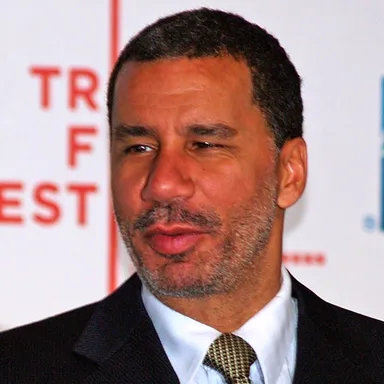
Automated transcript · uncorrectedSunday morning. With a second every Sunday is Governor David Pattison? What is common sense message? Whether it’s for a city or state or country. Well, Governor Patterson has a lot of common sense. Well, Governor Pattison, what are you getting off your chest this morning?
Well, John, I had the privilege all the way back in nineteen eighty eighty three for working for the Queen’s District Attorney’s Office under supervision, and my job, along with the people in my unit, was to determine whether or not defendants could understand the charges against them and whether or not they could assist in their own defense.
And these units were set up all around.
The city to try to stop the situations with people with mental health issues committing crimes, and the question was do they know the difference between right and wrong? I think that we’re starting to see replication of that. Michael Katz is writing about it in the post and others are talking about it after the killing of the person
a week ago, not this past Thursday, but before when he was released from one of these institutions. Now, the Mental Health Information Service has always recommended that before a patient is released that there has to be some kind of process. You just don’t look at him and say, oh, he’s smiling today, he must be happy. He won’t bother anyone.
And we’re finding out the hard way that we don’t have enough people to actually work in that particular area. So I would really hope that Mayor Mundani and the borough presidents and the city Council looks at this because there are very dangerous people walking down the street. Someone will passed me on the street two days ago and
we were just passing each other, and he pointed and he said, why don’t you move over? And I’m in the middle of the sidewalk. He’s in the middle of the other sidewalk and he wants me to move over.
These are the types of people that when you walk around, you run into it. But more seriously, it’s the type of problem that is going to be manifest if we have to start spending all kinds of money on the repair of our inability to keep people who have mental disease or disability hidden from the public.
Now, Governor, I mean, we’ve been around for a while. There’s some people that are never going to be cured.
Oh, that’s absolutely true.
And that’s that’s where we have to. Somebody has to make the determination. There are certain people, maybe one quarter of one percent. You know, if you have eight and a half million people in New York City, what’s so one percent is what is going to be eighty thousand, eighty thousand, So we have maybe a half of one.
Percent, so that would be forty thousand that will never be cured.
And you can’t leave them among civilized people.
You can’t even in many respects, leave them around other people like themselves, because they will inevitably attack each other. And it’s this really sad situation because sometimes these people got in this condition, not by things that they actually did, but by trauma, abuse by parents, you know, living in bad neighborhoods, and having port you know, situations where they
were violently, violently attacked. But we, as much as we do have to have concern for those people, we also have to be concerned about eight and a half million people who live in New York City who really don’t want to be exposed to this type of problem.
And I just hope.
That the explanations that were given a week ago Thursday for why that individual was let out of an institution is updated and corrected. The next time something like this happens.
You’re absolutely right, And you know there’s two categories here. One category is the I guess mentally ill, and the category is to repeat offenders in crime. And maybe there might be a quarter or one percent or a half of one percent of each category.
And one of the things John is many people who are mentally ill are not violent.
They have mental issues, but they are they.
Do have a situation where they can’t deal with issues of society, so they wind up out in the cold and exposed and in typical situations when they really are not intending to hurt other people, but almost are forced that way because they’re not the services that can assist them.
Where do we go from here, Governor? I mean? And the other thing that I’m alreally upset about some of these judges. They allow these people back in the street again, and they got back in the street and they kill people and hurt people.
I sometimes wonder if the judges are men and women like you and me.
They have feelings, they notice things.
But when you watch this over a long period of time, you start to ferret out the ones who you don’t think are really that dangerous from the ones who are and the quest, And all I’m saying is many of these reports that you can read on the individuals when they come into court should make it very clear whether
or not they should be let.
Out or not.
Why they get let out in spite of the reports is a little bit of a mystery to me.
And Governor, let’s digest it, let’s let’s see what else we can do about it. And thank you for putting it on the mainscreen on Sunday morning.
Thank you, John
Sunday, May 17, 2026

Florida's Policy Model Focuses on Law and Order and Education Reform
Ron DeSantis Governor of Florida

Florida's Economic Model Is Attracting Frightened New Yorkers
Rick Scott U.S. Senator from Florida
National Security Threats From Iran and China
Ron Johnson U.S. Senator from Wisconsin

China Visit Underscores Broader Strategic Competition
Joni Ernst U.S. Senator from Iowa


Trump 2.0 Marks a New Era for Conservative Politics
Sean Spicer Former White House Press Secretary

SDNY Defendant Apprehended in Case Tied to Foreign-Linked Terror Activity
Jay Clayton Director of National Intelligence

There Must Be Tougher Measures to Protect Police Officers
Nicole Malliotakis U.S. Representative from New York

Excessive Taxation Is Driving Investors Out of New York
Mike Lawler U.S. Representative from New York

Penn Station Set for Major World-Class Transformation
Andy Byford Amtrak Special Advisor; Former NYC Transit President

NYC Luxury Real Estate Market Remains Strong
Suzanne Miller President, Empire State Properties; WABC Real Estate Analyst



Big Bounce Theory Challenges Traditional Big Bang Model
Steve Kates Space and astronomy broadcaster (Dr. Sky)

Bipartisan Push Grows for Kids Online Safety Act
Lynn Shaw Founder of Lynn's Warriors

David Paterson
Rips UN Walkout on Netanyahu: “Shocked and Appalled”
David Paterson Former Governor of New York
The Rise of Black Candidates and the Changing Landscape of American Politics
David Paterson Former Governor of New York
NYC Students Face Alarming Decline in Literacy Rates
David Paterson Former Governor of New York
