


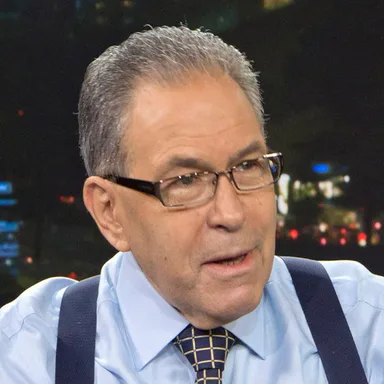
Michael Stoler Real Estate Expert
The Stoler Report with Michael Stoler: Kent Swig
Transcript
Automated transcript · uncorrectedGood morning. This is Mike Stoler for the Stolear Real Estate Report. As I would say, happy days are here again. What do I mean by that? I mean that office leasing is moving up, a residential conversion of office buildings to residential or in focus. And there are a lot of good things happening in the New York marketplace. So
today I have a dean of the New York real estate market, my friend Ken Swig, who has a variety of jobs. One of them is that is a principal at Swig Equities, principal at Brown Harris Stevens, and needless to say, principal at Hemsley’s sphere over there. I’d like to thank you for being here.
It’s a pleasure, Michael, and thank you for having me.
So tell me what’s your thoughts about the market today with different areas and specific.
Sure, well, if you look at the commercial marketplace, you know, who would have thought that we would be in the situation in New York City where we are today, which is rather extraordinary. You’ve got Class A rents, you know, pushing over two hundred dollars and in some places over three hundred dollars a square foot. You’ve got projects that
on six twenty five, Madison were related as decided to go build a resident a commercial building instead of a residential building. And you’ve got the vacancy or availability rate that’s falling, and the city is doing extremely well the rental market and the residential is also doing very well.
It’s painful for some because the rents they’re climbing and very very high, and the condo market is holding up quite well. So overall, New York City, I would say, has come out of the COVID era and is doing rather well for ourselves.
Well, what do you consider the reasons for doing so well?
You know? One of the things that it was simply put is that New York is New York. You know, we’re the largest city in America. We’re the financial capital of the world, and people want to be here. The other thing is that the resurgence of urban living, which has been twenty five years in the making in America,
is quintessentially here in New York City. Young people want to be here because it offers a variety of lifestyles in terms of whether it’s the arts, whether it’s sports, whether it’s entertainment, the movie industry, the film industry, you know, all kinds of things business obviously, and it’s a haven for people around the nation to want to be here
in New York.
But it’s impossible to live here for many people. Well I mean you have two young sons, yeah, okay, and they have to live here in New York. They have to pay rent. I mean, it’s difficult.
That is a problem. So one of the big things that we’re confronting is affordable housing, and there are some solutions that can come for that, but it is a very difficult thing. You know, if you look at New York City’s housing market, the whole market. We have, you know, right now, about what eight point three million people living
in New York City approximately, and we have roughly three point one million housing units. Half of that two million is rental. And then you’ve got about one point four million plus or minus of things to buy, roughly one million townhouses or one to three family homes, mostly out of the boroughs. There’s only ten thousand in Manhattan. And
then you’ve got approximately two hundred thousand co ops, which is nothing a condos, pardon me. And then you’ve got about roughly four hundred thousand co ops in the whole city. So we don’t have housing, and one of the things we need to do is to increase that the housing in the city and especially especially affordable housing.
So what are your suggestions on how to increase affordable housing? Well, one and tax the rich.
Well, you know, here’s the thing I think you can. You can create affordable housing without taxing the rich. And much like when you raise children, right, you find that when you give incentives to somebody, you get a better response than threatening punishment. So what I would do is to take And the city doesn’t have money to go
do this, so how do you make that happen. One of the things is the city has an abundance of air right, so that’s free. So air rights you make available, and you make it with with certain you know, restrictions if you will. So I would look at, which I’ve said before, the largest boulevard in New York City, Queen’s Boulevard,
which is underserved in terms of FAAR. It’s got a low FAAR area, it’s got good public transportation, and I would say to those to that area, we’re going to increase your zone to fifteen to one far if you choose.
If you don’t, you don’t have to have it, but if you’d like it, we’re going to take the city. We will take the air that we have for free and extend it to you for free. But you have to put thirty percent, forty percent, fifty percent affordable housing in your project. This way, you’re giving incentives to developers. They,
in my opinion, will go out and build and you’ll increase the housing stock tremendously.
Well, that’s for rental housing for which.
Is what we need. Typically the for sale housing typically is yes, it’s very expensive, but right now what we need is affordable rental housing for the population that works here. And if you give incentives to people, typically you’re going to get and you have it attached to that, you know, and affordable housing percentage. I think that you’ll see a
lot more affordable housing without the city having to pay money, without the city having to give funding, and without having to go out and get you know, other kind of alternative financings from the federal government.
What about the conversion market. What are your thoughts about the conversion market from office to residential and especially since we’re on Third Avenue which at one time used to be Accountant’s Row and now it’s apartment throw.
So you’re exactly right for me. That’s very, very exciting. If you look at from forty first Street to forty eighth Street, forty ninth Street right where we are, you know, there’s probably four thousand units that are coming online that are being converted from commercial to residential right now. And I think that does two things. One, it reduces the
amount of sort of Class B office space that is not quite as desirable in the market, and that’s the first step. That’s a nice thing. But more importantly, it adds rental housing into the marketplace, which is sorely needed.
And then I think there’s another byproduct that people sort of have overlooked, and that is that those people living in those units don’t want to reverse commute out of the city and work somewhere else. They want to work in the city. So that’s going to put more pressure on businesses to stay in Manhattan and or expand in Manhattan.
And those businesses that during COVID said they don’t need an office in Manhattan now recognize that they do need an office and the employment is going to be here, they’re going to have to have an office in New York City. So I think it’s overall.
I think it’s a very very part talking about having an office in the city, we’re talking about coworking co shares. What’s your thoughts about that we Works of the world and the co share.
Well, you know, I think that one of the things that’s identified with we Work, which has changed now, which was a hyperbole of business, you know, industry. It was. It was overblown and hyperbolized in what they could produce.
Coworking has been around for a lot of years. I think coworking will continue to be around for a lot of years. But now I think it’s stabilized under we Work, if that’s a euphemistic term in effect, because a company is doing well right now. Happened to be a tenant of my family’s at fourteen sixty Broadway and doing very
well and always did well there. But I think that it’s now balanced out to where it should be, which is that it provides a good service. And in an environment today where a lot of entrepreneurial companies are trying to start up, I think it’s got a great place.
I think that, you know, what happened is that they over expanded and.
Over thought what about owners running their own office sharing business.
I think it’s there’s nothing wrong with that, and I think it’s probably good. It is a specific, unique business unto itself. I could tell you the first time I was exposed to it was in nineteen eighty the nineteen eighties under actually a friend of our, Sam Rosenblatt, who was working with the firms Swigwiler and Arno, and came
up with the idea that they would have we would go out and have coworking experience or small boutique suites at fourteen eleven Broadway for the garment industry that couldn’t necessarily afford to be in their own offices there. And it worked well, and I think under certain circumstances it work well. But it is a independent type of business.
It’s not real estate per se. It’s an operating business. It happens to function in an office building. But you have to be dedicated to that business. You have to have marketing to that business and the services to that business itself. Then it makes sense.
You were always involved with Lower Manhattan. What’s your thoughts today about Lower Manhattan.
You know, I love Lower Manhattan. As you know, I came up and coined the term Fidiye for the financial district in that area, and still own the trademark on that in fact, and you know, I’m still very very bullish.
The conversions down there are going, you know, at a very rapid pace. It’s up to seventy five thousand people living down there. If you looked at twenty years ago, there was ten or twenty thousand people, So it’s grown tremendously there and that gives a very very strong twenty four hour area, and that is now a very active
twenty four hour marketplace. Unfortunately, right now, they were more difficultly hit during COVID, and they have the highest vacancy rate or availability rate in Manhattan.
At the most availability rate there, it’s.
Pushing about eighteen percent, right so Manhattan’s fifteen percent, mid Towns fourteen percent, they’re about eighteen percent. The rents everywhere are moving up, so they’re in the forties. You can go find space and fifties. But you know, take a look, American Express just agreed to go into World Trade Center two.
That’s an extraordinary dedication and commitment for New York City as well, particularly in the Lower Manhattan And congratulations to Silverstein Properties that it now finishes off the entire World Trade Center. But for you know, World Trade Center.
Five, as I would say, what is your outlook for twenty twenty six and twenty twenty seven?
Okay, Well, so there’s one major you know, hangover if you will. That’s that’s that’s hanging over all of America and in real estate, which which is hotels, residential, commercial, and that is the interest rate environment. So there’s roughly two trillion dollars of debt coming due in America and two twenty six and twenty twenty seven. That two trillion
is pegged anywhere from two and a half to three and a half percent and moving up to six percent to twelve percent, and that ripple throughout America is having a very very tough effect. So if you have debt coming, do you have paydowns? Are that you’ll have to do because the underwriting doesn’t work at the levels of debt
that were there that may have been conservative at one point but ten years ago or five years ago, but today aren’t. And so owners are confronted with having to pay down their debt and or fine partners right or find partners in there. So that that’s one big thing.
The second thing that’s going on is that the under one hundred million dollar debt market has changed dramatically the tip the banks that we used to know and work with aren’t really in that marketplace, and they’ve been replaced by debt funds. And the debt funds that are out there, you know, are charging eight to twelve percent or more
and getting it because the banks have really exited that. So that I think is one of the biggest problems facing real estate right now.
So I look forward to having you back later on in the year to see how the predictions turned out. And thanks very much for being here.
It’s a pleasure. Nice to see Michael
Sunday, May 17, 2026
Florida's Policy Model Focuses on Law and Order and Education Reform
Ron DeSantis Governor of Florida
Florida's Economic Model Is Attracting Frightened New Yorkers
Rick Scott U.S. Senator from Florida
National Security Threats From Iran and China
Ron Johnson U.S. Senator from Wisconsin

China Visit Underscores Broader Strategic Competition
Joni Ernst U.S. Senator from Iowa

Trump 2.0 Marks a New Era for Conservative Politics
Sean Spicer Former White House Press Secretary
SDNY Defendant Apprehended in Case Tied to Foreign-Linked Terror Activity
Jay Clayton Director of National Intelligence

There Must Be Tougher Measures to Protect Police Officers
Nicole Malliotakis U.S. Representative from New York

Excessive Taxation Is Driving Investors Out of New York
Mike Lawler U.S. Representative from New York

Penn Station Set for Major World-Class Transformation
Andy Byford Amtrak Special Advisor; Former NYC Transit President

NYC Luxury Real Estate Market Remains Strong
Suzanne Miller President, Empire State Properties; WABC Real Estate Analyst


Big Bounce Theory Challenges Traditional Big Bang Model
Steve Kates Space and astronomy broadcaster (Dr. Sky)
Bipartisan Push Grows for Kids Online Safety Act
Lynn Shaw Founder of Lynn's Warriors

Michael Stoler
The Stoler Report with Michael Stoler: Eli Weiss and Andrew Albstein
Michael Stoler Real Estate Expert
The Stoler Report with Michael Stoler: Eli Weiss and Andrew Albstein
Michael Stoler Real Estate Expert
The Stoler Report with Michael Stoler: Robin Schneiderman
Michael Stoler Real Estate Expert
