


Transcript
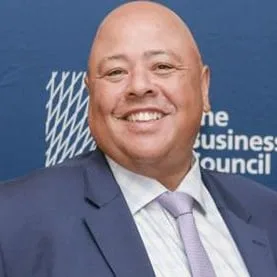
Automated transcript · uncorrectedWith us today is Paul Zuber. He is the vice senior vice president with the New York Business Council for the State of New York. New York has been voted number fifty out of fifty states and desirability to live there.
There’s so many problems in New York City, New York State. Five hundred and forty thousand New Yorkers have moved out in the last twenty four months and the move continues. The budget cuts are about to happen with us? Is Paul Zuber. Paul Sunday morning after Thanksgiving? What the heck is going on? What bothers you the most? Can we
save New York?
I think we can save New York. But I think what has to happen is that our elected officials need to understand a very important point, and that point is that, whether we like it or not, the economy in the United States in the world has changed, and that’s been accelerated by COVID. So there used to be a point
in time that we used to all go to the office five days a week. We would be located, are headquartered in a particular location. We had to do work from our location. But that’s all changed. People do remote work.
You don’t need to be in a particular state in order to do work. So now when you put upon businesses and taxpayers these incredible taxes and cost of living, you know, it’s easy for companies to pick up and leave and go someplace else. Right, So, like I use the financial services industry, you no longer have to be
on the floor of Wall Street to trade. You trade by using your computer. I can I can be a successful hedge fund manager or stock trader whether I’m in Florida or whether I’m in New York City. So people have to understand our elected officials to understand that when you pile along with these pieces of legislation that make
it harder for people to do business in New York, the answer for executives is simple, We’ll just go someplace else. And folks need to understand that. And there, you know, whether it’s taxes or Right now, we have a bill that the governor is reviewing. It would ban non compete agreements in New York State. Now, I think to the
rank of file person that says, oh great, you know band non competes. I don’t want to be under a non compete. But the problem with that bill is companies that are either considering coming to New York or companies that are currently in book, this is the type of thing that is going to drive them out of New York.
Why if I’m a big research and development company, why would I want to come to New York with the understanding that my top people could leave with all that information, go to a competing company and suddenly my competition has a same information that I have. Or if I’m a financial services company, that one of my type person can
leave and take all the clients with him. You know, it just doesn’t work anymore in this economy. And the more that our politicians, our elected officials, keep piling on the worst thing.
I wouldn’t want my headquarters to be in New York. I would even consider moving my headquarters out of New York if a situation, if a law like that to the FET well, you.
Know, and you know what, John, And this is the other part that our elected officials don’t understand. Sometimes they don’t understand the dominoes. Right, So you lose a company coming into New York. Let’s say you lose a financial services company in New York City, You’re not only losing the tax revenue that comes from those employees in New
York City, but you’re also losing the commercial rent tax that these companies likely would be paying, or the least holder would be paying because they have occupancy in that office space. So when our OCCUPYCECE rate drops in these office buildings, it decreases our you know, commercial rent tax, which goes directly to the New York City budget and
is a big part of the New York City budget. So we’re looking at budget deficits, but we’re not doing anything in the state to bring people in and want them to locate in New York City. And so this noncompete bill is something that is just on its face, is going to be the type of thing that’s going
to drive people out of New York City, out of New York State. And what’s going to happen to the rank and file person, Well, you know, the New York City City budget deficit is going to get larger, the New York State budget deficit is going to get larger, and that means the services that you depend on are
going to get cut because there’s no other choice. And elected officials need to understand that that we’re in a competiti We’re in a different sort of competitive economic environment we’ve never been in before. Before we were New York.
We were in New York City. Who wouldn’t want to be in New York City. It’s the greatest city in the world. I can be in Miami and do the same job that I did when I was in New York City, and that is something that we had to be aware of.
We had last week. We had Jimmy patronis the CFO of Florida on and he says, like one hundred and sixty different financial companies have moved to Miami and trying to make Miami a new capital for the finance financial area.
We just did a study, John. It was a study that we did with the New York Bankers Association and SIFMA, which works with all the investment companies, and we found that there is a significant out migration of financial services to other states. And not only is there an out migration, but we’re not keeping pace with other states which are
booming with an increase in companies that do financial services. So we’re losing a huge portion of our tax base. And you know, I know for a fact, you know, Heather Mulligan, who is our CEO. She talks often to other chambers throughout the country. And I can tell you right now that the Florida Chamber of Commerce, they’re openly,
openly recruiting New York businesses to come to Florida. We have low taxes, we don’t have the same burdens, and people are moving to Florida. So I think we have to understand what this means for everybody, not just rich people or middle class people or por people. It means something for everybody because it impacts our New York City
and New York State budget.
Well, New York is moving to Florida. It’s like not moving to a strange state, because half of Florida is probably New Yorkers.
Absolutely, and so so. And to your point, if I move, if I were to up and leave and go to to to Florida, it wouldn’t be like a fish out of water, because there would be like there would be hundreds of people that I know that are already down there, that are already you know, creating new lives down in
Florida without the financial burdens that exist in New York State, you know, And to your first question, can we fix it. Yes, we can fix it, but we just have to be smart about the legislation that we passed, the legislation that the governor signs. You know, I understand that there is a progressive movement in New York State, and you know,
I’m not quibbling with them on every issue. But what folks have to understand is the agenda that you want. You know, you want to provide things to create things for all people in New York State. You will never achieve that agenda if you drive businesses out of New York State because there won’t be enough money in the
state or city cofers to help the people that you claim the one to help.
We got a less than a minute left, Paul, What else can we do? I mean, are the legislators in Albany, I mean you represent the business community. Are the legislators in Albany or New York at least cognizant that there’s going to be a lot of pain when the budget does cutting well.
I think there’s two things we can do. I think from the business standpoint, and something that we started to do with the Business Council is we need to start being more active with letting the public know about what really is going on, what this legislation really means, not just talking to the elected officials and their staff, but
talking directly to the public. That’s one thing that we did with the noncompete bill. We have an educational campaign that’s going on through the Public Policy Institute, which is an affiliate of the Business Council. That’s going to be very important. And I think the other thing that’s very important is I think people are kind of voting with
their feet, they’re walking out. I think, you know, the public has to start voting at the poll box, right, they have to let the politicians know and understand that this isn’t sustainable and you know there’s going to be consequences. Right.
I think it’s city concerts.
When we had the city council elections, less than ten percent voted. I mean, it’s it’s.
Fun, it’s horrifying. And the problem is the group that is going to the polls and running to the polls are in some ways are the segment of the population that really isn’t speaking for the rest of the population.
If you can understand what I’m saying there.
Yes, we’re out of time, thank you, and we’re going to continue this conversation, Chris New York. Depends on us working and letting getting the message across.
Thank you so much, and thank you for all you do. John truly truly appreciate it because you’re a champion of business. Thank you,
Sunday, November 26, 2023
Governor Hochul promises to help NYC budget shortfall.
David Paterson Former Governor of New York

Mayor Adams cannot cut back police funding.
Peter King Former U.S. Representative from New York

Large Democratic majorities in both Houses of New Jersey legislature.
Eric Shuffler Founding Partner, River Crossing Strategy Group

Interest rates are killin' the real estate market.
Suzanne Miller President, Empire State Properties; WABC Real Estate Analyst

Israel has the right to defend itself.
Alfonse D'Amato Former U.S. Senator from New York

Timid White House affects Israel's retaliation.
Dick Morris Political Strategist and Author



Interviews Eric M. Gural, Principal of GFP Real Estate.
Michael Stoler Real Estate Expert


Jupiter's Great Red Spot shrinking.
Steve Kates Space and astronomy broadcaster (Dr. Sky)
Paul Zuber
Climate Mandates Are Hurting Working Families
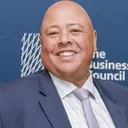
Paul Zuber SVP, NY Business Council
They Need To Fix The Climate Law In Albany, To Make Life More Affordable For New Yorkers
Paul Zuber SVP, NY Business Council
New York will face a $34 billion budget gap over the next 3 years.
Paul Zuber SVP, NY Business Council
