


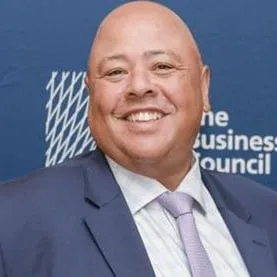
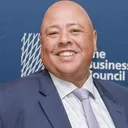
Paul Zuber SVP, NY Business Council
Climate Mandates Are Hurting Working Families
Transcript
Automated transcript · uncorrectedSunday morning, Mother’s Day, Well, what the heck is going on in Aubany. I’m not sure mothers are happy, because I’m not sure that kids are going to be any safer in the streets of New York City or New York and New York State. If Paul Zuber, what the heck is going on?
Well, John, it looks like it looks like at some point we’re gonna get a We’re gonna get a budget agreement. We thought we everybody in Aubany thought there was going to be a budget agreement this week. Uh, the governor announced a budget agreement and then the Speaker of the Assembly said, hold on, I didn’t agree to everything that
was that was listed out. So you know, that’s the usual blow up that happens during the budget. So I think the expectation is that either late next week or the following week they they’ll have a budget. I think some of the big things that you know, the listeners out there should be aware of is that I think
that as it stands now, the governor is going to be able to make some significant changes with the climate law. She’s going to be able to kind of get rid of some of the mandates, it seems, and make them more of an interim targets. She’s going to be able to make some changes into this process of how you
determine greenhouse gas emissions, which will lower costs. And you know, I think it’s kind of funny to me John that whole debate, because you know, when word got out that there was an agreement, you know, the environmentalist did all these videos and they were pretty like nasty about the governor and calling her in the pocket of big oil.
And what I want to ask them is, well, who’s out there protecting the working class? Because what was clear about the way this law was written, whether it was going to cost people more money, and it was going to cost people who least could afford it, which is the working class New Yorkers, more money. It was they
were studies which showed that gas prices were going to go up in additional two dollars on consumers, that if you had an upstate home, you probably have to pay additional four thousand dollars annually. And you know, this was less an issue about energy and renewables but an issue about affordability. And I’m sick and tired of legislators claiming
there for the working class in New York and talking about affordability. But then they fight like heck not to change laws that we know are costing working class folks money. So it looks like that’s going to be done. It looks like there’s going to be some stuff on auto insurance that you know, it’s not going to lower your
insurance rates at the rate of which the governor initially proposed because they had to do some compromises, but you know, from what I understand from some of our members, will probably help lower you know, auto insurance rates. And I think the last thing out there that’s still yet to be resolved is what to do about New York City
and how much money is going to be shifted to New York City to help close their budget gap. You know, I think there’s been a lot of back and forth, uh in the city. You know, I think the mayor made a tactical era and and kind of going after Ken Griffin, who is the owner of Citadel and making
it a personal issue. I thought that was unfair on the marriage part, but I also thought it sent the wrong message to businesses out there, you know, to say to somebody, you know, you’re creating thousands of jobs, you’re making a huge investment in New York. Oh, by the way, you’re some some horrible person because you happen to be
be successful. And I think that’s the wrong message to send to businesses who are in New York and businesses that are outside the state who may be thinking about moving into New York City. It just shows that you’re unwelcome, uh in New York City. So hopefully this will all get resolved and within the next ten days and we’ll see,
we’ll see how everything shakes out.
Let me ask you just sick and for a bigon dollar question. I mean, some day will be sixty four trillion dollar questions. You you represent three thousand businesses in New York State. Have they reached the FU level yet?
I think they reached that level a couple of years ago. John. I think you know, it goes back to something that I’ve been trying to kind of tell legislators and everybody that’s willing to listen. You know, you got to stop putting your blinders on and acting like you know, these companies can go to Texas and Florida and North Carolina
and still do business in New York. And when we continue to make it difficult for you to do business in New York with overregulation, more red tape, we make it difficult because we’re going to tax the heck out of you. And you know, your energy prices are going to be through the roof, which is partially related to
the over taxation in New York. You are getting businesses saying, you know what, I can keep it off us here, but you know what, I’m going to move most of my new employees to another state. And and that’s a very real problem. And a lot of companies have shrugged their shoulders and said, Okay, we’re going to do that.
And I think we forget how important those businesses are to the revenue in the state, which actually supports some of these programs that the folks who are out there screaming tax corporations attact the rich want government to support.
So yes, to answer your question, yes, there is there is a level of anxiety that companies are.
As Ken Griffin reach that level.
I can’t speak for mister Griffin, but no, but my opinion is is yeah, and I think not only him, but I think other CEOs out there, because clearly what they did was they targeted him, the merit targeted him, and even though he’s creating all these working class jobs because of the construction jobs as well as important jobs
the city, and they’re treating him like the redheaded stepchild. Right. So if I’m him, I’m like, Okay, maybe I follow through with my project, but don’t expect me to put more into the into the city. And I think that’s a very dangerous thing. And we got to be very careful about that because there’s a whole bunch of other
states that are that are raising their hands and saying, hey, over here, if they don’t want you, I’ll take you.
I think there’s a translation in Florida and they say, come on down, John.
We have we’re very close to all our our state chambers throughout the US, and Florida has told us they are directly marketing to companies to come to Florida. You know, they’ve told us. You know, they showed us the ad that they were sending around. So they understand it, and they understand that there’s there’s easy pickings right now because
people are frustrated, and you know, we got to dig ourselves out of the hole. And part of it is getting rid of some of these regulations. And part of it is, you know, eventually we help the governor, help firm on the taxes, but eventually she going to have to come back in the next couple of years in
lower taxes.
Thank you so much, and we’ll catch up with you again real.
Soon, all right, Thank you, John, I appreciate it. Happy mothers and.
Have a happy family day today. Thank you.
Sunday, May 10, 2026
A New Memoir of Service and Leadership for New York
Peter King Former U.S. Representative from New York

Pied-à-Terre Tax Will Hurt Investments in NYC
Suzanne Miller President, Empire State Properties; WABC Real Estate Analyst
Wind Turbines Pose Risks to National Security
Bonnie Brady Executive Director, LI Commercial Fishing Assoc.

Lou Katsos: America's First Overseas Victory at The Battle of Derna
Louis Katsos President, EMBCA & Construction Executive
Reviving National Conversation Through Books and Ideas
Steve Israel Former U.S. Representative from New York

New York's Leadership and the Cost of Radical Policy Shifts
Jessica Proud Senior Adviser to Rep. Langworthy (R-NY)
Running for Governor to Restore Common-Sense Leadership in Pennsylvania
Stacy Garrity Pennsylvania Treasurer; nominee for Governor
U.S. Must Adapt to a Changing Global Security Landscape
Newt Gingrich 50th Speaker of the House
NATO Is Obsolete in a Changing Global Order
General Paul Vallely Retired Major General, U.S. Army

Pushing for Government Transparency on UFO Records
Timothy Burchett U.S. Representative from Tennessee

Honoring Mothers With a Safer, More Secure America
Kevin Cramer U.S. Senator from North Dakota

Honoring Motherhood, Family, and Spiritual Love on Mother's Day
Alveda King Activist, Author & Niece of Dr. Martin Luther King Jr.


The Martian Moon Phobos May Be Destroyed
Steve Kates Space and astronomy broadcaster (Dr. Sky)

Parents Are Fighting for Online Accountability Laws
Lynn Shaw Founder of Lynn's Warriors
Paul Zuber
They Need To Fix The Climate Law In Albany, To Make Life More Affordable For New Yorkers
Paul Zuber SVP, NY Business Council
New York will face a $34 billion budget gap over the next 3 years.
Paul Zuber SVP, NY Business Council
The All-Electric Buildings Act will drive housing prices up.
Paul Zuber SVP, NY Business Council
