


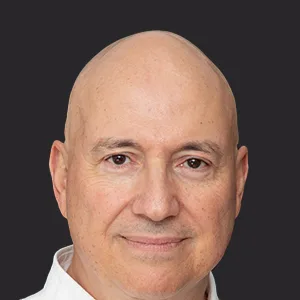
Transcript
Automated transcript · uncorrectedSunday Morning, Live, Long and prosper Doctor Peter Mithelows is going to tell you how can we live to be at least one hundred? Well, doctor Peter, what’s the tips of the day.
Well, today, John, we’re going to talk about the exciting and amazing developments in medicine in twenty twenty six and the things that are around the corner. For example, one of the biggest diseases that Americans deal with and worldwide is heart disease and strokes. And there’s some new medicines.
For example, there’s one blood test called the LP LITTLEA and that’s the cholesterol that’s the sticky one, the tiny one that penetrates and forms the plaque and inflammation and increases your risk of heart attacks, especially those who have a genetic predisposition. And there’s a new technology and new medicine coming out called Pacalarson and it’s called antisense therapy.
And what it does, it goes to your liver and it blocks theduction of this LP little A and that’s going to end up saving a lot of lives. And the other one, which we already have called the PSK nine inhibitors like pririulan and REPATHA, and they are able to lower the cholesterol dramatically and the LDL and the
ape lipoprotein, which is another big marker that you should check when you’re checking out your heart. And that one was actually developed initially by Georgia Youngcompolis at Regeneron, and that medicine has been shown to actually reverse blockages, reverse the plaque. And I told one friend who two years ago started taking it. The doctors was surprised that his
scan showed that his plaques had actually reversed. So anybody on heartsten should probably be on one of those PSK nine inhibitors. And the other great thing that came out of Regeneron in Georgia Young Compolis is that they have developed this mouse call the VelocImmune mouse that mimics the human immune system, so they give it a disease like
they gave it to ebola, and they were the first to make antibodies against ebola. And during COVID, they also made the amazing medicine for COVID by giving it to the mouse and then generating antibodies against that specific variant of COVID, and a lot of us who got COVID were able to get that including the President of the
United States. That’s the IVY antibody that he got, so it is pretty amazing. There’s also now people who get anaphylactic or allergic reactions. You always had to get that emergency at pinefron shot. There’s a new oral pill coming out in Athylin. It’s the first oral epinephrine for severe allergic reactions, which is a very big deal. We’re also
got a new medicine for breast cancer for people who have a certain G mutation called ESR one. For women with breast cancer, it’s called coms a trand so that’s amazing. And also the cancer vaccines that are coming out out that basically, you’re going to go for your biopsy and if it’s cancer, they’re going to send it to the
lab and they’re going to look at the keys on the surface of your specific cancer and make a vaccine customized just for your cancer. And that type of immune therapy is going to be amazing. It’s already starting to be used in melanoma, which is very exciting. And then of course the testing in the early diagnosis, the liquid
biopsies like the blood test that can spot tumor DNA just on a simple blood test like the one from Cancer Guard. Those are the makers of Cologuard, which I recommend everyone who’s afraid of colonoscopy. You just send in a poop sample and you can analyze with Cologuard to see if you have colon cancer. And that’s amazing. And
also we’re going to hear a lot about AI because AI is changing medicine, because AI, as you say, is only as good as what you feed into it. But for cat scans, MRIs, ultrasound and reading your lab work, it is pretty amazing. And they found that it actually reads the MRIs and scan some is better than the
human and in one study they found that it picked up early pancreatic cancer better than the human eye. And now with things like GROC and AI, you can just take a picture of your labs and your reports and then you ask it.
That is.
Amazing and it gives you a diagnosis.
But let me ask this silly questions mean you know about the stuff, and we we we want our listeners to know about this stuff because we want we want our listeners to live to one hundred and uh if not more. But all the doctors we have in the world some of the doctors got an A and uh
when they graduated, some of the doctors got a D. I mean, how do you know which doctor go to?
Well, the the issue John is more about now that most of the private practitioners are no longer around and it’s moved into a model where they work for some larger entity or some fund and they only have fifteen minutes with you, and you’re not going to get this kind of care. And sadly and unfortunately, you have to
sometimes be your own doctor, be prepared, do this stuff before you go to the doctor with those fifteen minutes, show them what you found, show them your report. And sometimes you have to pay for private concierge medicine or unfortunately that’s the model where people have to, you know, find a private doctor otherwise you’re not going to get
the time of day in this new model where they have to see forty patients a day. And if you can do things in advance, like I did genetic testing to find out what medicines I was likely to benefit from and which ones would be toxic, and I found out just by doing it on my own, and then
I can show it to my doctor. Hey, I can’t take this medicine or this medicine because it’ll interact and here’s my genetic testing. And the other thing we’re going to see more about to help people is telehealth, and they’ll be inexpensive telehealth services where for example, if you’re a cardiac patients, they can monitor you you’re remotely, or
if you’re pregnant, they can monitor your pregnancy remotely, or some of these watches now can pick up whether you have an a rhythmia or you’re having a fib or some heart problem and it can notify you and you can notify your doctor right away. So these are exciting things, but of course with the good comes to bed. Also
some of these new weight loss drugs are amazing, like zep bound for sleep apnea, losing weight, fatty liver, and that’s helping a lot of people. But there’s also a risk. One in ten thousand people now are presenting with vision loss, and there’s like seven thousand people now who’ve go on stone coldline with non ischemic artery disease of the eye,
and you know, those are some of the problems. And there’s also now a bunch of lawsuits because it slows down your intestinal mobility, and some people are getting intestinal obstruction blocking the instruction. That’s also like one in ten thousand.
So there are a lot of positive things, but we also have to watch out for the long term issues. That’s why I keep listening to WABC. And as I wrote my book The Death of Aging, I said, add years to your life and life to your years. And that’s why you have to keep listening to WABC for
more interesting health tips and also we’re on TikTok at Death of Aging and Instagram to get some of the updated information before the new book, The Death of Aging comes out.
Well, thank you so much, Doctor p to be Hellos and let’s catch up again real soon. But we want our listeners to live to one hundred.
Thank you John for always getting the truth out on the Cats Roundtable.
Sunday, May 10, 2026
Climate Mandates Are Hurting Working Families
Paul Zuber SVP, NY Business Council
A New Memoir of Service and Leadership for New York
Peter King Former U.S. Representative from New York
Pied-à-Terre Tax Will Hurt Investments in NYC
Suzanne Miller President, Empire State Properties; WABC Real Estate Analyst
Wind Turbines Pose Risks to National Security
Bonnie Brady Executive Director, LI Commercial Fishing Assoc.
Lou Katsos: America's First Overseas Victory at The Battle of Derna
Louis Katsos President, EMBCA & Construction Executive

Reviving National Conversation Through Books and Ideas
Steve Israel Former U.S. Representative from New York

New York's Leadership and the Cost of Radical Policy Shifts
Jessica Proud Senior Adviser to Rep. Langworthy (R-NY)
Running for Governor to Restore Common-Sense Leadership in Pennsylvania
Stacy Garrity Pennsylvania Treasurer; nominee for Governor
U.S. Must Adapt to a Changing Global Security Landscape
Newt Gingrich 50th Speaker of the House
NATO Is Obsolete in a Changing Global Order
General Paul Vallely Retired Major General, U.S. Army

Pushing for Government Transparency on UFO Records
Timothy Burchett U.S. Representative from Tennessee
Honoring Mothers With a Safer, More Secure America
Kevin Cramer U.S. Senator from North Dakota

Honoring Motherhood, Family, and Spiritual Love on Mother's Day
Alveda King Activist, Author & Niece of Dr. Martin Luther King Jr.
The Martian Moon Phobos May Be Destroyed
Steve Kates Space and astronomy broadcaster (Dr. Sky)
Parents Are Fighting for Online Accountability Laws
Lynn Shaw Founder of Lynn's Warriors
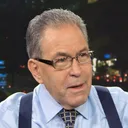
Dr. Peter Michalos
Advances in Lung Cancer Detection and Personalized Treatment
Dr. Peter Michalos WABC Medical Expert
Healthy Eating, Stronger Immunity and the Science of Living Longer
Dr. Peter Michalos WABC Medical Expert
Limiting Sugar and Choosing Whole Foods to Support Healthy Aging
Dr. Peter Michalos WABC Medical Expert
Protect Your Skin From UV Radiation and Reduce the Risk of Skin Cancer
Dr. Peter Michalos WABC Medical Expert
