


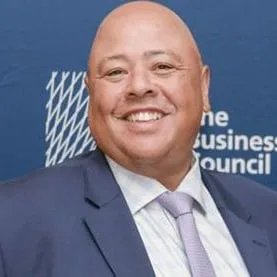
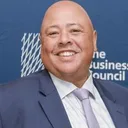
Paul Zuber SVP, NY Business Council
The City and State are still losing businesses to the Red States.
Transcript
Automated transcript · uncorrectedWith us today is Paul Zuber is exactive a vice president of the New York State Business Council, representing over three thousand businesses in the New York State. Paul Zuber, give us an update, where the heck we are to such turmoil and almost everything? Give us an update.
Well, you know, there’s a lot of turmoil, John, because I think something that we’ve all discussed and talked about is the affordability of New York and why people are leaving the state and why it’s costing so much to live in the state. And I think from the Business Council’s perspective, one of our major concerns has been the
direction the state has been taking on some of the climate legislation that’s been passed over the last several years. We as an organization are not opposed to renewables. We support renewables. We think renewables should be part of the system.
What we’re concerned with is there is a complete lack of transparency to the public to actually what the costs will be for the public as we move to this transition. And it’s not just with renewables in terms of wind and solar, it’s also with you know, electric vehicles and how much are they going to cost and how much
is it going to cost to businesses and consumers. So it’s a real issue, and we’re decided to put together a campaign to kind of inform the public so the public can make a decision based on facts rather than decisions based on rhetoric from both sides of the debate.
Well, many people know that windmills and solar energy is not going to work completely to retool all of America, and maybe it might be a small portion. And many people are concerned about the windmills because a lot of whales are dying in the Atlantic and along the Jersey coast, along the Long Island coast, and there’s concerns about that,
and there will be alternative fuel, And what they’re talking about these days is SMRs, which is small modular reactors nuclear reactors that will probably be put into effect over the next twenty thirty years.
I think, John, the problem that we see with what the state is doing is we can build out renewables without necessarily having to take current energy sources offline. So what I think the state should be thinking about is building out renewables, keeping those current alternative sources of energy online and incentivize those companies to make those alternative forms
of energy even greener than they actually already are green, right, because what’s going to have what’s happening, and what our concern is is the New York Independent System Operators, which will tet the entire electric grid overall in the state, has already said that there are potentially reliability issues because transmission connections have not been made to many of these
renewable projects. So why are we even thinking about taking some of these things offline before we build out our renewables and we know exactly what type of capacity we have. So it’s a major issue. And you know, one thing I kind of want to want to say to the listening audience. You know, there’s a lot of rhetoric about
storms and this type of thing, and look, we should be thinking about the environment, and a business council is thinking about the environment. But let’s not forget New York State accounts for point zero four percent of the green hass greenhouse gas emissions worldwide. That’s less than an a half of one percent, So it’s not as if New
York is China and we’re polluting the rest of the world. We are actually one of the leaders when it comes to greenhouse gas emissions. So if the argument is that we need to do this climate law because we need to be a leader, that’s fine. But let’s talk to the public about how much it is going to cost.
Well, so, the Electric Car group, a lot of the companies are getting feedback that the electric cars and that’s selling. And I think that Toyoda chairman had the best idea make all of the cars possible, and electric consumer picked out what kind of car they went to buy.
Yeah, I agree that. You know, there’s another aspect again, why we’re going to educate the public about electric vehicles. So by twenty thirty five, we’re going to move all school buses to electric vehicle school buses. That’s great, but New York City has already said that it will cost about two point two billion dollars to convert all their
school buses to electric school buses. But that’s not including the fact that you’re going to have to build charging stations within school districts so the buses can charge up. Up Here in the Capitol District region where I live, there’s a school district right now that’s just looking at building charging stations to charge school buses have been told
it’s going to cost an excess of twenty five million dollars to do. That’s just one school district. So who’s paying for that? That’s the question, right don’t I can’t answer it because I don’t think anybody can answer it.
Is the school district, is the tax payer? Are the schools going to have to cut programs? These are the questions that we need to ask ourselves, you know, and what is going to be the impact on businesses, on the taxpayer. And that’s the things that we kind of want to bring forth with this campaign is not to
say renewables are bad, but to say that the public, hey, this is what’s going to happen. This is practically what’s going to happen. Are you okay with it? Are you okay with your costs going? If you are, that’s fine, then then we can then we can go forward. But the public really doesn’t understand what’s going on here because
no one is.
Actually trying to well, that’s what’s been happening. It’s been the Washington has been trying to shove it down the consumers throughout and everybody’s now objecting to it. Uh, and it’s a problem, and I’m glad. I am glad your your your business council is speaking out on it, and I will participate in anything you need to help help
from me.
Well, I I appreciate it because you know, I think it’s an important issue. And again, if we’re talking about attracting businesses into New York State, you know there’s a couple of things that they look at, not only housing costs, but they also look at energy costs because if I’m a business, I’m gonna have to pay my employees more
are if I move into a state where energy where housing costs are high and energy costs are high. So that’s why I’ll look I’ll be like Golden Sacks or JP Morgan Chase and go to Dallas, right. You know, So these are the type of things that people have to understand. There’s a bigger picture here, right, And all
we’re all we’re saying is let’s talk about it.
We got a minute left. Anything else you want to say?
Uh, you know, I think John, you know, affordability is going to be a big thing going forward. You know, we’re not going to be looking at a very good budget. I’m already told you know by some that where you can probably expect tax revenues to be down in New York State, it’s time that we start thinking about the
tax player and stop thinking about putting all these crazy programs together that are that are driving people out of the state.
Well, well, Zuber, thank you for speaking up to the business quersons of New York State. Otherwise there’s going to be no business people left. Thank you so much, and let’s catch up a giving me soon.
Al Right, thank you, John, I appreciate it.
Sunday, October 15, 2023

Fluctuating oil prices underlying cause of inflation.
Larry Kudlow Fox Business Host and Former NEC Director
What is going with the House of Representatives? The world wants to know.
Peter King Former U.S. Representative from New York

These interest rates are killing us.
Suzanne Miller President, Empire State Properties; WABC Real Estate Analyst
Interviews David Schechtman Meridian Capital Group and Meridian Investment Sales
Michael Stoler Real Estate Expert


Paul Zuber
Climate Mandates Are Hurting Working Families
Paul Zuber SVP, NY Business Council
They Need To Fix The Climate Law In Albany, To Make Life More Affordable For New Yorkers
Paul Zuber SVP, NY Business Council
New York will face a $34 billion budget gap over the next 3 years.
Paul Zuber SVP, NY Business Council
