


Transcript
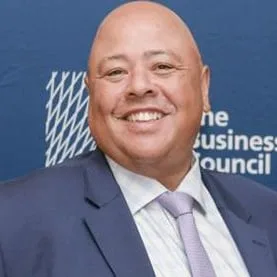
Automated transcript · uncorrectedWhat is today is Paul Zuba, the New York State, the Business Council, and so many things that happening in New York State that that actually hurt business. Paul, how are we doing? How is the new budget training us so far?
Well? You know, the new budget is I think a mixed bag. You know, there are some good aspects of the new budget, with the fact that the governor was able to hold the line and not raise any taxes, even though there was a lot of pressure from a lot of different groups out there to raise income taxes
on the wealthy and corporate into taxes. And I’m really glad that the governor paid attention to some of the polling out there. There was a recent poll by Marris College that said thirty seven percent of New Yorkers want to leave New York. So I’m glad that the governor woke up and realized that this is a major pri
them and she held the line on taxes. You know, I think the next step after the budget is the governor has to take a serious look at this climate law that we passed several years ago, which I think is becoming increasingly a problem for consumers and businesses and most recently, right after the budget, it was kind of
lost in the news is New York State had put a solicitation out for three new offshore win projects, and those offshore wind projects the solicitations were not granted because of supply chain issues. So now it is very clear that New York will not meet the goals that are required under the statue. When it comes to climate change.
There were two goals. Seventy percent of the electro electric power needed to become from renewables and forty percent of the greenhouse gas reductions had to occur by twenty thirty. Right now we’re probably at about thirty renewables. I think there’s a belief that maybe we’ll get to the mid fifties with renewables. So that leads us to discussion, this
isn’t working.
We’re win windmills, windmills. How much we are you supposed to supply? I mean that is a joke, the amount that they’re supplying. It doesn’t really work.
It doesn’t It doesn’t especially doesn’t work John when you do what many of the environmentalists want, which is have only wind and have only solar and say to everybody, we’re going to get rid of every other option out there.
We’re not going to look at nuclear, We’re not going to look at natural gas, We’re not going to look at anything else. When you look at it that way, it is a joke because there won’t be enough electricity.
People’s costs, The cost of the average consumer when when they’re paying their electric bill is going to skyrocket because utilities have to build transmission lines to these renewable projects, which cost money, and those that cost has passed on to the taxpayer. So we have to ask ourselves, like, what are we doing here, and shouldn’t we be sitting
down and reshaping our energy policy in a way that works in a way that allows for natural gas to be considered it a way that allows for micronuclear to be considered, a way that allows for all these other forms of energy to be brought into the mix, so it doesn’t increase costs on consumer and it doesn’t increase
costs on businesses. My upstay business members have said that this climate law is a real problem, and I’ve actually had many companies come to me and say, you know what, we’re considering leaving New York because we just can’t do business with windmills and solar panels. There needs to be natural gas or there needs to be some other form
of energy that works.
Wow, And that’s true. I mean, and out where I live in the summer, out in the East Quad and Kyogi, they’re trying to put a solar farm in and that definitely doesn’t work. And it gives you an infinite testinal amount of energy for all the the the hullaballoon you have to go through.
Yeah, and it doesn’t it doesn’t. It doesn’t work. And quite frankly, like, how how do we think that we’re going to take everybody off of natural gas? Do we think that the average New Yorker is going to you know, you’re going to come to their home and tell them you’re shutting off their natural gas. It’s it’s not a
realistic goal. It’s not a realistic statute. And you know, all you’re doing by continuing to head down this path is you’re guaranteeing increased costs for consumers. You’re guaranteeing increased costs for businesses. And part of the problem with New York right now now is affordability. And we want companies to come into New York. We want companies to locate
in New York. But you’re not going to have those companies located in New York if the executives are looking and they’re saying, wow, look at those energy costs are through the roof. I can’t I can’t go there, or I need the energy to build out my facility. You know, a perfect example is Corning is doing Corning is doing
some incredible, incredible, incredible things with the Internet fiber and using glass fiber, all that manufacturings occurring in North Carolina. Corning is one of the oldest companies in New York state, but they’re doing well stuff in North Carolina. It’s not because they want to. I’m sure if you were to sit them down and say, it’s not because they want to,
it’s because North Carolina is more affordable. Right, So we have to start thinking about these things in terms of having a balance.
You need some common sense in Albany, Are you absolutely right? And I did start speaking about small modular reactors for different states, and I know Texas wants them, I know Virginia wants them, I know North Dakota wants them, but they’re like seven years away. It’s not going to happen tomorrow morning.
It’s not going to happen tomorrow. And look it is. It is a viable option, and just like hydrogen is a viable option. But like you said, it’s not going to happen overnight. So why are we rushing into something when we know that we don’t have the technology to take us where we need to be. We eventually will
have that technology and everything will be fine, But there’s no reason that we have to we have to go down this path and create more problems, problems than we need. You know, if you go if you go to Denmark and you ask someone in Denmark about because they’re all renewable out there, they will tell you it took thirty
years to make Denmark, which is you know, the size of Rhode Island, which in thirty years to become run completely by renewables. Why do we think New York State is going to do it in like seven years. It’s it’s asinine. And then back to what you said, at some point, we have to have some common sense in
New York. You know, we have to realize people are leaving. We have to understand that taxes and energy costs and all those things are creating a problem for people wanting to live here. And I worry about my state. You know, I really do, because as you’re in New Yorker, John, how.
How is the population? Is the exodus continuing?
The exodus is continuing. We’ve seen that even after COVID, that New York has been leading to pack with the exodus. And like I said earlier, there was a recent poll by Marris College, you know, asking New Yorkers if they intended to stay in New York State, and thirty seven percent that they intended to leave New York State of
those polled. So that shows you where the mindset is right now with with folks in New York State, with what New York has to offer. And you know, again I commend Governor Hocal for holding the line on taxes.
You know, there was there was it was a little rough with some of the housing. I think there are some pieces in there that that are are not great. But that being said, you know, it’s not just about taxes.
And we burned fire and we burned firewood in my fireplace.
Yet yeah, well it’ll stop soon with the way we’re with the way we’re we’re headed. And and you know, just the last example, I remember this last year in the budget, the governor wanted to change how you measure greenhouse gases, and the environmentalists went nuts and they wouldn’t let let the governor change how you measure greenhouse gases,
even though her own people said, if we didn’t change how we measure it costs for consumers with skyrocket and gas prices with skyrocket, because that’s what because we we’re the only state that has a very weird way of how we measure greenhouse gases. But that’s the problem. We have, the lack of common sense. So that should have been
a signed to everybody, like, oh, let’s fix this, let’s make it work. But suddenly it became a referendum as to whether or not we believe in, you know, climate change.
Cannot use filewood.
Eventually, Eventually you are going to find it very difficult to use firewood. You’re going to find it very difficult to use propane, you know, gas grills. You’re going to find it very very difficult in the coming years as and you’re going to see more of a push to electrify buildings because of the fact that you know, we
we have this climate law, which you know, we’re supposed to have these reductions of forty percent greenhouse gas emissions by twenty thirty. And the only way that you can get there is by two things, reducing the greenhouse gases from automobiles and reduce seeing the greenhouse gases from homes and office buildings. So yeah, things are going to change
dramatically for the public.
Pulse Zuber, thank you for bringing all the New Yorkers up to Dayton. We’ll catch up with you again real soon. Thank you so much.
All right, thank you, Johnny
Sunday, April 28, 2024

The NYPD is fighting back with a social media presence.
John Chell Former NYPD Chief of Department

Budget money for housing and more cops.
Craig McCarthy City Hall Bureau Chief, New York Post

Still believes Biden will be replaced as the nominee.
Dick Morris Political Strategist and Author


So much turmoil in the world, China, Israel, Ukraine.
Mike Pompeo Former U.S. Secretary of State

Michael Hoffenberg, Founder & Managing Principal, Trevian Capital
Michael Stoler Real Estate Expert

Mars research is threatened by NASA's budget.
Steve Kates Space and astronomy broadcaster (Dr. Sky)

Paul Zuber
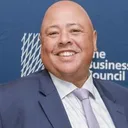
Climate Mandates Are Hurting Working Families
Paul Zuber SVP, NY Business Council
They Need To Fix The Climate Law In Albany, To Make Life More Affordable For New Yorkers
Paul Zuber SVP, NY Business Council
New York will face a $34 billion budget gap over the next 3 years.
Paul Zuber SVP, NY Business Council
